In a sharp escalation of its confrontation with the Central Government, the Congress on Monday announced a forthcoming nationwide public agitation to protest what it describes as the “bulldozed demolition” of the Mahatma Gandhi National Rural Employment Guarantee Act (MGNREGA).
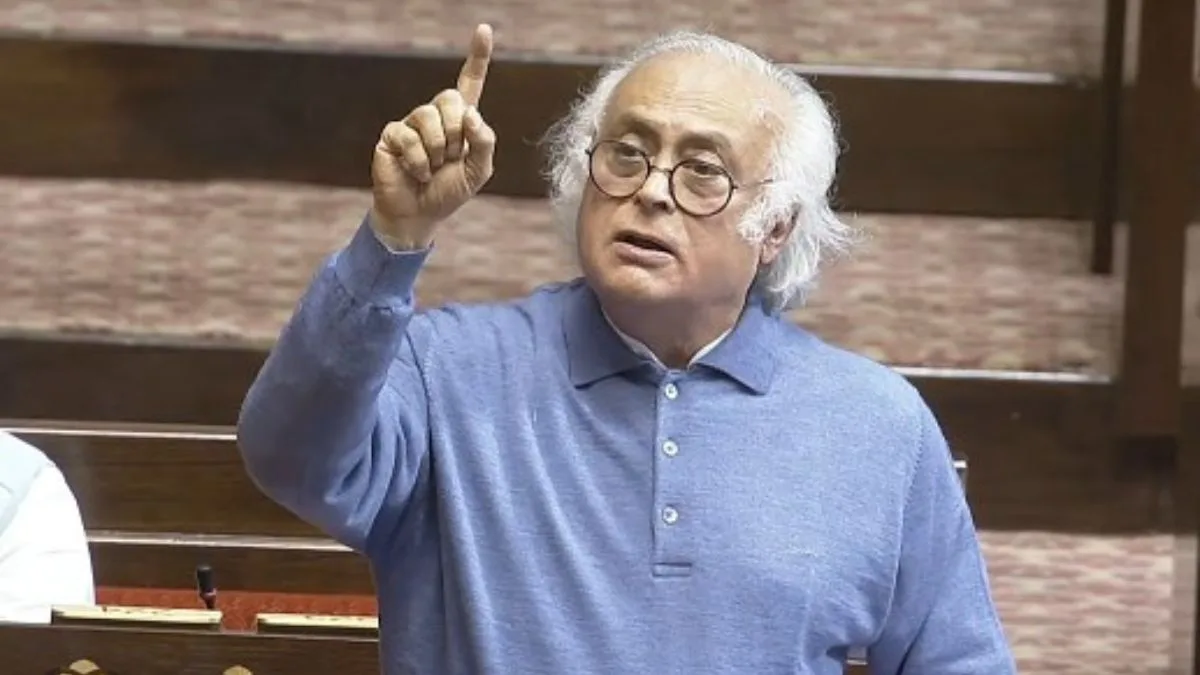
The announcement was made by senior Congress leader and Rajya Sabha MP Jairam Ramesh, who provided a detailed historical context to the scheme, framing it not merely as a policy but as the culmination of decades of social welfare evolution spearheaded by the Congress party.
Advertisement
Tracing the origins of the programme back to the 1970s, Ramesh noted that the seeds of the employment guarantee were sown in Maharashtra under the leadership of then Chief Minister V. P. Naik and the vision of V. S. Page, who introduced the Employment Guarantee Scheme to combat severe drought.
This model, Ramesh highlighted, evolved through the decades. Prime Minister Indira Gandhi launched the National Rural Employment Programme (NREP) and the Rural Landless Employment Guarantee Programme (RLEGP). Prime Minister PV Narasimha Rao introduced the Employment Assurance Scheme in the 100 poorest districts.
Following a meeting of Congress Chief Ministers in 2002, the party formalised the shift from an “administrative promise” to a “legal guarantee” in its 2004 manifesto, which later became a cornerstone of the UPA’s Common Minimum Programme.
“This is the background to MGNREGA,” Ramesh stated. “It was born from the idea of a legal guarantee… Smt. Sonia Gandhi and Dr Manmohan Singh played a pivotal role in making MGNREGA happen as an instrument of rural transformation.”
The Congress party’s current alarm stems from what it perceives as a systematic dismantling of the scheme by the present administration. Writing in a national daily, Congress Parliamentary Party Chairperson Sonia Gandhi expressed grave concerns over the dilution of the Act, which has historically served as a safety net for millions of rural households.
“In the next few days, the Indian National Congress will announce a public agitation campaign to repeal the abolition of MGNREGA,” Ramesh declared, signalling that the party intends to take the fight from Parliament to the streets.
The move to launch a mass agitation marks a strategic effort by the Congress to reclaim its narrative on rural distress and social security. By tracing the lineage of MGNREGA back to the 1970s, the party is attempting to remind the electorate of its long-standing commitment to the “right to work.”
Critics of the government argue that budget cuts, mandatory digital attendance, and delays in wage payments have rendered the Act increasingly ineffective.
As the Congress prepares for its protest campaign, the political spotlight returns to the rural heartlands, where the fate of MGNREGA remains a critical issue for millions of labourers who rely on the scheme as their last resort against poverty.