The Viksit Bharat Guarantee for Rozgar and Ajeevika Mission (Gramin) Bill, 2025—a legislation that has triggered intense debate with questions being raised not only about its key element, livelihood security, but also its name and ideological positioning—was introduced suddenly during the Winter Session, catching many off guard. It was formally tabled in the Lok Sabha on Tuesday by Union Minister Shivraj Singh Chouhan, sparking immediate protests, and put up for debate on Wednesday, with the day’s proceedings stretching late into the evening.
Incidentally, the draft of the VB-G RAM G Bill—aimed at replacing the decades-old Mahatma Gandhi National Rural Employment Guarantee Act (MGNREGA)—was shared among Lok Sabha members around Monday. There are also no reports of any public announcements before the session started on December 15.
Advertisement
Hints first emerged around December 14 about government plans to replace MGNREGA, but specifics such as the full name and detailed provisions were not available widely until the Bill was tabled. This suggested internal preparation, yet the Opposition—and even some NDA allies—are said to have expressed surprise at the tearing hurry by the government.
The fact is, there are no apparent reasons, though any major change may have political fallouts in Opposition-ruled states such as poll-bound Tamil Nadu and West Bengal, where state governments and regional parties are strong critics of BJP policies. But these elections are also a couple of months away.
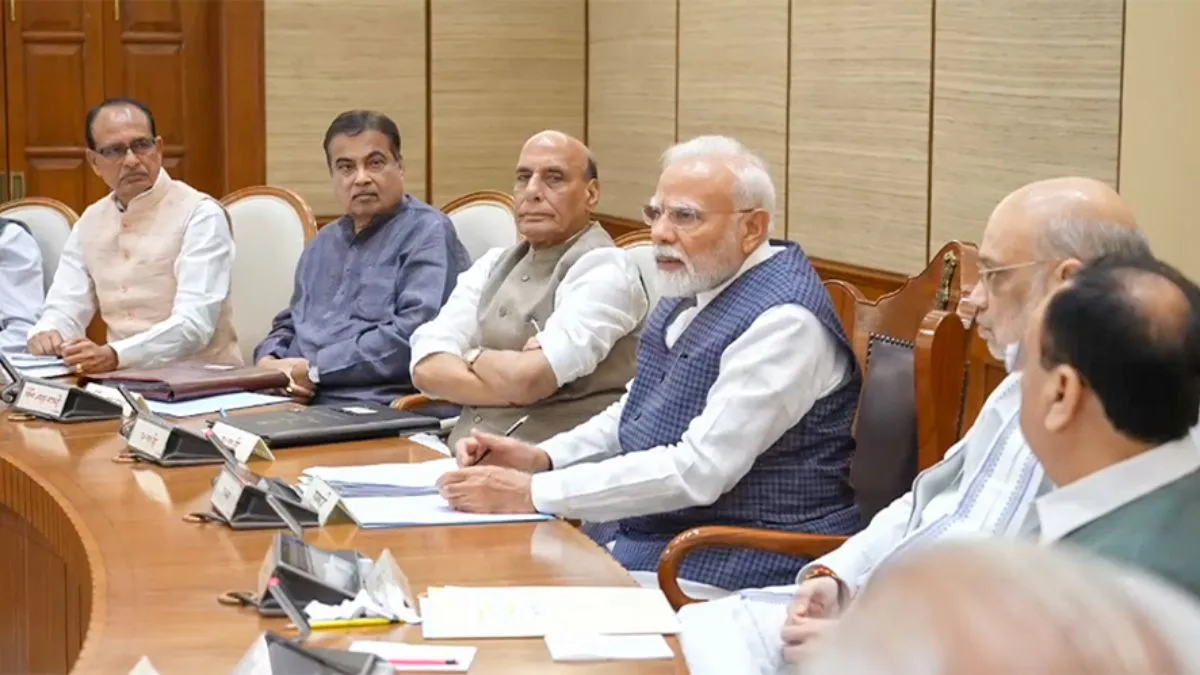
Invoking the idea of Ram Rajya and seeking to recast rural welfare, Union Minister Shivraj Singh Chouhan on Tuesday introduced the Bill, triggering multiple questions over livelihood security, its nomenclature, and its ideological positioning. Chouhan defended the move, stating that the government remains committed to Mahatma Gandhi’s ideals and that the invocation of “RAM” reflects the Gandhian vision of Ram Rajya—a just and suffering-free society.
Quoting Gandhi’s references to Ram Rajya and his last words, “Hey Ram,” Chouhan said the name should not be misinterpreted as religious dominance but as a symbol of moral governance. Even during the debate on Wednesday, strong objections were raised over the removal of Mahatma Gandhi’s name, with critics calling it an ideological assault on a landmark social guarantee.
The Bill was listed for passage after the Sustainable Harnessing and Advancement of Nuclear Energy for Transforming India Bill, 2025, despite reports that an NDA ally had suggested referring it to a select committee. The ally was reportedly concerned about the financial burden on states, as the Bill proposes a 60:40 fund-sharing pattern between the Centre and state governments.
The Bill promises to guarantee 125 days of rural employment annually—up from the existing 100 days. The government argues that the proposed law addresses long-standing structural weaknesses in MGNREGA, including fund misuse, delayed payments, and the creation of poor-quality assets. Under the new framework, real-time monitoring and weekly wage payments are proposed to improve efficiency and transparency. The scheme also shifts focus towards climate-resilient and durable rural infrastructure.
The Bill also shifts towards a capped, centrally guided programme.
A 60-day seasonal pause has been introduced to align employment with peak agricultural activity, and states will shoulder a greater share of funding through a 60:40 Centre-state split, compared to full central wage support under MGNREGA and the 90:10 ratio applicable to special category states.
Opposition parties, including the Congress and the TMC, strongly criticised the Bill for diluting worker rights and undermining federal principles enshrined in the Constitution. Some groups also warned that increased financial burdens on states and greater centralisation could eventually erode rural livelihood security.