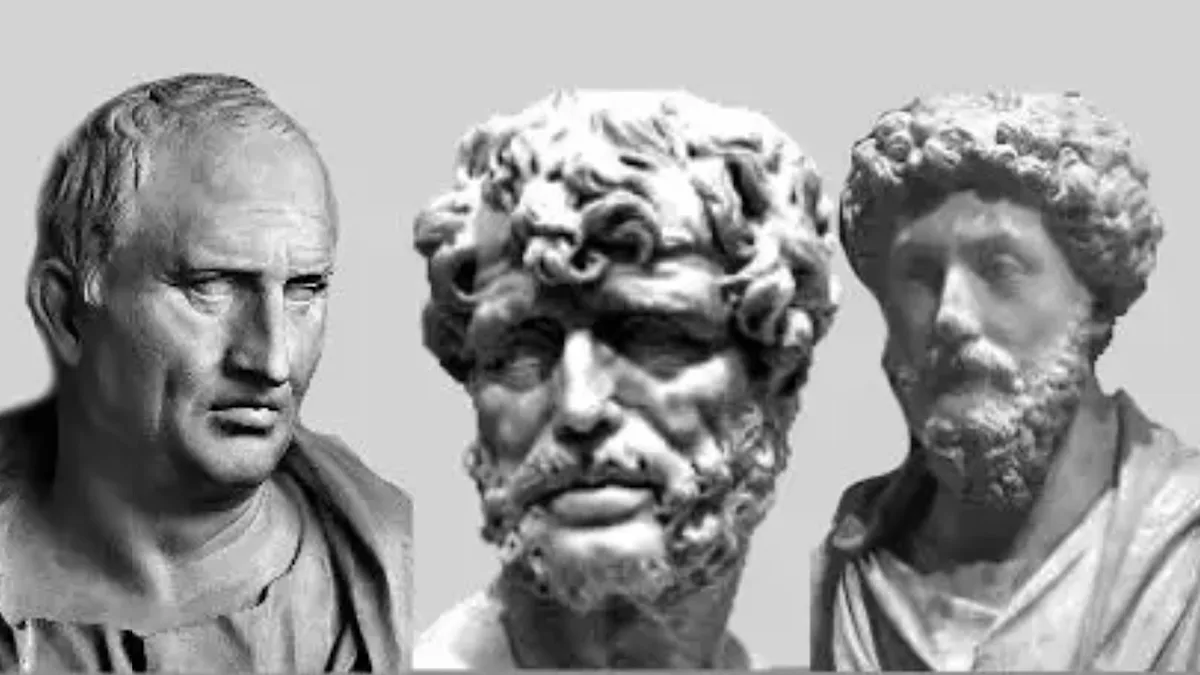
During my recent travels across Italy, I found myself unexpectedly drawn into the world of three extraordinary Romans – Marcus Aurelius, Seneca, and Cicero. Although separated by more than a century, their writings share a striking common thread: each confronted periods of political anxiety and uncertainty, and each offered profound insights on how individuals and societies should conduct themselves in troubled times. Their reflections on power, law, virtue, fear, compassion, and the responsibilities of citizenship illuminate not only the world they lived in, but also the dilemmas we face today.
Marcus Aurelius (121–180 CE), the philosopher-king, governed an empire beset by war, plague, and instability. Yet in his private notebook – the Meditations – he repeatedly warned himself against arrogance, cruelty, and the intoxication of absolute power. He urged leaders to act with empathy, reminding himself that anger and division weaken a nation from within. “What harms the hive harms the bee,” he wrote, insisting that a ruler must never create enemies among his own people or stoke fear for political gain. His emphasis on compassion, dignity, and humility stands in stark contrast to modern leaders who weaponize institutions, silence critics, and divide societies by turning citizens against one another. Seneca (4 BCE–65 CE), tutor to Nero and one of Rome’s great Stoic thinkers, wrote eloquently about the shortness of life.
Advertisement
He argued that life feels short not because of its length but because we squander it on pursuits that drain our attention and distort our priorities. “It is not that we have a short time to live, but that we waste a great deal of it,” he observed. This insight is strikingly relevant today, especially in politics. Leaders preoccupied with image-building, social media theatrics, and the pursuit of power waste the precious time that should be devoted to governing wisely. Citizens, too, are swept into storms of noise, distraction, and outrage – leaving little room for reflection or civic responsibility. Seneca’s warning remains timeless: when a society confuses spectacle with substance, and activity with achievement, truth and justice become casualties.
Cicero (106–43 BCE) lived during the collapse of the Roman Republic, a time marked by corruption, demagoguery, and the rise of strongmen. His central belief was simple yet profound: the law must restrain the powerful, not burden only the weak. “We are all servants of the laws in order to be free,” he wrote. Today, we witness instances where constitutions are weakened, dissenters silenced, and institutions bent to serve political ambition. Cicero would have condemned the moral decay that follows when public office becomes a pathway to self-aggrandizement rather than public service. He insisted that integrity is not optional: a republic collapses when those entrusted with safeguarding it look the other way. Equally essential to Cicero was freedom of speech.
Journalists losing their jobs for criticizing authority, citizens being monitored for their social media posts, or dissent being branded as disloyalty – these patterns would have alarmed him. A nation that fears truth ultimately fears its own people. Despite their differences, the three Romans converge on one essential insight: a society survives not merely through wealth or military strength, but through character – the character of its leaders and its citizens. Aurelius teaches compassion and humility. Seneca teaches clarity and the wise use of time. Cicero teaches integrity and moral courage. Together, they remind us that fear-mongering, division, corruption, and distraction are the surest ways to weaken a nation from within. The wisdom of these three Romans endures because it is rooted in an unchanging truth: political crises are, at their core, moral crises.
When leaders abandon virtue, when citizens surrender reflection for noise, and when the law becomes a tool of power rather than protection, societies lose their way. Yet Aurelius, Seneca, and Cicero also offer hope. They remind us that dignity can survive chaos, that moral clarity can cut through confusion, and that courage – whether in a ruler, a thinker, or an ordinary citizen – remains the foundation of a just and humane society. Their words, written 2,000 years ago, speak directly to the uncertainties of our present moment. And perhaps that is their greatest gift: a reminder that even in troubled times, wisdom endures – and so does our capacity to choose integrity over fear.
(The writer is professor emeritus at Loyola Marymount University, Los Angeles.)