Extraction of minerals from the Indian offshore: Opportunities and challenges
The mineral economy of India is at a crucial moment of structural transition.
The MoU was signed at Kaushal Bhawan, New Delhi, on 9 December in the presence of Prof. Uma Kanjilal, Vice Chancellor, IGNOU; Debashree Mukherjee, Secretary, MSDE; and other senior officials of both institutions.




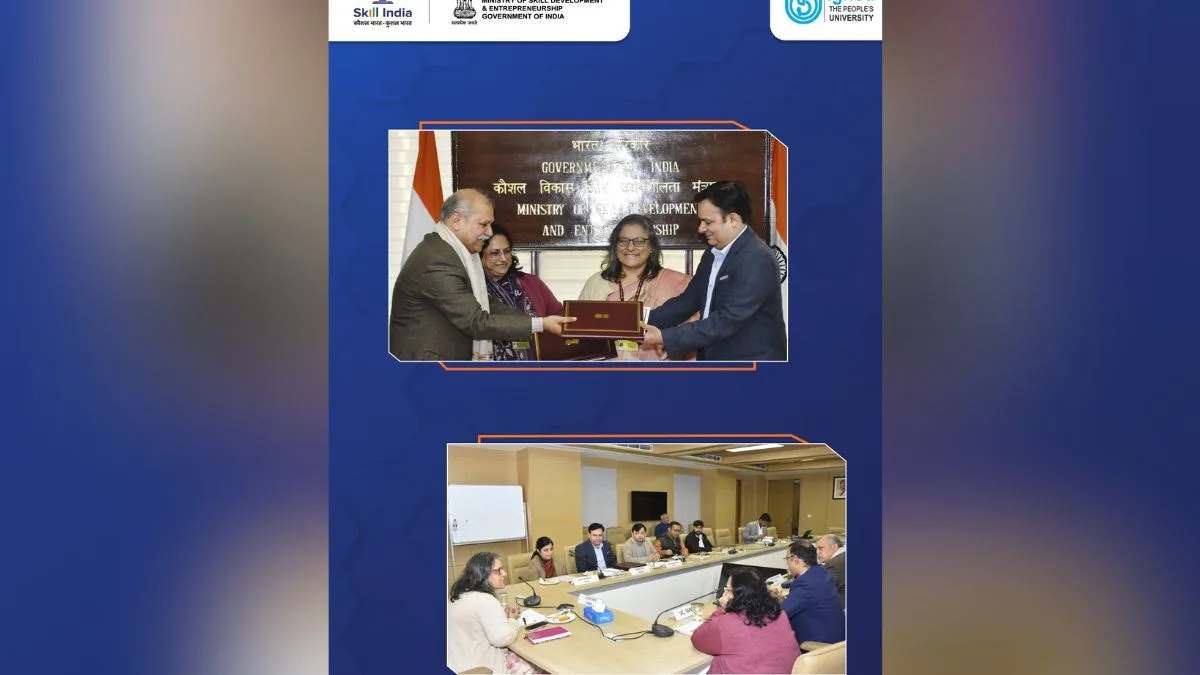
Photo: X/@MSDESkillIndia
Indira Gandhi National Open University (IGNOU) and the Ministry of Skill Development and Entrepreneurship (MSDE), Government of India, have signed a Memorandum of Understanding (MoU) to implement skill training under the Pradhan Mantri Kaushal Vikas Yojana (PMKVY) and to establish skill centres across IGNOU’s Regional Centres.
The MoU was signed at Kaushal Bhawan, New Delhi, on 9 December in the presence of Prof. Uma Kanjilal, Vice Chancellor, IGNOU; Debashree Mukherjee, Secretary, MSDE; and other senior officials of both institutions.
Advertisement
A National Partnership for Skill–Education Integration:
Advertisement
The collaboration marks a major step towards aligning higher education with India’s national skilling priorities. Under the MoU, Skill Centres will be set up across all 70 IGNOU Regional Centres. These centres will offer NSQF-aligned and industry-focused training programmes under PMKVY.
IGNOU, with its network of 70 Regional Centres and over 2,400 Learner Support Centres, will serve as a Training Partner under PMKVY 4.0. As highlighted during the Vice Chancellor’s address, the university will leverage its digital and blended learning ecosystem, as well as its status as an NCVT-recognised Awarding Body, to design and deliver skill programmes that enhance employability, entrepreneurship, and upward mobility.
Key Features of the Collaboration:
Establishment of Skill Centres at IGNOU Regional Centres with infrastructure support from IGNOU and accreditation and affiliation facilitated by MSDE.
Delivery of industry-relevant, NSQF-compliant training programmes through IGNOU as an official Project Implementing Agency under PMKVY 4.0.
Integration of vocational modules with academic programmes to enable credit-linked pathways in line with the National Education Policy.
Training of Trainers supported by MSDE through Sector Skill Councils and NSDC.
Placement support through industry partnerships, apprenticeships, internships, and job fairs.
Digital tracking and reporting of outcomes via the Skill India Digital Hub (SIDH).
In her address, the Vice Chancellor emphasised that the initiative will strengthen opportunities for women, rural youth, first-generation learners, and workers in the informal sector. The partnership is expected to contribute significantly to local employment ecosystems and help create a future-ready workforce.
Both institutions reaffirmed their commitment to building a unified national learning ecosystem where education and skills work together to support India’s economic growth and global competitiveness.
Advertisement