Why Industry Academia Collaboration Is No Longer Optional in India’s Education System
Every campus placement season, the same conversation plays out between recruiters and university leadership.
Urbanisation, often celebrated as the hallmark of progress, carries within it a paradox that modern societies are struggling to resolve.




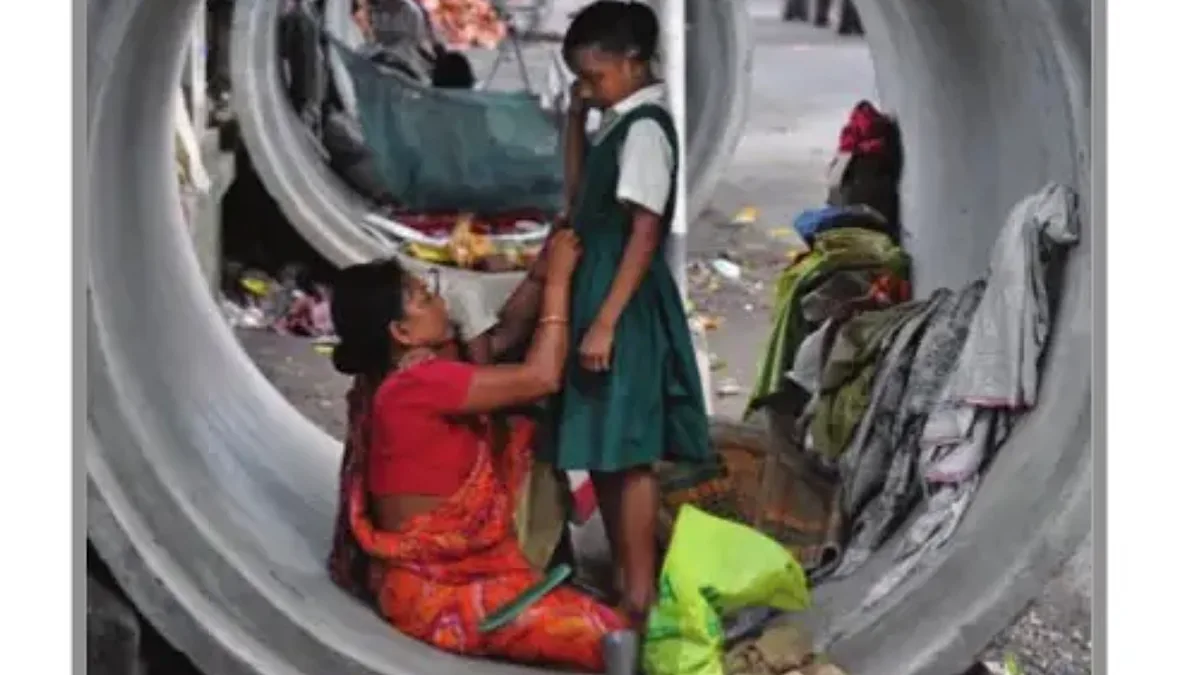
Photo:SNS
Urbanisation, often celebrated as the hallmark of progress, carries within it a paradox that modern societies are struggling to resolve. As cities grow into centres of economic power, cultural vibrancy, and technological innovation, they simultaneously become landscapes where inequality is etched into everyday life. Amid the towering apartments, gleaming malls, and illuminated flyovers lives a population that has no roof to call its own. Urban homelessness – once viewed as a marginal issue – has now transformed into a silent emergency that shadows the march of development.
It is not simply a logistical failure; it is a moral challenge that questions the very soul of our cities. The roots of this crisis lie in the deep and persistent imbalance between the dream of urban prosperity and the reality of urban planning. Every year, millions leave their villages and small towns, drawn by the promise of jobs, education, and opportunity. But the cities they arrive in suffer from a different crisis: an acute shortage of affordable housing. While high-rise apartments multiply and real-estate prices soar beyond imagination, the poor often find no legal or safe space to live. The mismatch is stark – the engines of the urban economy depend heavily on migrant labourers, domestic workers, street vendors, construction workers, delivery personnel, and security staff, yet these very contributors cannot afford even the most basic shelter.
Advertisement
Real-estate speculation only worsens the problem. Housing stock is increasingly locked up as investment rather than lived-in spaces. Property prices rise far beyond the real income levels of ordinary citizens. Middle-class families stretch their finances to breaking point to secure small apartments, while the urban poor slide further into precarity. Gentrification, now a common urban phenomenon, transforms old, affordable neighbourhoods into glossy enclaves for the wealthy. As buildings are demolished and land is acquired for commercial use, generations-old communities are uprooted. Cultural memory and social cohesion suffer irreparable damage, and the displaced join the swelling ranks of the homeless. Homelessness, however, is not merely the absence of four walls. It is the erosion of dignity, identity, and agency.
Advertisement
Without an address, a person becomes invisible in the administrative map of a city. Identity documents cannot be obtained or renewed. Children are unable to access schooling. Healthcare systems remain out of reach. Welfare schemes, no matter how well designed, exclude those who cannot prove their residence. A homeless person lives at the crossroads of multiple vulnerabilities – economic, social, psychological, and health-related. Each day becomes a struggle for survival, not just existence. The physical suffering is equally severe. Life on the street exposes individuals to extreme weather – scorching summers, unending monsoons, and biting winters. Lack of sanitation leads to chronic illnesses. Women and children face constant threats of abuse and exploitation. Elderly homeless persons fight not only hunger but also loneliness and neglect.
Many avoid government shelters because these spaces, often overcrowded and poorly maintained, fail to provide privacy, safety, or cleanliness. Some shelters operate more like temporary lock-ups than dignified spaces of refuge, pushing people back into the streets. The tragedy is that homelessness is often a preventable condition. A sudden job loss, medical emergency, family breakdown, or natural disaster can push an already vulnerable person below the line of stability. Without social security measures – rental support, emergency shelters, counselling, and food assistance – people who were once self-sufficient can quickly slip into chronic homelessness.
This is not a failure of individuals; it is a structural failure of the system meant to protect them. Addressing the crisis demands a compassionate and multi-layered response. Governments must recognise affordable housing not as a charitable act but as a fundamental human right. Urban planners need to shift from a market-driven approach to a people-centred one. Cities must invest in large-scale rental housing specifically designed for low-income and migrant populations. Inclusionary zoning laws can ensure that private developers allocate a portion of every housing project to economically weaker sections. Slum redevelopment should focus on in-situ upgrading – improving water, sanitation, and electricity – rather than displacing residents to far-off resettlement colonies where livelihoods are lost.
Additionally, cities must establish a network of dignified night shelters, community kitchens, mobile healthcare units, and employment-matching centres. Technological tools can be used to identify homeless populations, track their needs, and connect them to government schemes. Civil society organisations and volunteers can help bridge the trust deficit that often keeps the homeless away from institutional support. Ultimately, the measure of a city’s greatness lies not in its architecture or GDP but in its compassion toward its most vulnerable residents. A truly developed city is one where the poorest citizen can sleep without fear, where no one is forced to call a pavement home, and where the promise of urban life includes dignity, safety, and shelter for all. Urban homelessness is a reminder that progress without inclusion is merely an illusion. As we build smarter, cleaner, and technologically advanced cities, we must also build kinder ones – cities where every individual, irrespective of class or income, has the basic right to a place to call home.
(The writer is a Thrissur-based accountant and freelance contributor.)
Advertisement