The inherent bond of revolutionary freedom fighters was evident in the Ghadar party’s formation. Advised by Lala Lajpat Rai, Lala Har Dayal went abroad to continue his work for the country’s freedom and, with other revolutionaries, founded the Ghadar party in the USA. Ghadar meant revolt. The Ghadar party sought to start an insurrection against British rule inside India. The headquarter of the party in San Francisco was named ‘’Jugantar Ashram’’ after Barin Ghose’s paper, Jugantar. Thus, beneath the surface level of separation, there were always links between the revolutionaries.
As part of the Ghadar conspiracy, Sachindra Nath Sanyal, closely working with Rash Behari Bose, went to Punjab and planned a nation-wide mutiny in 1915. This was to be done by organising a revolt of Indian soldiers of the British Indian army. It failed primarily because the plan was leaked to the British by an informant and weapons bought from Germany never reached India. Before this, various fitness clubs or “Akharas” had come up as underground centres for revolutionary activities. The most influential among them was Anushilan Samiti, formed in Calcutta in 1902.
Advertisement
Sister Nivedita lent active support to this organisation. Aurobindo Ghosh and his brother Barin Ghosh were deeply involved with its activities. In a solemn oath-taking ceremony, Barin was initiated by Aurobindo into Anushilan Samiti by holding a sword in one hand and the Bhagwat Gita in the other. This was a rite common to the initiation of all revolutionaries. An explicit call for waging war was found in Aurobindo’s pamphlet of 1905, ‘’Bhawani Mandir’’.
Here, he propagated the idea of building a temple-school for training warrior monks who would spread across India to begin an armed rebellion against the Raj. In 1906, the Jugantar group emerged as an offshoot of Anushilan Samiti. In 1882, Bankimchandra also sought to send a message of revolt, fictionalising the Sanyasi rebellion. However, the patriotic hymn ‘Vande Mataram’ appearing in “Anandamath”, came in for criticism for being anti-Muslim. Nevertheless, Vande Mataram became the rallying slogan of all Indian freedom fighters after Rabindranath Tagore sang it in the Calcutta Session of Congress in 1896. Both Bankim and Aurobindo wanted to awaken awareness of our roots in Sanatan Dharma. Aurobindo called it nationalism in his famous Uttarpara speech in 1909. The revolutionary spirit that Swami Vivekananda instilled glorified Hinduism and inspired us to build our national unity on the basis of strength and self-reliance.
What the British feared most was this national unity. Meanwhile, the British created a safety valve to counteract revolutionary upsurges with the help of those who adopted constitutional methods of protest. But, despite this plan, the Swadeshi movement following the Partition of Bengal in 1905, led to an extremist trend culminating in the moderate-extremist split in Indian National Congress. Bipin Chandra Pal was one of the foremost leaders of the extremist group of the Congress. Pal extensively campaigned for recruitment of volunteers for the Anushilan Samiti in Dhaka. Still, despite this closeness, the revolutionaries chose different ways and means.
They were exasperated by repeated retreats from anti-British movements and continuous stress on negotiated settlements led by Gandhi. After the Non-Cooperation movement was called off, in 1924, Sachindra Nath Sanyal, Ram Prasad Bismil and some other revolutionaries founded Hindustan Republican Association (HRA). Bhagat Singh and Chandrasekhar Azad, the leading members of this organisation, were mentored by Sanyal. One year later, the HRA decided to rob a train carrying government cash and ammunition, at Kakori near Lucknow, to collect fund and weapons for revolutionary activities. Ram Prasad Bismil and Ashfaqullah Khan along with others robbed the train.
The British police tried to persuade Ashfaqullah, a Muslim, to become a witness against Bismil who was a Hindu. Asfaqullah refused to betray his compatriot and the cause of the freedom movement. Ashfaqullah Khan, Ram Prasad Bismil, Roshan Singh and Rajendra Lahiri were executed. Their daring act and sacrifice made them the nation’s heroes. Three years later, the Hindustan Republican Association was renamed as Hindustan Socialist Republican Association. Bhagat Singh, influenced by the Russian revolution, insisted on the addition of the word socialist. Still, revolt against British rule in India remained the primary objective. In the same year, Lala Lajpat Rai, a great nationalist leader of Punjab, was mercilessly beaten by police led by Superintendent of Police James Scott, during a peaceful anti-Simon Commission protest in Lahore.
He never recovered from his injuries and died on 17 November 1928. On 29 November, Deshabandhu Chittaranjan Das’s widow, Basanti Devi, in a memorial meeting at Calcutta, urged India’s youth to avenge Rai’s death. She said, “I quake with shame and disgrace. Do the youth and manhood of the country still exist? A woman of the land demands a clear answer to it.” In December, Bhagat Singh, Shivaram Rajguru, Sukhdev Thapar, Chandrasekhar Azad and other revolutionaries met in Lahore and decided to eliminate Scott. Unfortunately, as one of the revolutionaries confused Asst. Superintendent Saunders as Scott, both Rajguru and Bhagat Singh shot Saunders. Saunders was also involved in the baton charge on protesters in Lahore.
One year later, in 1929, as the heat of the authority’s reaction to Saunders’ assassination subsided, Bhagat Singh and Batukeshwar Dutt threw non-lethal bombs in the Central Legislative Assembly in Delhi to stall passing of the Public Safety Bill and Trade Dispute Bill. The Public Safety Bill was to detain and deport individuals without trial. It targeted revolutionaries. The Trade Dispute Bill was aimed at limiting workers’ right to strike. More daring acts took place in 1930. The first was the Chittagong Armoury raid led by Surya Sen and the second was the killing of the Inspector General of Prison, Norman Simpson, in the Writers’ Building by Benoy Basu, Badal Gupta and Dinesh Gupta. The Chittagong Armoury raid was an operation of Surya Sen’s Indian Republican Army. Sen established it in 1930. It planned to sever telegraph and telephone lines and disrupt railway services for preventing supply of reinforcements from Calcutta.
The Armoury was raided, to collect arms and ammunition for establishing a Provisional government in Chittagong. A few months later, in December 1930, Benoy, Badal and Dinesh shot dead Inspector General of Prison, Simpson, in the Writers’ Building. The three were members of the Bengal Volunteers formed by Subhas Chandra Bose. Bengal Volunteers, later, became an underground revolutionary organisation. Lastly, we should mention how the Jallianwala Bagh massacre of 1919 was avenged. In 1940. A survivor of the massacre, Udham Singh, killed former lieutenant Governor of Punjab, Michael O’Dwyer in London. O’Dwyer had endorsed the action of Reginald Dyer.
Dyer, who ordered, on the spot, the killing of innocent people, had already died by the time Singh planned the revenge. After killing O’Dwyer, Singh said that he was not afraid to die. He hoped that his sacrifice would inspire his countrymen to drive out the British from India. People hailed Singh as a hero, but Gandhi condemned the killing of O’ Dwyer. Revolutionaries never changed their stand. But some of the Congress extremists did. In 1916, during the Lucknow Pact between Congress and the Muslim League, Tilak came close to the Moderates, and moved to constitutional means of agitation. He also supported separate electorates for Muslims, in both provincial and central Legislatures.
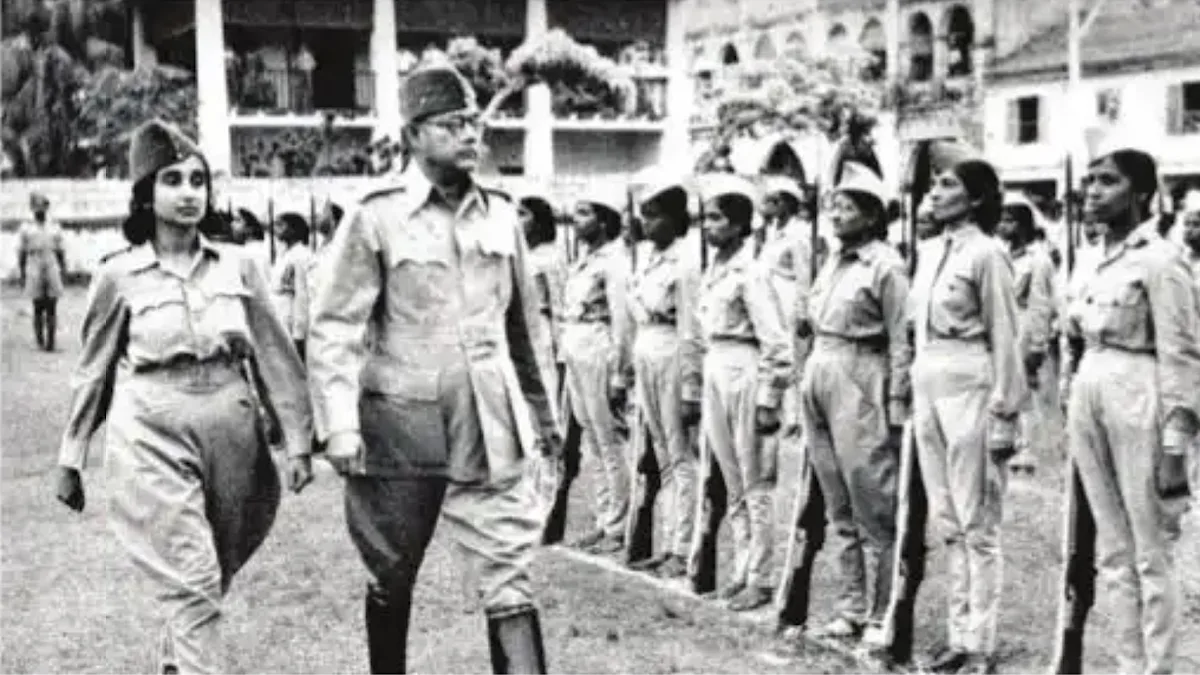
This, in effect, conformed to the Government of India Act of 1909, which sought to introduce separate electorate for Muslims to pursue the notorious policy of divide and rule. Revolutionaries might have lost steam with most of their leadership either executed or sentenced to life-imprisonment. However, it is historically wrong to state that the British left because of non-violent movements only. They were forced to leave as a long-drawn process of violent actions had shaken the coercive foundations of their rule. Finally, the revolutionaries’ dream was realised in INA’s war of independence and the Naval mutiny inspired by INA’s campaigns. Did the revolutionaries fail?
(The writer is former Head of the Department of Political Science, Presidency College, Kolkata)