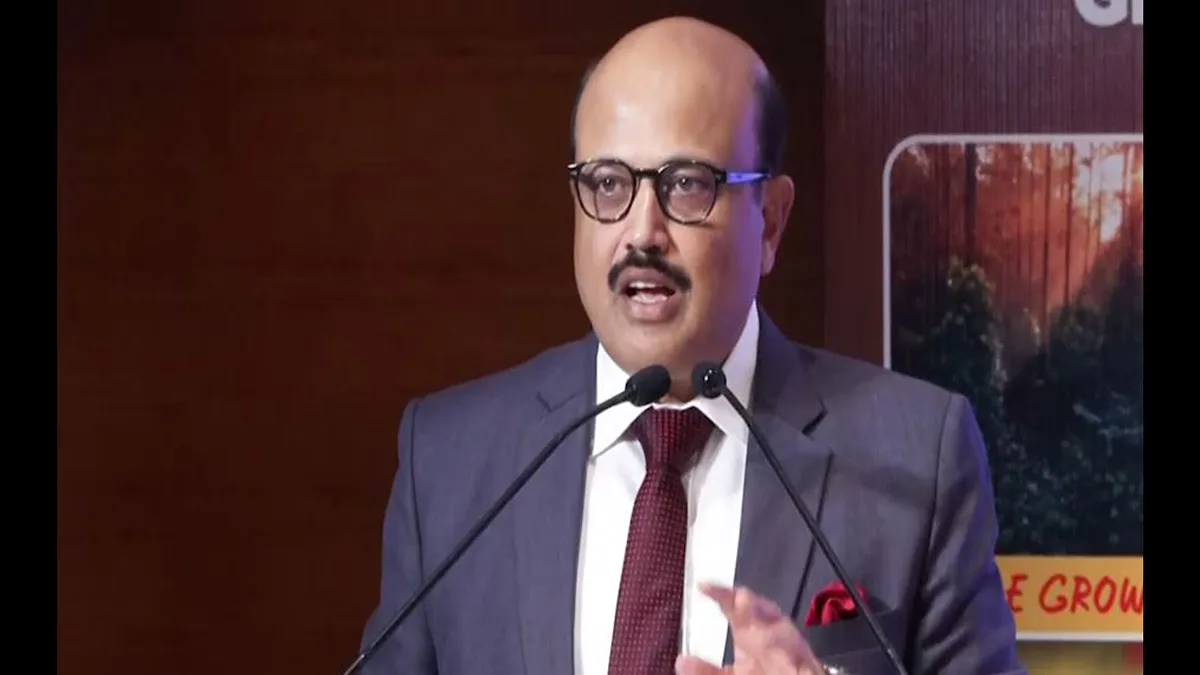
India’s Commerce Secretary Rajesh Agrawal reviewed the progress of India–Eurasian Economic Union (EAEU) Free Trade Agreement negotiations with Eurasian Economic Commission officials in a series of meetings in Moscow.
Agrawal met the Minister in charge of Trade of the Eurasian Economic Commission, Andrey Slepnev, the Deputy Minister of Industry and Trade of the Russian Federation, Mikhail Yurin, and also addressed a business networking plenary with members of the Indian and Russian industry.
Advertisement
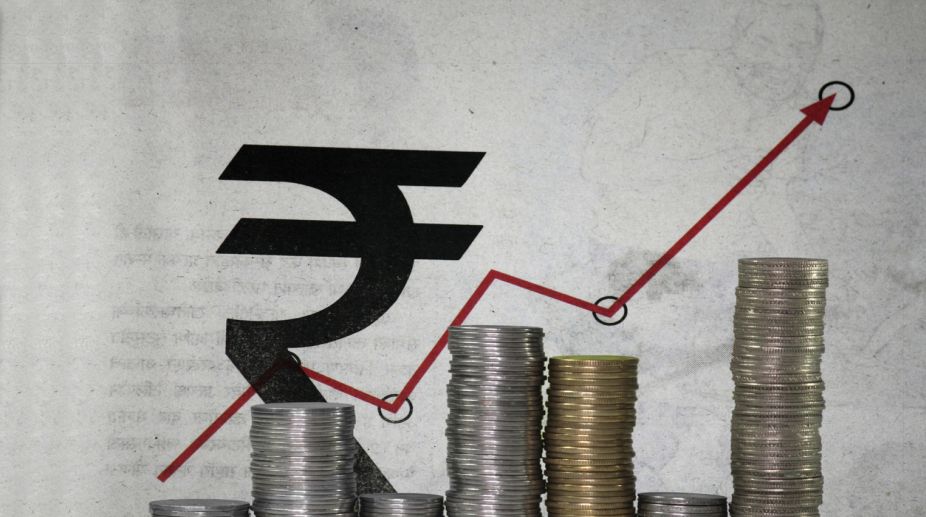
These efforts reflect the Leaders’ direction to reach USD 100 billion in bilateral trade by 2030 and to expand Indian exports through industrial and technological collaboration.
At Moscow, the Commerce Secretary also encouraged companies to align their projects with the 2030 bilateral trade target.
In the meeting with Minister Slepnev, the Commerce Secretary reviewed the next steps for the India–EAEU FTA in goods, India’s Commerce Ministry said in a statement.
The Terms of Reference signed on 20 August 2025 outline an 18-month work plan aimed at diversifying markets for Indian businesses, including MSMEs, farmers and fishermen. In line with the Leaders’ guidance, the services and investment tracks will also be examined as the process advances.
In his discussions with Deputy Minister Yurin, the Commerce Secretary explored ways to enhance trade diversification, supply-chain resilience and cooperation in critical minerals.
Both sides discussed a time-bound pathway across key sectors such as pharmaceuticals, telecom equipment, machinery, leather, automobiles and chemicals.
Further, the quarterly regulator-to-regulator engagement was agreed upon to address certification requirements, listings of agricultural and marine businesses, prevention of monopolistic practices and other non-tariff issues.
The dialogue also covered practical measures related to logistics, payments and standards to improve predictability and ease of doing business for firms in both countries.
During his meeting with company officials, he highlighted India’s logistics upgrades, digital public infrastructure and opportunities for co-investment and co-production across goods and services. The discussions emphasised the need to broaden the export basket, de-risk supply chains and convert planned projects into actionable contracts that enhance value and volume, generating more jobs and long-term prosperity for people in both countries.