India’s relations with Bangladesh, once considered a model of regional cooperation in South Asia, have entered a period of deep uncertainty and strain since the fall of Sheikh Hasina’s government in August 2024. The interim regime led by Nobel laureate Muhammad Yunus has displayed a pattern of behaviour that many in India interpret as openly antagonistic and strategically provocative. From inflammatory rhetoric and symbolic gestures to the revival of ties with Pakistan and growing proximity to China, the Yunus administration appears to be steering Bangladesh away from the cooperative trajectory established during the Hasina years and into a confrontational stance that directly threatens India’s security and territorial integrity.
The latest provocation came during Yunus’s meeting with Pakistan’s military chief General Sahir Shamshad Mirza in Dhaka in October 2025, when the Bangladeshi leader handed over an artwork titled Art of Triumph. The cover of the artwork allegedly depicts parts of India’s Northeast ~ including Assam, Tripura, and West Bengal ~ as integral to a “Greater Bangladesh.” This act, which Dhaka has yet to clarify or disown, has been interpreted in India as a symbolic assertion of expansionist intent. The fact that this gesture was directed at a visiting Pakistani general further magnifies its significance, evoking the spectre of a Dhaka-Islamabad rapprochement rooted in anti-India sentiment. This episode is not an isolated aberration but part of a consistent pattern of hostility.
Advertisement
Since assuming office, Yunus has made several statements portraying India’s Northeast as “landlocked” and Bangladesh as its “guardian of the ocean”, implying a form of dependency that challenges India’s sovereignty. His close aides have made even more incendiary remarks. In the wake of the Pahalgam terrorist attack in April 2025, which claimed the lives of 26 Hindu pilgrims, retired Major General A.L.M. Fazlur Rahman ~ now head of the National Independent Commission appointed by Yunus’s government ~ suggested that if India retaliated against Pakistan, Bangladesh should exploit the opportunity to “occupy India’s Northeast” with China’s help.
While the Bangladeshi Ministry of Foreign Affairs later distanced itself from Rahman’s statement, the damage was already done. The fact that such rhetoric emanates from individuals holding positions of influence under the interim regime reflects a deeper ideological shift taking root in Dhaka. Under Sheikh Hasina, Bangladesh’s relations with India were characterised by pragmatic cooperation. Her government decisively cracked down on anti-India insurgents operating from Bangladeshi soil, handed over several wanted militants, and strengthened border management. Dhaka and New Delhi cooperated closely on counterterrorism, connectivity, and trade, contributing to relative peace in India’s Northeast after decades of insurgency.
Hasina’s policy of zero tolerance towards terrorism and her willingness to confront radical Islamists earned her respect in New Delhi but also fierce opposition from domestic groups aligned with the Bangladesh Nationalist Party (BNP) and Jamaat-e-Islami. The Yunus regime appears to have opened the door once again to these very elements that Hasina had painstakingly marginalized. The Yunus government’s growing proximity to Pakistan is particularly alarming for India. Meetings between Bangladeshi and Pakistani military and political figures, accompanied by revived trade and defence discussions, signal a deliberate effort to rebuild ties ruptured after 1971.
It is worth recalling that India played a pivotal role in the liberation of Bangladesh, providing sanctuary, training, and arms to the Muktijodhas. The Indian Northeast served as the logistical heart of the liberation struggle. In return, India expected enduring goodwill and cooperation. Instead, under Yunus, Dhaka seems to have adopted a revisionist outlook, emboldened by China’s strategic patronage and Pakistan’s ideological encouragement. The security implications of this alignment are profound. The Siliguri Corridor, India’s narrow 22-kilometre-wide lifeline connecting the mainland to the Northeast, remains a key strategic vulnerability. Any hostile activity from Bangladesh, in concert with Chinese manoeuvres from the north, could jeopardize India’s access to its eastern states.
China’s reported involvement in infrastructure projects such as the Lalmonirhat airport near the tri-junction of India, Bhutan, and Bangladesh underscores New Delhi’s fears of a creeping encirclement under Beijing’s “String of Pearls” strategy. The possibility of a coordinated China-Bangladesh-Pakistan axis exploiting India’s eastern vulnerabilities cannot be dismissed. Another dimension of concern lies in demographic and internal security dynamics. Over the decades, illegal migration from Bangladesh into India’s border states has dramatically altered local demographics, particularly in Assam and Tripura.
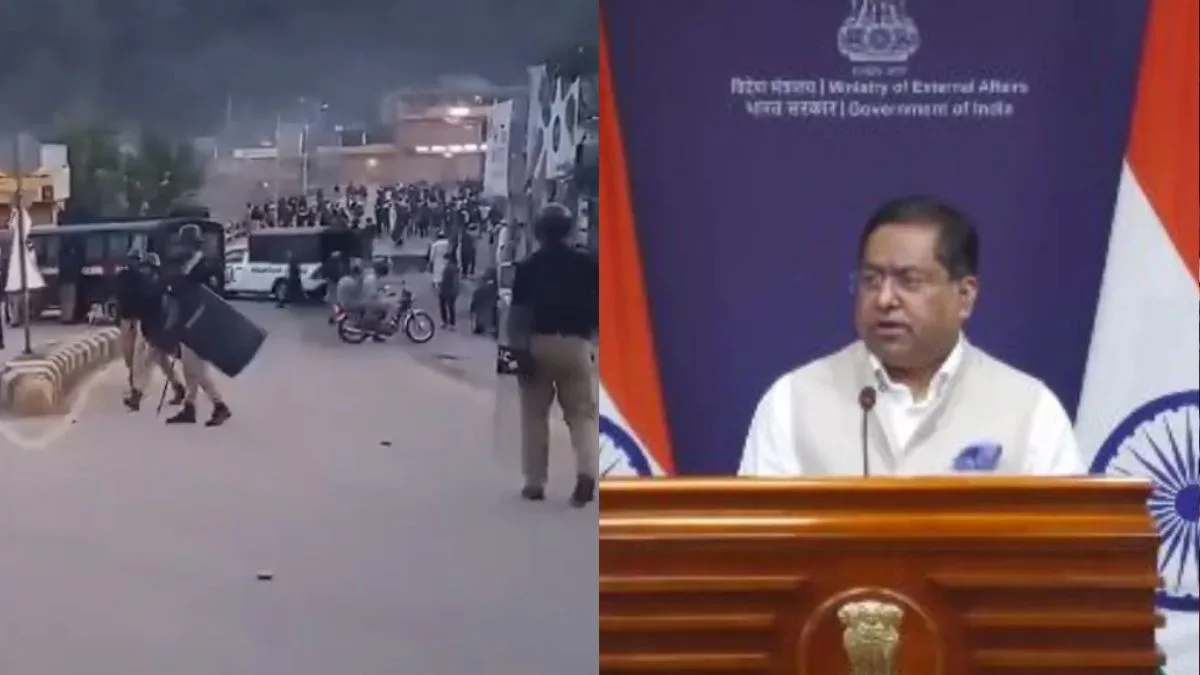
While migration during earlier decades had humanitarian roots, later flows were largely economic and unregulated. Successive Indian governments have grappled with the challenge of identifying and deporting illegal migrants, often facing resistance from Dhaka. Under the Yunus regime, such resistance has intensified, accompanied by growing assertiveness from the Border Guard Bangladesh (BGB), which has clashed repeatedly with India’s Border Security Force (BSF). Reports suggest that the BGB has obstructed fencing activities and engaged in cross-border firing incidents, heightening tensions along the frontier. Beyond the border, Bangladesh’s internal shifts under Yunus have had disturbing social implications. The persecution of Hindu minorities, temple desecrations, and attacks on liberal voices have increased since Hasina’s ouster.
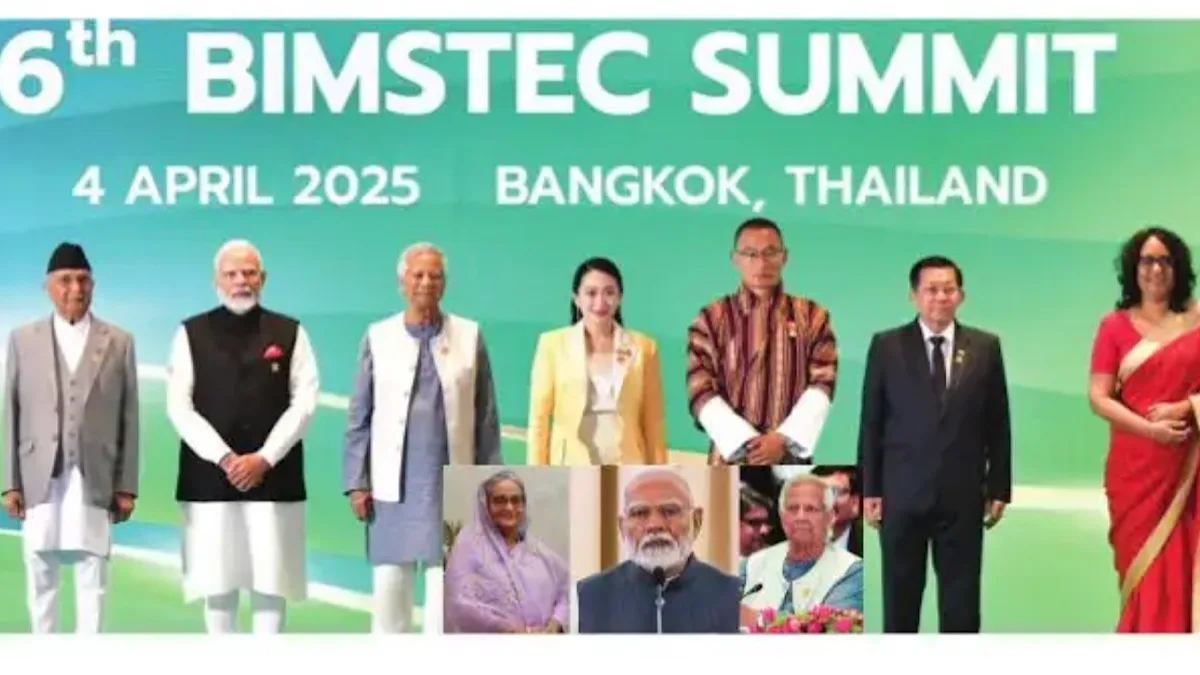
Many observers believe these developments are not incidental but indicative of the reassertion of Islamist groups who view India ~ and by extension Hindus ~ as adversaries. Yunus’s silence on such incidents, coupled with his willingness to accommodate religious conservatives, suggests a calculated political compromise aimed at consolidating support among Islamist constituencies. India has responded with a mix of diplomatic restraint and strategic firmness. Prime Minister Narendra Modi’s warning to Yunus at the April 2025 BIMSTEC Summit in Bangkok to “avoid rhetoric that vitiates the environment” was a clear signal that New Delhi will not tolerate provocations. External Affairs Minister S. Jaishankar’s remarks that “cooperation cannot be cherry-picked” underscored India’s dissatisfaction with Dhaka’s selective engagement.
At the operational level, India has restricted certain Bangladeshi exports to the Northeast, paused key infrastructure projects, and intensified military preparedness in the Siliguri Corridor and adjoining areas. Yet India’s challenge lies not merely in managing a hostile neighbour but in recalibrating its broader eastern strategy. Bangladesh’s tilt towards China and Pakistan must be seen as part of a wider regional realignment in the post-Hasina era. For Beijing, Dhaka is a crucial node in its Bay of Bengal outreach, complementing its presence in Myanmar’s Kyaukpyu port and Sri Lanka’s Hambantota. For Islamabad, Bangladesh’s estrangement from India offers a new avenue to revive its old ideological project of pan-Islamic solidarity in South Asia.
Together, these dynamics aim to constrain India’s strategic autonomy and dilute its influence in the eastern subcontinent. India cannot afford complacency. While it must continue to engage Dhaka through diplomatic channels, it should simultaneously build deterrence by strengthening border infrastructure, deepening ties with Bhutan and Myanmar, and reinforcing its influence in BIMSTEC and the Indo-Pacific frameworks. The message to Dhaka must be unambiguous: India seeks friendship and cooperation, but its territorial integrity is non-negotiable. Any attempt to challenge it – through rhetoric, cartographic aggression, or covert destabilisation – will invite a decisive response.
The hostility of the Yunus regime represents a sharp reversal in a relationship that once embodied the promise of South Asian regionalism. Bangladesh’s alignment with China and Pakistan, coupled with its internal radicalisation, poses a grave challenge not only to India’s eastern security but also to the vision of a peaceful and integrated subcontinent. India, while maintaining its composure, must remain vigilant, proactive, and prepared to defend its sovereignty against any hostile designs emanating from Dhaka. The time for quiet observation is over; the time for strategic clarity has arrived.
(The writer is Associate Fellow, Manohar Parrikar Institute for Defence Studies and Analyses)