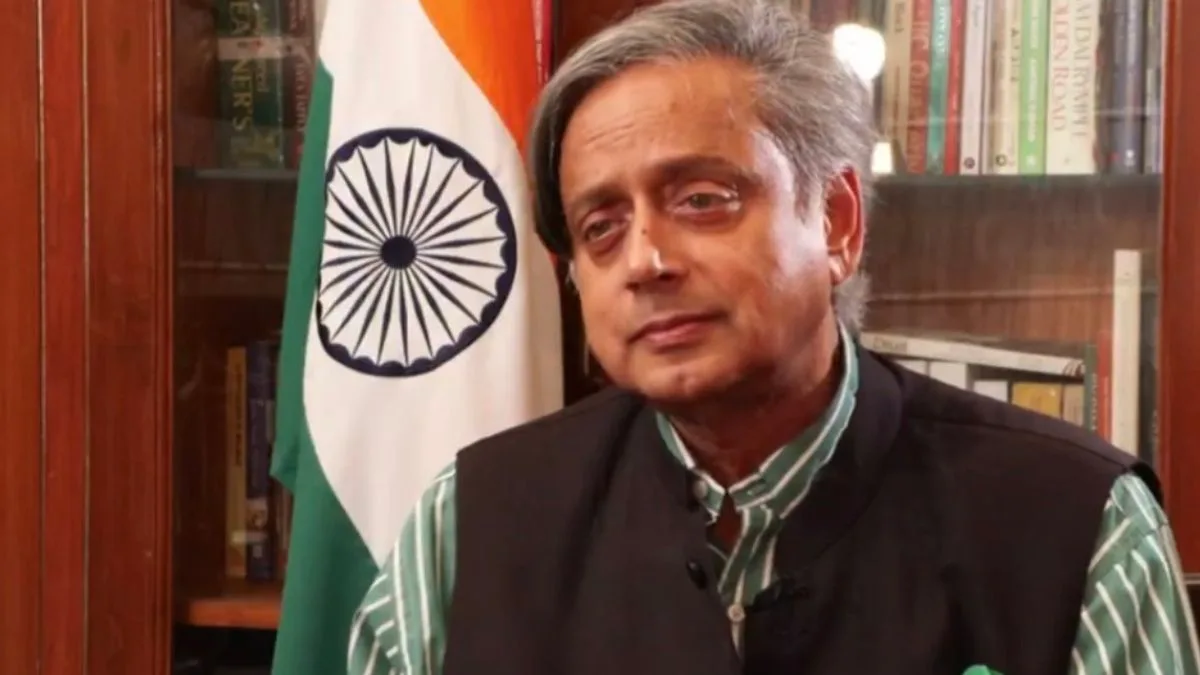
Congress leader Shashi Tharoor has criticised the dynastic politics in India, saying it is a direct threat to democracy and it is high time we move towards ‘meritocracy’.
In an opinion peace written in the Project Syndicate portal, he directly targeted Rahul and Priyanka Gandhi, saying that the very idea that political leadership can be a birthright was cemented by the Nehru-Gandhi family.
Advertisement
“For decades, one family has towered over Indian politics. The influence of the Nehru-Gandhi dynasty – including independent India’s first prime minister, Jawaharlal Nehru, prime ministers Indira Gandhi and Rajiv Gandhi, and current opposition leader Rahul Gandhi and MP Priyanka Gandhi Vadra – is bound up with the history of India’s struggle for freedom. But it has also cemented the idea that political leadership can be a birthright,” Tharoor noted.
The disgruntled Congress leader said this idea has penetrated Indian politics across every party, in every region, and at every level.
He, however, also noted that the dynastic succession prevail across the political spectrum, and named several prominent families, including the Abdullahs (J&K NC) in Jammu and Kashmir, Akhilesh Yadav of Samajwadi Party, Chirag Paswan of LJP, Uddhav Thakceray of Shiv Sena, and Naveen Patnaik of the BJD, among others.
This phenomenon, Tharoor argued, is not limited to a handful of prominent families. “Rather, it is woven deeply into the fabric of Indian governance, from village councils to the highest echelons of parliament,” he added.
He noted similar practice in other neighbouring countries, including Pakistan, Sri Lanka and Bangaldesh.
“To be fair, such dynastic politics are practiced across the Indian subcontinent: the Bhuttos and Sharifs in Pakistan, the Sheikh and Zia families in Bangladesh, and the Bandaranaikes and the Rajapaksas in Sri Lanka. But they appear particularly incongruous with India’s vibrant democracy,” the Congress leader stated.
He claimed that dynastic families enjoy enormous advantage over political newcomers as they possess “considerable financial capital, which they have accumulated over years in power” along with the “access to ready-made election machinery, including networks of donors, party workers, and local thugs.”
In what is being seen as a direct attack on the Gandhi family, with whome his ties have deteriorated over the years, the Thiruvananthapuram MP said, “When political power is determined by lineage, rather than ability, commitment, or grassroots engagement, the quality of governance suffers.”
He reasoned that drawing from a smaller talent pool is especially problematic when candidates’ main qualification is their surname.
“In fact, given that members of political dynasties are likely to be insulated from the challenges faced by ordinary people, they are often particularly ill-equipped to respond effectively to their constituents’ needs. Yet there is no guarantee that they will be held accountable for poor performance,” he said.
Adding “it is high time India traded dynasty for meritocracy,” Tharoor called for legal reforms and concerted efforts to educate electors to choose leaders based on merit.