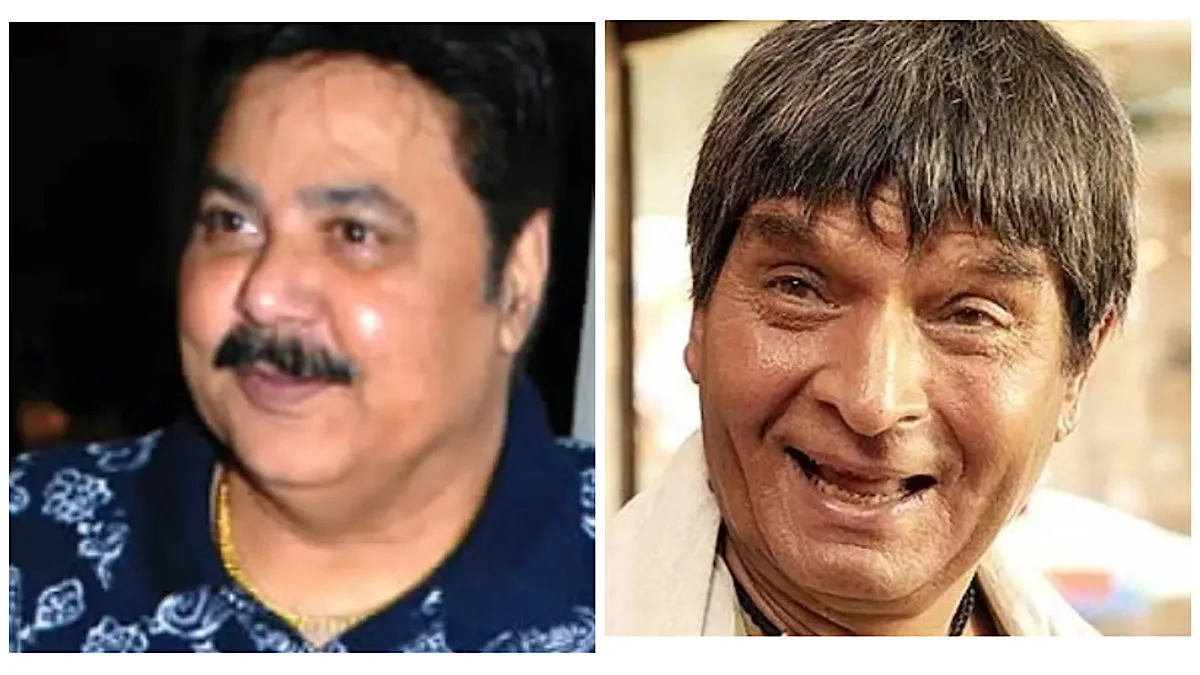
In the vast, emotional, and ever-evolving tapestry of Hindi cinema, comedy has often been the thread that holds everything together. It’s the reprieve between drama, the levity that offsets tragedy, the rhythm that gives films their human pulse. And yet, it is the one craft most taken for granted. The passing of two stalwarts, Asrani and Satish Shah, within days of each other, reminds us that true comedic brilliance is rare, irreplaceable, and worthy of reverence. And it makes one thing heartbreakingly clear: we are slowly losing the artists who once defined what it meant to truly, deeply, joyfully laugh.
GovardhanAsrani, forever etched in our memories as the outrageously funny jailor in Sholay, had a way of walking the tightrope between chaos and control like nobody else. Over five decades and hundreds of films later, you realise, he wasn’t just cracking jokes, he was conducting an orchestra. His characters may have leaned into the ridiculous, but they were never hollow. There was always a clever glint behind the madness, a rhythm in his timing that made even the silliest lines feel strangely sophisticated. And then there’s Satish Shah, effortlessly iconic, joyfully unpredictable.
Advertisement
The man played 55 characters in Yeh Jo HaiZindagi and made each one feel like someone you’ve met at a family wedding. As Indravadan in Sarabhai vs Sarabhai, he didn’t just steal scenes, he was the scene. No gimmicks, no noise, just sharp timing, dry wit, and the kind of delivery that’ll hit your witty bone in an instant and make the moment unforgettable. It’s important to understand that what these legends did was no accident. Comedy is hard. Far harder than it looks. To land a joke isn’t just about the line, it’s about the beat before it, the silence after it, the expression you wear when you say it, and the truth you don’t say at all.
It demands the precision of a musician, the instincts of a dramatist, and the heart of a poet. While the world often glorifies method actors and tragic heroes for their intensity, it is the comedians, the true ones, who have the most challenging job: to connect, disarm, and uplift, often in a matter of seconds. Great comedy is not loud. It is control. It is listening. It is generosity. It’s the rare ability to shape a moment not just for yourself but for your scene partner, your audience, and for the film’s rhythm itself. Asrani and Satish Shah weren’t just brilliant actors, they were part of a long, golden lineage of artists who taught us that comedy in Indian cinema was never just a filler between plot points. It was the plot. It was culture, commentary, catharsis.
It was survival. They carried forward a legacy built by giants like Johnny Walker, Mehmood, and Kader Khan, each of whom redefined what it meant to make people laugh, and more importantly, why we laugh. Johnny Walker, with his famously slurred delivery and wobbly walk, didn’t simply spoof the drunkard, he gave him soul. He made that character relatable, even endearing, in a way that never felt exploitative.
There was a sweetness in his timing, a twinkle in his eye that told you he wasn’t just chasing laughs, he was inviting you to feel for the man behind the joke. Then there was Mehmood, the eternal chameleon, whose range was almost terrifying. In one scene he could be ridiculous, laugh-out-loud funny, and in the next, he could shatter your heart with a single glance. He played the fool, the dreamer, the sidekick, the father, the everyman, and through all of them, he gave us empathy dressed in humour.
And Kader Khan. He was something else entirely. Not just a comedian, but a writer, a philosopher in disguise. His dialogues were clever, yes, but they were also wise. You laughed, and then the meaning would hit you a moment later. He didn’t just tell jokes, he built punchlines that doubled as life advice, as critique, as poetic observation. His words still echo across generations because they were layered with meaning, not just laughter. Let’s not forget the comedic powerhouses who redefined presence, tone, and timing in their own right. TunTun turned every stereotype she was boxed into into a weapon, and then turned the weapon into a joke. ArunaIrani and Farida Jalal brought warmth and sharpness in equal measure, making even a one-line comeback feel like a scene-stealer.
Archana Puran Singh proved that being loud doesn’t mean being shallow, it means owning the moment like no one else can. RatnaPathak Shah as Maya Sarabhai delivered insults so elegantly, you almost wanted to thank her. SeemaPahwa, with her effortless realism, turned domestic chaos into pure gold. And in the world of live comedy, Bharti Singh has held her own in rooms that were never built to include her in the first place, rewriting the rules, one punchline at a time. These artists were never “comic relief.” They were the relief. They were the pulse that steadied you when everything else in the story grew too heavy. And that’s what people often fail to understand about comedy, it’s not just about being funny. It’s about knowing when to be funny, how much to give, and when to stop.
It’s about reading the room, the rhythm of the scene, and somehow making everyone watching feel like you’re in sync with their emotion. Today, in a world overflowing with content, where every second person can stitch a meme or crack a viral joke, it’s easy to forget what true mastery looks like. Anyone can be loud. Anyone can shout or make faces or force a laugh. But to be profoundly, genuinely funny, the kind of funny that gets under your skin and stays there, the kind of funny that people quote twenty years later, that takes genius. That takes timing. That takes years of failure, of trial, of being laughed at before you learn to make them laugh with you. Asrani and Satish Shah did exactly that. Their roles may not have always been the protagonists, but they were often the scenes we remembered most. The lines we waited for. The pauses that made the punchline soar.
And honestly, isn’t that the true test of greatness? When you’re not the lead on paper, but you become the lead in memory. Let’s think about how many times we’ve rewatched those old films and found ourselves smiling before the joke even lands, just at the sight of them on screen. That anticipation, that affection, that trust, that’s not easy to earn. That’s legacy. That’s what these actors built, not just careers, but comfort. They gave us relief. They gave us rhythm. And they gave us the sacred gift of laughter that didn’t talk down to us, it laughed with us. So maybe the best way we honour them now is by watching closely. Listening deeply.Laughing not just from the surface, but from the soul.And reminding ourselves, again and again, that when done right, comedy isn’t escape. It’s art. And the legends who mastered it? They weren’t just actors. They were alchemists. The writer is a former civil servant; he writes on cinema and strategic communication
(Views expressed are personal) Inputs provided by Zoya Ahmad and Vaishnavie Srinivasan)