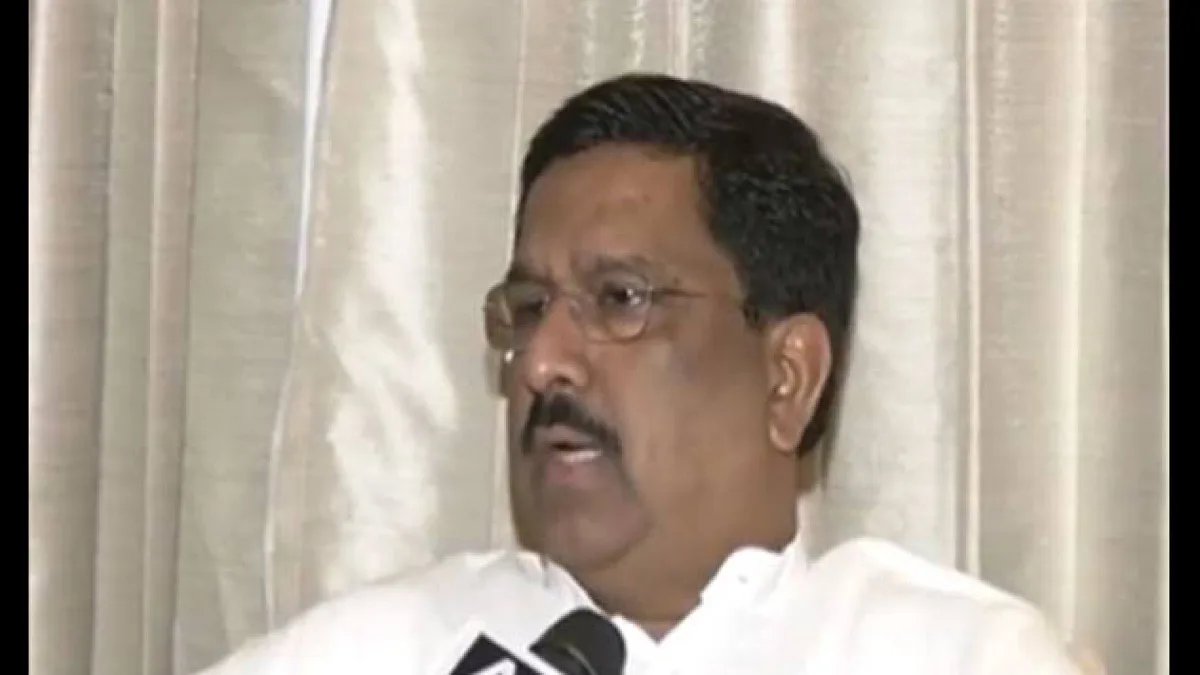
Syed Naseer Hussain, a two-term Rajya Sabha member and prominent Congress leader from Karnataka, has been a vocal advocate for public issues and minority welfare. With a strong academic background and experience in student politics, Hussain has risen through the ranks of the Indian National Congress, showcasing his leadership skills and passion for politics.
In an exclusive interview with Shahid K Abbas, Hussain shared his insights on the current power struggle within the Karnataka Congress, the contentious Waqf Amendment Bill, Rahul Gandhi’s “Vote-Chori” campaign, and the party’s stance on economic policies, GST reforms and foreign relations.
Advertisement
Q: How do you perceive the current power struggle between Chief Minister Siddaramaiah and Deputy Chief Minister DK Shivakumar? Do you think it will impact the stability of the Congress government in Karnataka?
A: The Congress government in Karnataka is stable and is deep-rooted in its commitment to the people of Karnataka. Both the CM and Deputy CM are united in their vision to strengthen governance in Karnataka. We as a party endeavour to deliver on our promises to the people and that remains our primary mission and commitment. The Karnataka model of growth is an example of inclusive growth and robust development and shall continue to serve the people.
Q: What role do you think the party’s top brass can play in resolving the differences between the two leaders?
A: The Congress believes in democracy. Internal democracy within the party is a key achievement of the Congress party. Democracy thrives when people have different opinions and outlook. In the Congress party, there has always been respect for varying ideas and ways of thought that fall within our fundamental ethos and those include commitment to equality, social justice and a secular India.
Q: Can you elaborate on your criticism of the Waqf Amendment Bill, and why you think it lacks transparent deliberation on its clauses?
A: The criticism regarding lack of transparent deliberation centres on the idea that such a significant piece of legislation, which affects a vast number of properties and the rights of a minority community, should have been subjected to more inclusive and public debate. While the government did refer the Bill to a Joint Parliamentary Committee (JPC), that process was not sufficiently consultative with the broader Muslim community and its religious bodies. The concern is that without full and open dialogue, the Bill’s provisions may not have been fully vetted for their potential negative consequences and the passing of the bill is an imposition rather than a collaborative reform. It is a unilateral move that undermines the community’s autonomy and rights. In the garb of administrative reform, the Waqf Amendment Bill infringes on the community’s fundamental constitutional right to freely practise religion and manage its own religious affairs.
Q: What do you think about Rahul Gandhi’s campaign against alleged voter deletions in Karnataka? Do you think it’s a genuine concern or a strategic political move?
A: ‘Vote Chori’ is the biggest concern India is facing today. Our right to vote is everything in a parliamentary democracy. Without the right to vote, participation in democracy is impossible. The most pertinent question we must ask here is how can a person overnight lose his right to vote? If a citizen of India, loses his or her right to vote, in effect, he or she loses all his or her social, political, cultural, economic and personal rights in this country. He or she will cease to be entitled to enjoy rights granted in the constitution. What the BJP is attempting to do by voter deletions is to delete the power and rights of people who they fear will rise against them. How can this campaign be viewed as a political move; this a very important fight to protect the people’s basic right to vote. Universal adult franchise as enshrined in our constitution was the most radical of the rights that were given to the people of our country in those days, when even some of the western countries had not done so.
Q: How do you respond to BJP leaders’ accusing Rahul Gandhi of destabilising democracy?
A: It is the BJP that is destabilising democracy through actions like Vote Chori, SIR, Waqf Amendment Bill, Bulldozer justice, misuse of autonomous agencies, communal polarization, etc. The list of actions and atrocities committed by the BJP over the past years to destabilize democracy is rather long. How can we forget what happened in Manipur? Democracy cannot be for a chosen few, while the vast majority of the masses continue to reel under the ill-effects of economic and social policies of the BJP government.
Q: What role do you think India’s youth, especially Gen Z, can play in safeguarding democracy and preventing vote tampering?
A: India’s youth are aware that the right to vote is synonymous with freedom. They are aware of what is happening in the world, and they know that their aspirations of employment, safety, security, equality are all being trampled upon. The youth see through the false rhetoric and gimmickry of the Prime Minister. They see that promises are not being fulfilled. Q: What do you think about the government’s GST reforms? A: The latest GST reform is a belated and politically motivated move, rather than a genuine, comprehensive effort to fix the underlying issues with the tax regime. The government has taken too long to implement these changes. This is a classic example of delayed action. The opposition have been advocating for a simpler, rationalized GST structure since its initial rollout in 2017.
Q: What are your views on the Modi government’s handling of diplomatic relations with the US? Do you think the government prioritizes national interests or superficial gestures?
A: This government is yet to understand the fine difference between foreign policy and ‘events and optics’. The Modi government has spent energy and resources on high-profile events.
Q: What are your thoughts on the issue of unemployment in India? How do you think the government can address this challenge?
A: The government has failed to address the root issues of unemployment. Our economy is different from Western economies and replicating them will not solve our core issues. During Covid, many domestic industries shut down irretrievably, MSME’s suffered huge losses, the service sector including hospitality faced major losses. The government announced hollow packages, but did not see them through to fruition. A large percentage of India’s population, especially rural youth work outside the vibrant IT industry. Women in the work-force are yet to receive equal pay, consideration or opportunities. MSMEs, agriculture and the service sector are the backbone of India’s rural economy, and yet not much has been done to generate sustainable employment opportunities.
Q: What are your views on the SIR issue and migrant-related concerns? How do you think the government can address these challenges effectively?
A: The Special Intensive Revision (SIR) of electoral rolls has the potential to disenfranchise genuine voters, especially migrant workers and the poor and marginalised. The issue is that for migrant workers, this process can be particularly challenging. Their transient nature means they often lack permanent addresses or the necessary documentation to prove residency in their new locations, leaving them vulnerable to being removed from the voter list in their native state and unable to register in their destination state/place.