Rajnath, Gadkari, Yogi inaugurate Lucknow-Kanpur Expressway
Defence Minister Rajnath Singh and Union Minister for Road Transport and Highways Nitin Gadkari inaugurated the Lucknow-Kanpur Expressway in Unnao on Monday.
Observing that Naxalism had been a major internal security challenge for a long time, Singh asserted that the concerted and organised efforts of police, CRPF, BSF, and the local administration have ensured that the problem does not escalate and the people in the LWE-affected areas breathe a sigh of relief.




File Photo: IANS
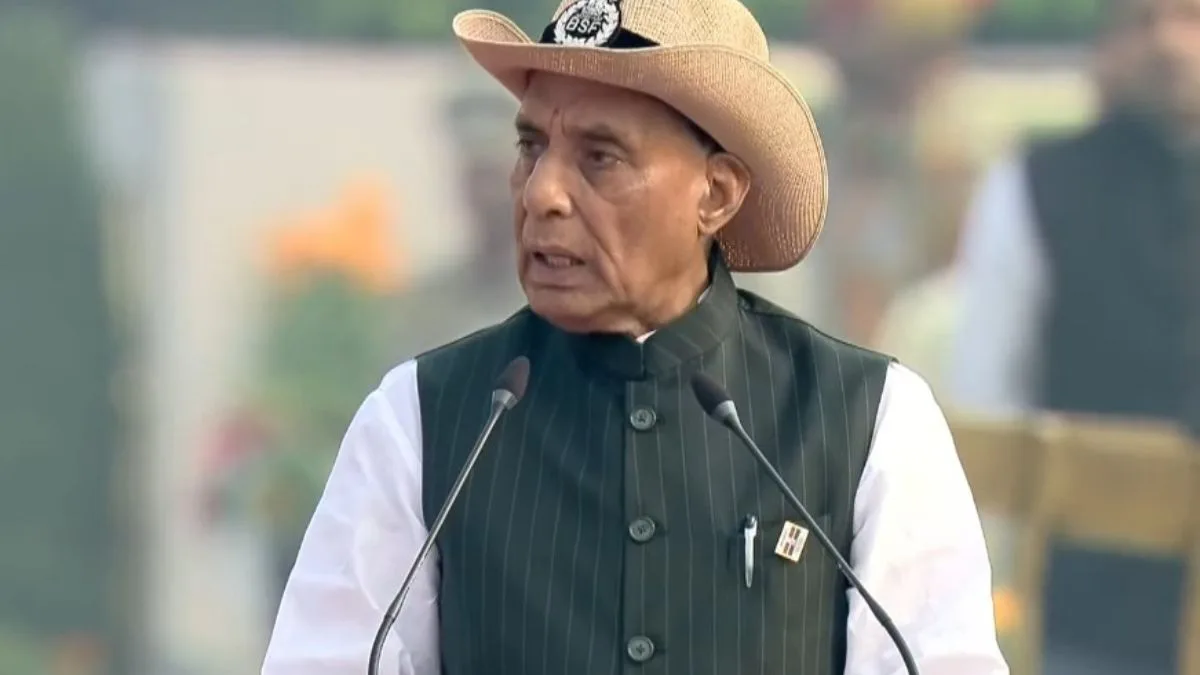
Noting that areas that were once known as ”Red Corridors” have now been transformed into ”Growth Corridors”, Defence Minister Rajnath Singh on Tuesday exuded confidence that the problem of Left-Wing Extremism (LWE) will end by March next year.
”The number of districts affected by LWE has come down drastically. Areas that were once Naxalite hubs are now becoming educational hubs. Areas that were once known as the Red Corridors have now been transformed into Growth Corridors. Our police and security forces have contributed significantly to this success,” he said at a function at the National Police Memorial on the occasion of Police Commemoration Day.
Advertisement
Observing that Naxalism had been a major internal security challenge for a long time, Singh asserted that the concerted and organised efforts of police, CRPF, BSF, and the local administration have ensured that the problem does not escalate and the people in the LWE-affected areas breathe a sigh of relief.
Advertisement
Those who previously took up arms against the state are now surrendering and joining the mainstream of development, he said, adding the number of districts affected by Left-Wing Extremism has come down drastically. Areas that were once Naxalite hubs are now becoming educational hubs, he noted.
Expressing gratitude to the police and paramilitary forces for their service to the nation, he described the armed forces and police forces as pillars of national security, stating that while the former protects the country and its geographical integrity, the latter safeguards society and social integrity.
“The military and police function on different platforms, but their mission is the same – to protect the nation. As we look towards Viksit Bharat by 2047, balancing the external and internal security of the nation is more important than ever,” the defence minister said.
On the present-day challenges, he said that while there is instability on the borders, new types of crime, terrorism, and ideological wars are emerging within the society. The defence minister pointed out that crime has become more organised, invisible, and complex, and its purpose is to create chaos in society, undermine trust, and challenge the stability of the nation.
Singh commended the police for carrying out their official responsibility of preventing crime, while fulfilling their moral duty of maintaining trust in society. “If people are sleeping peacefully today, it’s due to their confidence in our vigilant Armed Forces and alert police. This confidence is the foundation of our country’s stability,” he said.
He reiterated the Modi government’s commitment to ensuring national security and safeguarding the interests of police forces engaged in this endeavour. “For a long time, we, as a nation, didn’t fully recognise the contributions of the police. However, under the leadership of PM Modi, the government established the National Police Memorial in 2018 to honor the memories of our police forces. In addition, police have been provided with state-of-the-art weapons and improved facilities. They now have modern equipment such as surveillance systems, drones, forensic labs, and digital policing. Adequate resources are also being provided to the states for the modernisation of the police forces,” he said. He also called for optimal utilisation of resources, which can only be achieved through coordination and integration with security agencies.
Underlining that society and police are equally interdependent, Singh stressed the need to maintain a balanced relationship between the two to make the security apparatus even more robust and vigilant. “Policing can function effectively only when citizens work as partners and respect the law. When the relationship between society and the police is based on mutual understanding and responsibility, both prosper,” he said.
Advertisement