MCD wins first prize at Delhi Government Achievement & Scheme Expo 2026
The Expo featured 71 stalls representing various government departments, public sector enterprises, and other organisations.
Under Stage II of GRAP, several restrictions and flare-up measures have been enforced. These include daily mechanical or vacuum sweeping and water sprinkling on identified roads, preferably before peak traffic hours, to curb dust pollution.




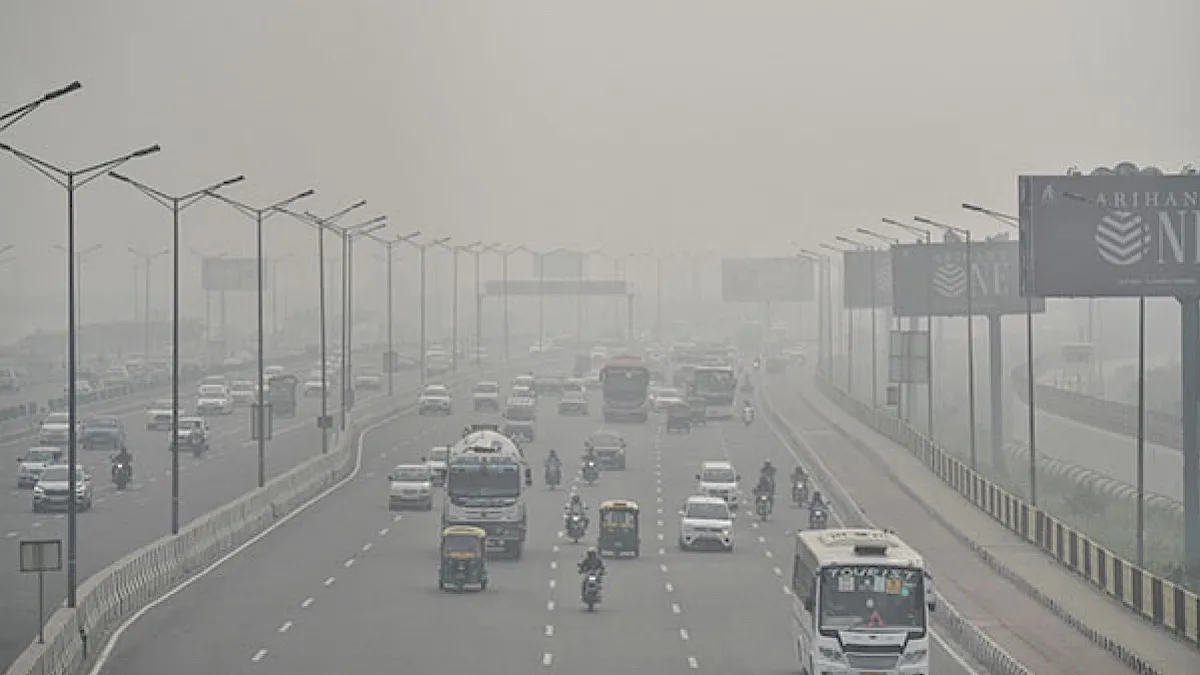
Photo:SNS
The national capital and its surrounding areas on Monday witnessed ‘very poor’ air quality, according to the Central Pollution Control Board (CPCB). The overall AQI in the national capital stood at 333 on the morning of Diwali. As Delhi’s air quality deteriorated, the Commission for Air Quality Management (CAQM) brought in Stage II of the Graded Response Action Plan (GRAP) across the NCR region on Sunday evening. “The AQI in Delhi has been surging since morning, reaching 296 at 4 p.m. and 302 at 7 p.m.,” the CAQM said in a statement.
Delhi: Visuals from the India Gate as GRAP-2 came into effect in Delhi pic.x.com/jkMAOjqroz
Advertisement
— IANS (@ians_india) October 20, 2025
Advertisement
An AQI between 0 and 50 is considered ‘good’, between 51 and 100 is ‘satisfactory, between 101 and 200 is ‘moderate’, between 201 and 300 is ‘poor’, between 301 and 400 is ‘very poor’, and between 401 and 500 is ‘severe’.
Though the overall Air Quality Index (AQI) in the city measured at 333 on Monday morning, some areas fell into the ‘severe’ category. According to real-time data from the World Air Quality Index Project (AQICN), Anand Vihar recorded an AQI of 464, while readings near Rohini and Satyawati College were 403 and 432, respectively.
In other areas such as ITO, Major Dhyan Chand National Stadium, Burari Crossing, Patparganj, and ITI Shahdara, the AQI levels were 287, 276, 266, 252, and 247, respectively, signaling ‘very poor’ air quality.
What are the curbs under GRAP 2?
Under Stage II of GRAP, several restrictions and flare-up measures have been enforced. These include daily mechanical or vacuum sweeping and water sprinkling on identified roads, preferably before peak traffic hours, to curb dust pollution. Construction and demolition sites will go through more frequent inspections to ensure strict compliance with dust control norms.
To promote cleaner mobility, public transport services are being stretched with additional CNG and electric buses, beefed-up metro frequency, and differential fare rates to encourage off-peak travel. Resident Welfare Associations (RWAs) have been given the directions to provide electric heaters to guards, gardeners, and sanitation workers to prevent the open burning of biomass or waste during winter.
Besides, the entry of inter-state buses into Delhi is now restricted to CNG, electric, or BS-VI diesel vehicles, with an exception made for tourist buses operating under all-India permits.
Advertisement