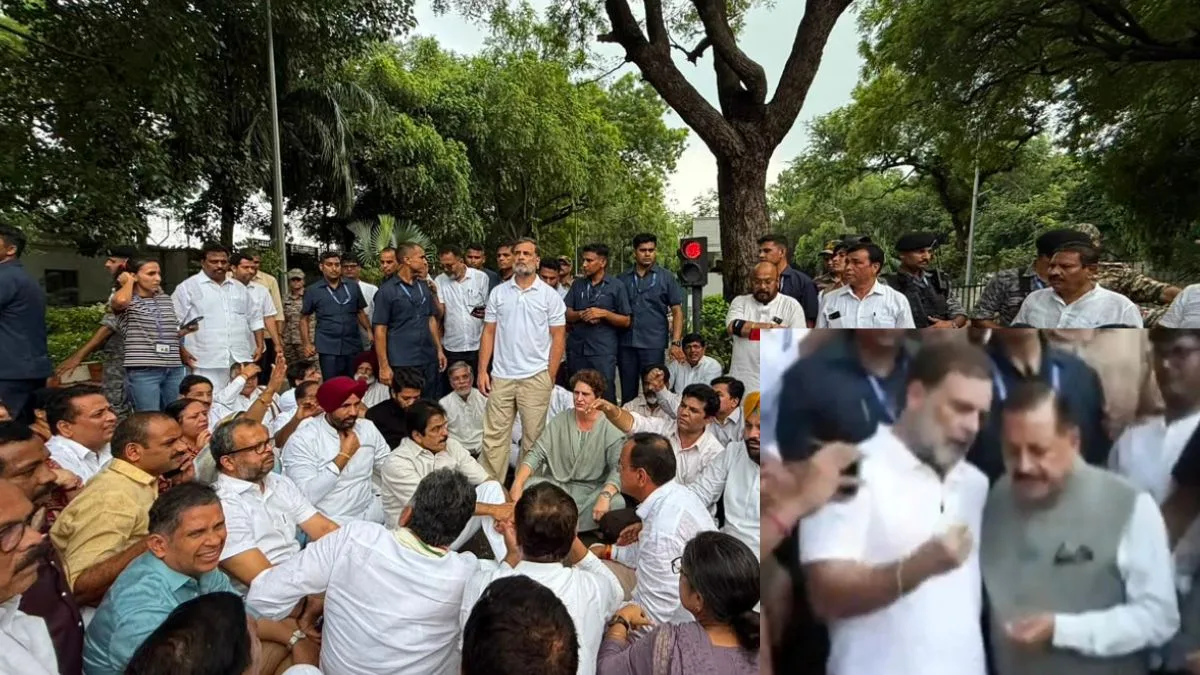
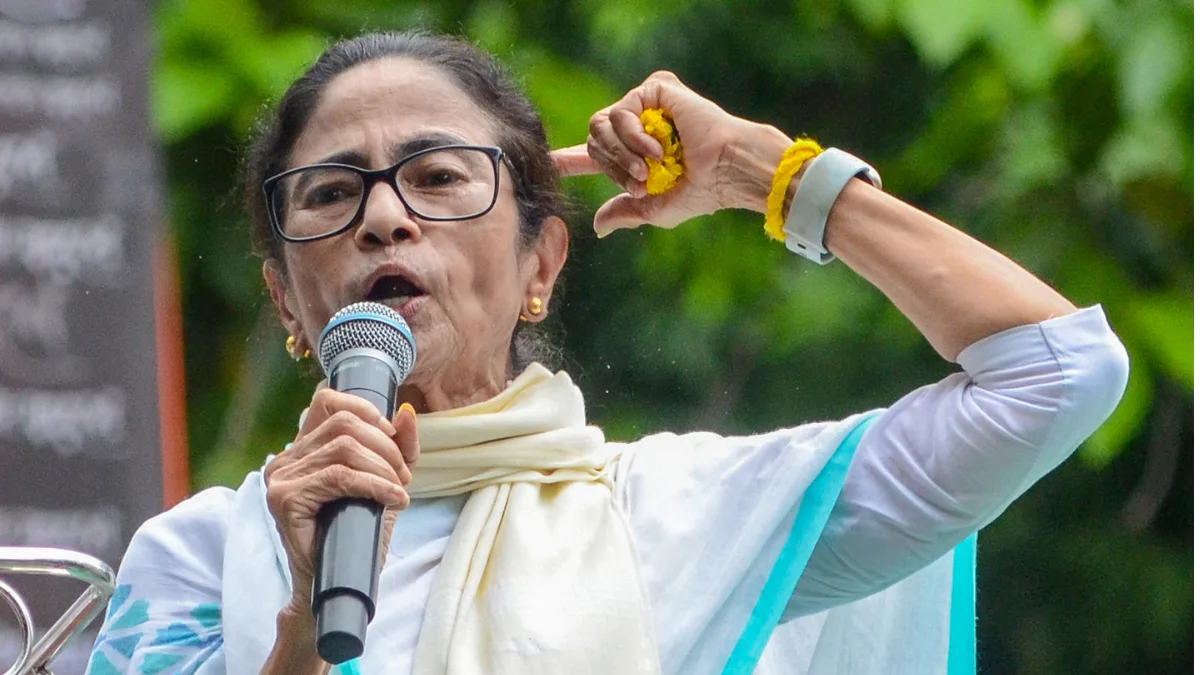
Mamata’s call for anti-BJP unity at Martyr’s Day rally junked by Congress, Left
Bengal BJP president Samik Bhattacharya said Mamata Banerjee should first focus on uniting her own party before attempting to forge an opposition alliance.
Eleven years after the launch of ‘Make in India’, the country’s global trade position is entering a new phase where resilience, compliance, and digital integration are becoming as critical as cost efficiency in shaping competitiveness.




FICCI
Eleven years after the launch of ‘Make in India’, the country’s global trade position is entering a new phase where resilience, compliance, and digital integration are becoming as critical as cost efficiency in shaping competitiveness.
A new report by BCG and FICCI, titled “Evolving Landscape of Global Value Chains,” highlights that Make in India has matured from its initial focus on industrial capacity to a model driven by innovation, resilience, and capability. The study notes that structural shifts in global trade have opened a window for India to push its manufacturing agenda and move from the margins to the centre of global value chains.
Advertisement
India’s drive toward indigenization is already visible across key sectors such as solar, semiconductors, aerospace, electric vehicles (EVs), and telecom where Production-linked incentive (PLI) schemes have attracted investments exceeding USD 20 billion and generated output worth USD191 billion.
Advertisement
The government’s emphasis on reducing import dependence, strengthening domestic supply chain resilience, and boosting value addition is central to this push. Simultaneously, the digital frontier is expanding, with initiatives like the IndiaAI Mission nurturing homegrown players such as Sarvam and Krutrim.
India’s trade diplomacy is also accelerating with a diversification strategy amid rising US tariffs. With exports accounting for a modest 20–21% of GDP, New Delhi has accelerated free trade agreement (FTA) negotiations. Agreements with the UK, EFTA nations, and others are creating fresh access corridors.
The first tranche of the India–Australia FTA is already in place, with a second phase under discussion. Negotiations with Oman are nearing conclusion. The BCG–FICCI report notes that the UK FTA alone will grant Indian exporters duty-free access to 99% of tariff lines, providing a foothold in the world’s sixth-largest economy, which currently imports $98 billion from China and $33 billion from ASEAN. Talks with the EU could potentially unlock a combined market importing $570 billion from China and $175 billion from ASEAN.
The report also underlines how compliance with global frameworks, such as the EU’s Carbon Border Adjustment Mechanism, is becoming a prerequisite for market access. India has responded with measures including the Carbon Credit Trading Scheme, Green Open Access Framework, and the National Green Hydrogen Mission to support export decarbonization.
Large industrial players are embedding ESG standards, while newer firms are innovating in circular economy models—such as battery recycling and specialty chemicals—to comply with Extended Producer Responsibility Rules across waste streams.
The report concludes that as ‘Make in India’ enters its second decade, the country stands poised to transform into not just a global manufacturing hub, but also a leader in sustainable and digitally integrated value chains.
Advertisement