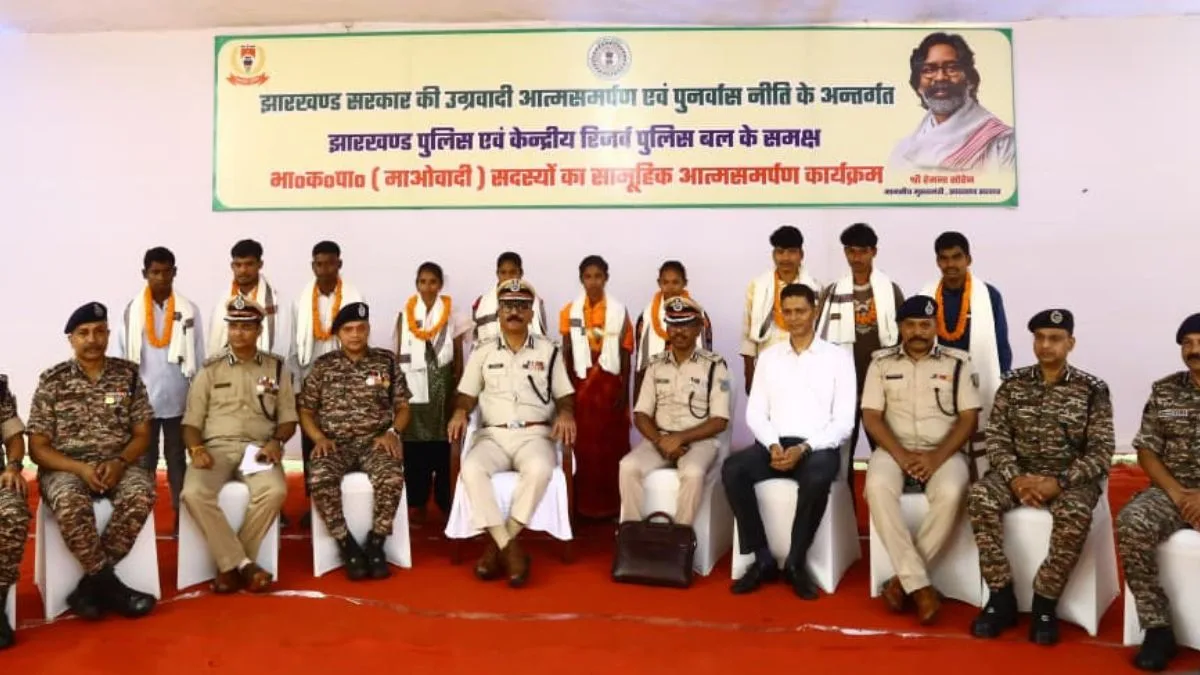
Ten Maoists surrendered in Chaibasa on Thursday at a ceremony organised jointly by the Jharkhand Police and the Central Reserve Police Force (CRPF). The surrender took place under the state government’s surrender and rehabilitation policy in the presence of Director General of Police (DGP) Anurag Gupta and senior officers of Jharkhand Jaguar.
According to a press note issued by the police headquarters, nine squad members and one area committee member of the CPI (Maoist) laid down their arms. Those who surrendered include Rando Boipai, alias Kranti Boipai; Gardi Koda; John, alias Johan Purti; Nirso Sidu, alias Asha; Ghonor Devgam; Gomeya Koda, alias Tarzan; Kaira Koda; Kairi Kayam, alias Gulanchi; Sovitri Gop, alias Muturi, alias Football; and Pradeep Singh Munda.
Advertisement
Police officials said the surrender would deal a blow to Maoist operations in the Kolhan and Saranda regions, where the banned outfit’s Eastern Regional Bureau has been active. Senior Maoist leaders, including Misir Besra; Patiram Manjhi, alias Anal; Asim Mandal; Sushant, alias Anmol; Mehnat, alias Mochhu; Ajay Mahato, alias Budhram; Pintu Lohra; Ashwin; Amit Munda; Saluka Kayam; and Sagen Angaria, have long directed operations in the area.
Security forces have conducted 9,631 operations in Chaibasa since 2022. In the past three years, 175 Maoists have been arrested, 10 killed in encounters, and large quantities of explosives and arms seized. Police data show that since January this year, 32 Maoists have been killed across Jharkhand, while 20 have surrendered in September alone.
DGP Gupta described the development as a sign of weakening Maoist influence. He said that coordinated action by the state police, central forces, and intelligence agencies had created pressure on the rebels, forcing many to abandon the path of violence. He urged remaining cadres to join the mainstream, warning that “those who do not surrender will be neutralised.”
Under the surrender policy, those who give up arms are eligible for rehabilitation support, vocational assistance, and financial aid, subject to legal scrutiny of their past offences. Officials stressed that serious crimes would continue to be prosecuted under due process.