In the heart of Ranchi, as autumn ushers in the festival of Shardiya Navratra, the sound of conch shells mingles with gunfire. For the Gorkha jawans of Jharkhand Armed Police (JAP-1), Navratra is not only a festival of devotion but also a living tradition that binds faith with discipline and culture with courage.
The roots of this Shakti Puja go back nearly a century and a half. In 1880, the Gorkha Brigade began worshipping Goddess Durga with rituals that combined prayer and weaponry. When the unit later became the Bihar Military Police, the tradition endured, and after the formation of Jharkhand in 2000, the newly named Jharkhand Armed Police continued it with the same discipline and reverence. The ritual has become a rare bridge between colonial-era regiments and today’s modern police force.
Advertisement
Over the decades, the puja has grown beyond the barracks to become part of Ranchi’s cultural identity. Locals wait every year to witness the rituals, the disciplined parades, and the unique fusion of devotion and martial spirit. For many residents, this ceremony is not just a regimental affair but a heritage of the city itself.
One of the most striking images is the firing of live rounds in salute to the Goddess. For the jawans, the sound of rifles is not merely a military drill but an offering and a way of invoking divine strength. The firing salute has become the dialogue between devotion and duty, between the soldier’s faith in the divine and his trust in the weapon he carries.
Central to the rituals is shastra puja, the worship of arms on Mahanavami. Weapons are placed before the Goddess, symbolically surrendering tools of war to the Mother of Power. The belief is simple yet profound: that the rifle should never betray its bearer in the battlefield, and that divine blessing ensures precision and protection. In a time when modern warfare is defined by technology, the ritual affirms the spiritual bond between the warrior and his weapon.
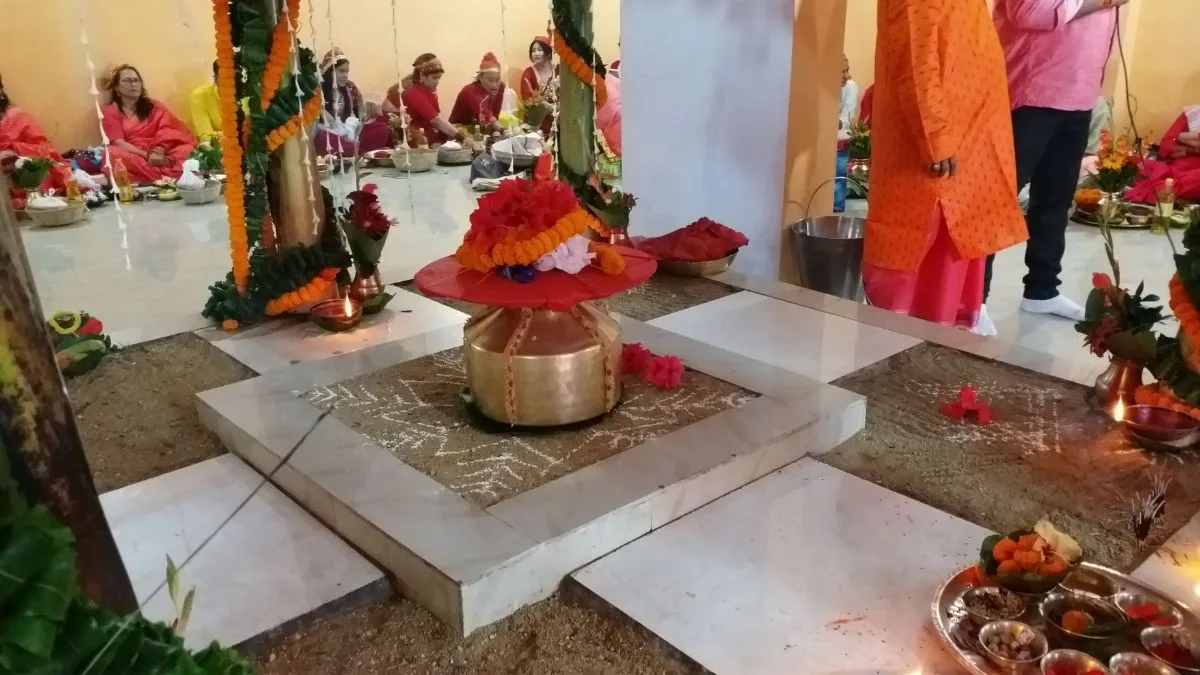
Unlike community pujas where idols are elaborately decorated, here the worship begins with kalash sthapana, the consecration of a sacred urn. Alongside it, rifles gleam under the morning sun. The blending of Goddess worship with the sanctity of arms defines the uniqueness of the Gorkha tradition.
Equally important is the role of women. For nine days, the wives of Gorkha jawans sit in meditative posture, circling the kalash in prayer. Their presence ensures that devotion flows continuously and embodies the idea that strength and sacrifice are not only borne by men in uniform but also by the families that stand beside them.
On Maha Saptami, the rituals extend into nature with the phool paati procession. Nine types of tree branches are gathered and worshipped as part of the Goddess’s presence. Long before environmentalism became a modern concern, this ritual reflected the community’s respect for ecological balance.
Every act of worship circles back to a singular prayer that weapons remain true in moments of crisis. For a Gorkha jawan, accuracy and reliability in combat are not just matters of training but also of divine trust. The offering of rifles before the Goddess becomes a symbolic renewal of that faith.
Over time, uniforms, insignia, and postings have changed, but this puja has offered continuity. The faces may be different, yet the rituals bind today’s force with its predecessors from more than a century ago. It is this continuity that gives the tradition its strength.
The Gorkha jawans of Ranchi have long been the state’s frontline defenders, from anti-naxal operations to VIP security. Locals often say their reliability comes from divine grace. Watching the puja, it is easy to see why many believe that courage, discipline, and devotion together make them the most trusted guardians of Jharkhand.
As JAP-1 Commandant Rakesh Ranjan remarked during this year’s kalash sthapana, “This tradition is not only an expression of faith but also of discipline, valour, and culture.” For Ranchi, the annual sight of Gorkha jawans saluting the Goddess with rifles in hand is more than a ritual. It is a reminder that in faith and firepower, the spirit of Shakti lives on.