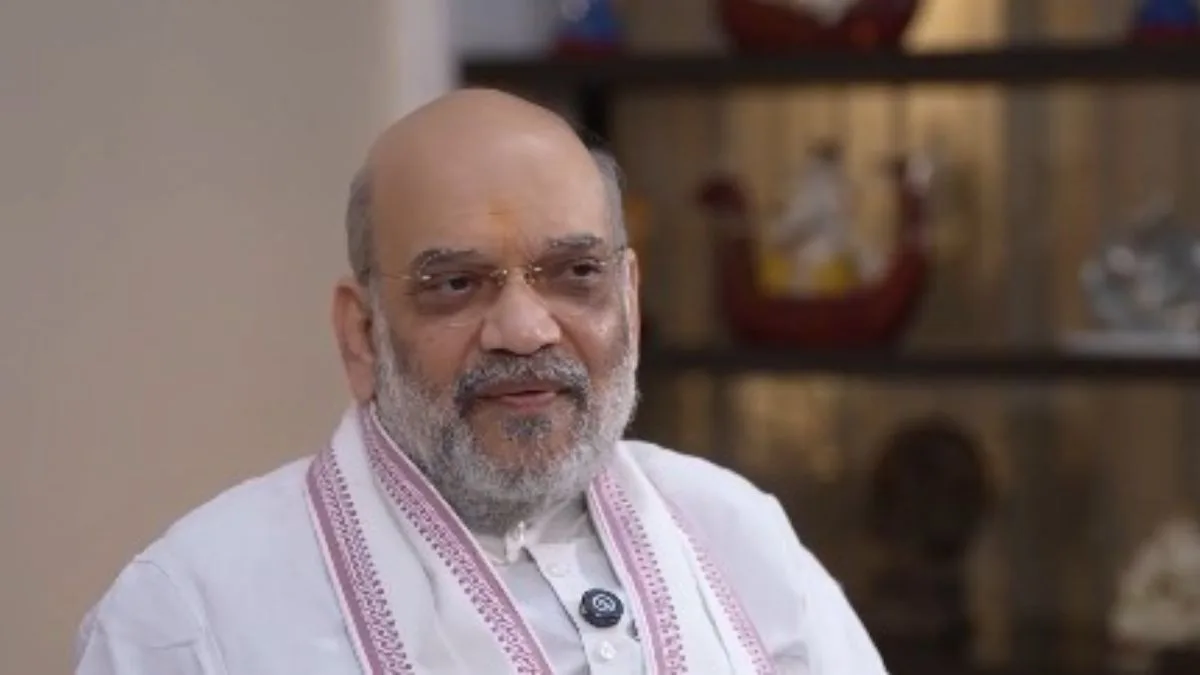
Union Home Minister Amit Shah is to celebrate the upcoming Dussehra festival in Bastar as he has been formally invited to attend the historic Bastar Dussehra festival, one of the longest-running and culturally rich celebrations in India.
Bastar MP Mahesh Kashyap met Shah in the national capital on Friday and extended the invitation on behalf of the Bastar Dussehra Committee and the Manjhi-Chalaki community, that plays a central role in the festival’s traditional proceedings.
Advertisement
During the meeting, the Union Home Minister was presented with a sacred image of Maa Danteshwari, the revered deity of Bastar, symbolising the spiritual essence of the event.
Shah took to X and wrote, “Bastar, now free from the grip of Naxalism and embracing a path of peace, is celebrating its festivals with renewed spirit and joy. I have been honoured with an invitation to attend the 75-day-long Muria Darbar, a central part of the Bastar Dussehra festivities.
“This remarkable event stands as a living testament to the region’s rich tribal culture and heritage. I look forward to being part of this celebration and witnessing the vibrant traditions that define Bastar’s identity.”
Shah has accepted the invitation and is scheduled to visit Bastar on October 4.
His itinerary includes attending the Muria Darbar at Sirhasar Bhavan in Jagdalpur, where he will interact with tribal representatives and review progress on Mission 2026, a central campaign aimed at eliminating Naxalism from the region.
The Bastar Dussehra Committee has also extended an invitation to Prime Minister Narendra Modi, signaling the festival’s growing prominence on the national stage.
The Bastar Dussehra, celebrated in Jagdalpur, Chhattisgarh, spans over 75 days and is deeply rooted in tribal customs and rituals that date back more than 600 years.
Unlike the mainstream Dussehra, which commemorates Lord Rama’s victory over Ravana, Bastar Dussehra is dedicated to the worship of local deities, especially Maa Danteshwari, and serves as a platform for tribal communities to voice their concerns through ceremonial gatherings like the Muria Darbar.