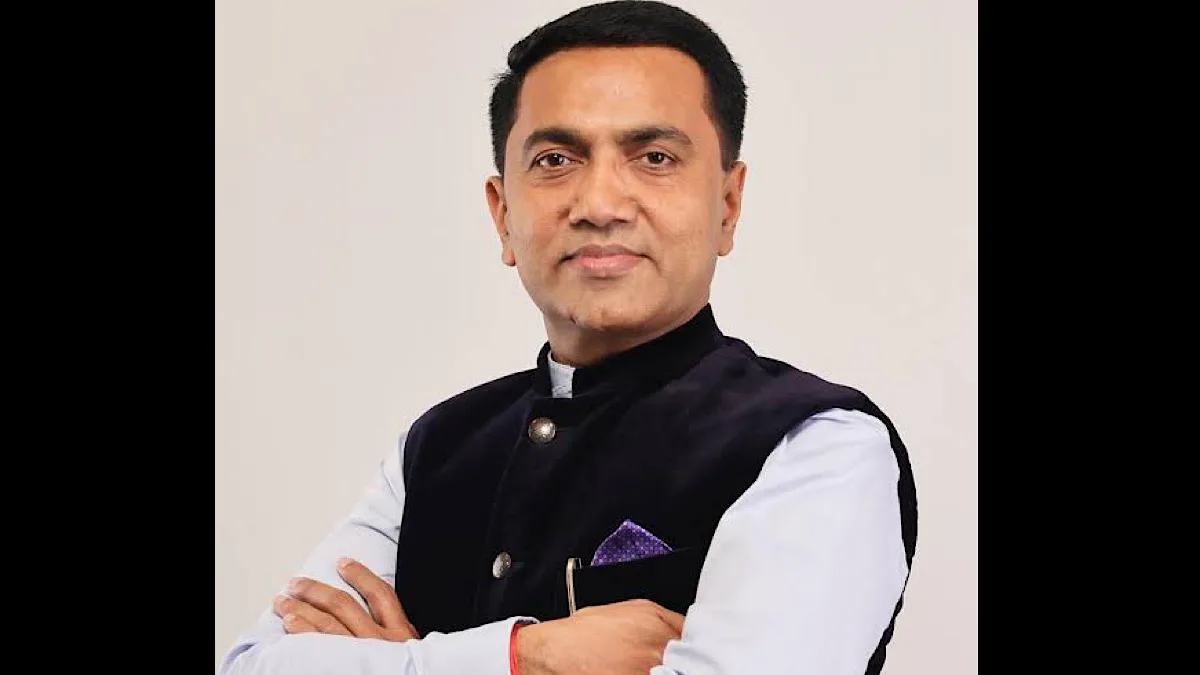
Goa Chief Minister Pramod Pandurang Sawant’s political career began as a BJP booth member as he climbed the steps of his socio-political journey as a dynamic youth leader. He was elected as the Speaker of Goa Legislative Assembly in 2017. After the unfortunate passing of Manohar Parrikar, Sawant was elected Chief Minister of Goa, continuing the state’s legacy of development.
He introduced the flagship campaign of Swayampurna Goa as a catalyst for Goa’s journey towards being self-reliant in every aspect. The campaign focused on a 10-point programme providing basic necessities and the government offered services and schemes to all based on the principle of Antyodaya. In an exclusive interview with Nikhil Vyas of The Statesman, the BJP leader talks about the state’s key development goals for the coming years, housing reforms and tourism sector.
Advertisement
Q: You are the first chief minister of Goa with a continuous term of six years. How has this journey been for you?
A: It has been an incredible journey of responsibility, learning, and transformation. When I took over as Chief Minister in 2019, Goa was already on a developmental path laid by the late Manohar Parrikar ji. Over the past six years, my focus has been on accelerating growth, ensuring political stability, and making governance more efficient and people-centric. With Swayampurna Goa, we have fostered self-reliance across sectors, while infrastructure, education, healthcare, tourism, and digital governance have seen unprecedented progress. Under the visionary leadership of Prime Minister Narendra Modi, Goa has benefited from a strong, progressive roadmap that aligns with the nation’s aspirations, driving rapid development and strengthening our position on the global stage.
Q: What governance reforms have been introduced to make the administration more efficient and transparent?
A: We have leveraged e-governance to streamline administrative processes and enhance citizen services. Goa Online Portal provides access to government services, reducing bureaucratic delays. Our Gramin Mitra initiative brings governance to people’s doorsteps in rural areas. The introduction of Swayampurna Mitras under Swayampurna Goa ensures grassroots development with personalized assistance for citizens. The state government has successfully completed 80 per cent of the 13 flagship programmes of the Centre with 100 per cent saturation, including key initiatives like Har Ghar Jal.
Q: What are Goa’s key development goals for the coming years?
A: Our vision is aligned with Viksit Bharat @2047, and we are focusing on economic resilience, infrastructure development, tourism expansion, environmental sustainability, and digital transformation. We aim to achieve 100 per cent saturation of central and state government schemes, enhance our tourism sector with new experiences like caravan tourism, eco-tourism, and heritage tourism, strengthen education with high-quality technical institutions and skill development programmes, and boost entrepreneurship and start-ups with favourable policies. We are also working towards making Goa a hub for renewable energy and circular economy models while also focusing on strengthening healthcare with modern facilities.
Q: The Mhaje Ghar Yojna is being seen as one of the most transformative housing reforms in Goa. Your comment.
A: Prime Minister Narendra Modi’s vision of Housing for All has inspired Goa to take bold steps in housing reforms. Mhaje Ghar Yojna is a historic step towards giving every Goan family dignity, security, and recognition. For decades, people lived in doubt about their homes whether they were pre-1972 houses, homes on Comunidade lands, or constructions lacking clear permissions. Through landmark amendments this year, we have ensured fast track recognition of pre-1972 homes within 14 days, ownership rights for families residing in houses before 2014, a final opportunity to regularize unauthorized constructions, and clarity for homes on Comunidade lands. We have simplified approvals for repairs and building permits, introduced separate house numbers for nuclear families, made stamp duty more affordable, and strengthened rehabilitation for displaced families. Most importantly, we have guaranteed services within 15 days, ending decades of delays and uncertainty. Over 1 lakh Goan families will benefit from this initiative which not only secures homes, but also empowers people to plan confidently for the future.
Q: How is Goa’s tourism sector evolving? What challenges does it face, and what are the government’s plans to expand and sustain tourism for the future?
A: Goa has established itself as India’s premier tourism destination, attracting millions of visitors annually with its pristine beaches, heritage sites, adventure sports, and cultural experiences. Key projects such as the revitalization of Mayem Lake, heritage conservation of Saptakoteshwar Temple, modernization of Dona Paula Jetty, and the promotion of temple tourism under the Temple Connect MoU are diversifying tourism beyond beaches. Sustainability is a major focus, with initiatives like ecotourism guidelines, plastic-free zones, and renewable energy-powered tourism projects ensuring environmental responsibility. Swayampurna Goa plays a crucial role by promoting local handicrafts, rural home stays, skill training for hospitality jobs, and digital tourism platforms, making tourism more inclusive and locally driven. Looking ahead, the government aims to position Goa as a global tourism hub with plans for luxury cruise tourism, and hosting major international conventions and events to ensure Goa remains a leading, sustainable, and world-class travel destination for the future.
Q: How is infrastructure supporting Goa’s economic growth and investment potential?
A: Over the past 13 years, Goa has witnessed an unprecedented transformation in infrastructure, strengthening connectivity, boosting economic growth, and ensuring sustainable urban development. With landmark projects like Manohar International Airport and Zuari Bridge, an upcoming marine cluster, the state has significantly improved domestic and international accessibility, supporting tourism, trade, and logistics. The Atal Setu has eased traffic congestion between Panaji and North Goa. Beyond road and air transport, the government has prioritized sustainable infrastructure, integrating solar power, rainwater harvesting, and AI-based traffic management into key projects.
Q: Goa has consistently ranked among the top states in India’s Fiscal Health Index, performed exceptionally in the SDG rankings, and achieved 100 per cent saturation in several government schemes. What has driven this success, and what roadmap do you envision for other states to emulate?
A: Ranked among the top states in India’s Fiscal Health Index, Goa has consistently maintained low debt, high revenue generation, and robust economic growth, ensuring a stable and resilient economy. Additionally, our exemplary performance in the Sustainable Development Goals (SDG) Index reflects our commitment to environmental sustainability, social equity, and economic prosperity. Achieving 100 per cent saturation in flagship government schemes such as Jal Jeevan Mission, Pradhan Mantri Gram Sadak Yojana, Pradhan Mantri Kisan Samman Nidhi, Swamitva, Bharat Net, and Soil Health Card – has been possible due to the effective last-mile delivery, digital governance, and grassroots-level engagement. For other states, Goa offers a replicable model of financial discipline, digital governance, and policy driven development. Our focus on technology, ease of doing business, renewable energy, and sustainable tourism is setting benchmarks for states aspiring to achieve fiscal stability and socio-economic progress.
Q: Goa has a thriving start-up culture. How is your government supporting entrepreneurship?
A: Goa is emerging as a preferred destination for entrepreneurs. We have launched the Start-Up Goa Policy, offering financial assistance, incubation support, and co-working spaces to foster innovation, promoted PM Vishwakarma Yojana to support artisans and small businesses and strengthened digital infrastructure and e-governance services to make business operations seamless. We are creating an entrepreneurial ecosystem where innovation, investment, and talent can thrive. The state has also partnered with Tata Technologies to upgrade the state’s Industrial Training Institutes (ITIs). This collaboration involves an investment of Rs 230 crore, with Tata Technologies contributing Rs 160 crore and the Goa government allocating Rs 70 crore over the next two years. The initiative includes establishing Centers of Excellence. This is aimed to equip Goan youth with advanced skills for better employment prospects and entrepreneurship opportunities.