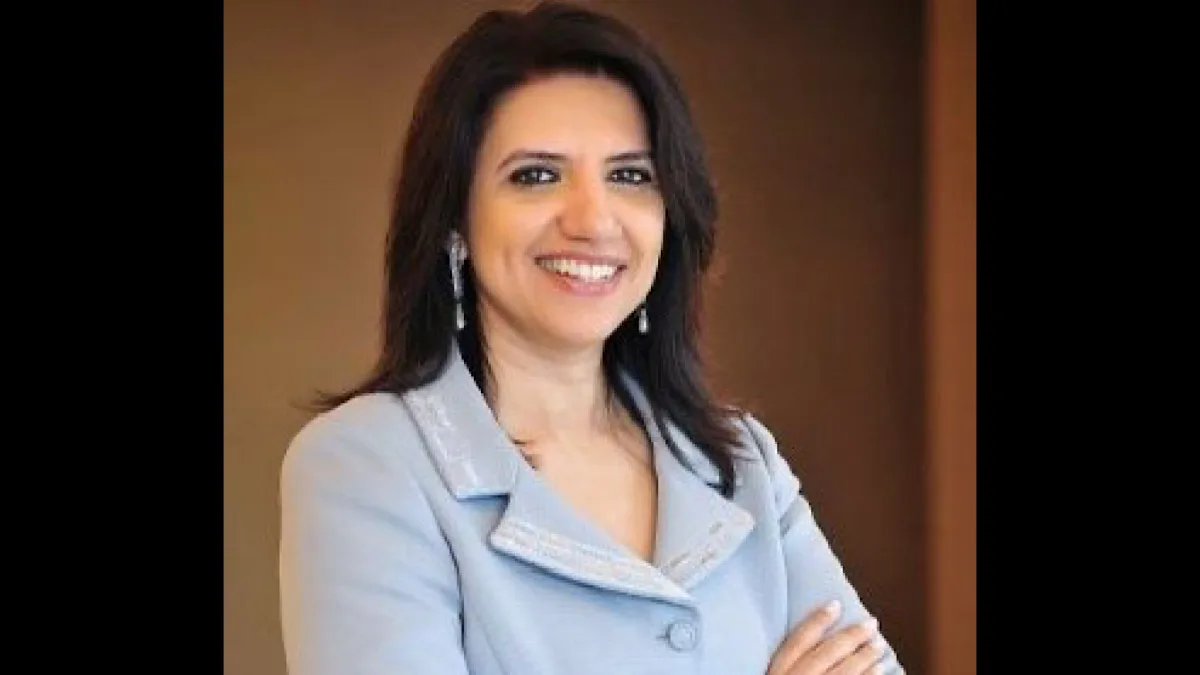
Latika Kundu is a widely acknowledged industry expert in setting up, launching and managing exchanges. She has more than 25 years of experience across leading global multi-asset exchanges and global investment banks – National Stock Exchange of India (NSE), Lehman Brothers, MCX Stock Exchange (now MSE), Singapore Mercantile Exchange (SMX), Macquarie Singapore and S Singapore Diamond Investment Exchange (SDiX). She now serves as the MD and CEO of Metropolitan Stock Exchange (MSE).
In an interview with The Statesman, Kundu throws light on her 30-year-old career and what sets MSE apart from the National Stock Exchange (NSE) and Bombay Stock Exchange (BSE).
Advertisement
Q: What is the Metropolitan Stock Exchange, and what sets it apart?
A: The Metropolitan Stock Exchange (MSE) is the third stock exchange, similar to NSE and BSE. It has licenses across the equity, equity derivatives, currency derivatives and debt segments. Licensed by SEBI, MSE provides a transparent platform for investors to buy and sell financial products, much like other exchanges. What makes us unique is our agility as the youngest player, allowing us to innovate and focus on investor-centric solutions, enhancing access and competition in the market.
Q: With NSE and BSE dominating the market, why is there a need for a third stock exchange?
A: India’s economy is growing rapidly, and as the world’s largest democracy with a young population — averaging under 30 years old — we need robust capital markets to drive wealth creation. Globally, countries and regions have multiple exchanges to de-risk concentration, foster innovation, and lower costs through competition. In India, each state is like a country, with diverse economic needs. A third exchange like MSE ensures diversity, transparency, and more options for investors and companies. Competition drives better services, lower costs, and innovation, ultimately benefiting the end investor. A monopolistic or duopolistic market limits choice, whereas multiple platforms empower investors and support capital formation for India’s growth.
Q: Most companies are listed on BSE or NSE. How does MSE plan to attract larger companies to list on its platform?
A: Attracting companies both established and new, is a key focus. For existing companies, listing on MSE offers their investors one more avenue in terms of trading platform, improving liquidity and access to information. The regulatory framework is the same across exchanges, so there is no additional compliance burden. It is about giving investors seamless access to trade. MSE further aims to simplify listing processes and reduce costs, leveraging competition to make capital raising more efficient. By offering a platform that’s less burdened than larger exchanges, we provide flexibility and choice, ensuring companies and investors benefit from a diversified market.
Q: MSE recently raised Rs 1,000 crore in funding. How will this enhance services and market liquidity?
A: While our services are already operational, what we are looking at is enhancing our infrastructure and expanding the services. Our immediate focus is on the equity cash segment, which provides the foundation for spot prices, followed by the derivatives market in the coming months, boosting liquidity and investor engagement.
Q: Can you share MSE’s journey, its challenges, and your revival strategy? Who are your key investors?
A: We are the youngest exchange, we are proud of that because that keeps us agile. We started in 2008 only with the currency segment and we did very well. Like any organization, we have also faced various challenges – market upheavals and competitive pressures – but these have strengthened our resolve. Since I joined as CEO in 2020, we’ve focused on building a solid foundation, addressing challenges and preparing for growth. Our recent Rs 1,000 crore funding reflects strong confidence in MSE’s potential to become a formidable player. We’re committed to creating a transparent, investor-friendly platform.
Q: You refer to your team as MSEpreneurs. What defines MSE’s work culture?
A: Our culture rests on three pillars: discipline, integrity, and respect. These are non-negotiable. We call our employees MSEpreneurs because they embody an entrepreneurial spirit, driven by the ethos of “MSE first.” This means prioritizing the institution’s goals – building a robust, transparent market – while maintaining integrity and respect in all interactions, internally and externally. Our focus on long-term growth ensures we stay agile and innovative, always keeping the investor at the heart of our mission.
Q: MSE is building a state-of-the-art data center. How will this enhance your technological edge?
A: As a newer player, we have the advantage of building with cutting-edge technology. Our data center is designed with the latest infrastructure – high-capacity racks, robust power systems, and advanced connectivity – to ensure seamless, reliable services for members and market participants. This technological edge will enhance trading efficiency and support our goal of providing a world-class platform for investors. Q: How do capital markets contribute to India’s goal of becoming a USD 5 trillion economy? A: Capital markets are critical for wealth creation and economic growth. Today around 5 per cent of Indians participate in capital markets,compared to much higher rates in developed economies. To reach $5 trillion – and beyond, to $10 or $30 trillion – we need greater inclusion. This requires education to promote responsible investing and trust in the market. India’s young, tech-savvy population, averaging 28–30years old, is poised to drive this transformation. By expanding access to diverse asset classes, and supporting entrepreneurs across tier-2 and tier-3 cities, capital markets can fuel India’s economic growth. Q: Over your 30-year career, what’s the biggest change you’ve seen in financial markets? A: The shift to electronic markets was a game-changer when I started at NSE as a summer intern. It revolutionized price discovery, transparency, and access. Since then, markets have evolved with new asset classes – currency, commodities etc. and regulations making our markets well regulated, responsive and transparent. The focus has always been on reaching the last mile, ensuring fairness, and building trust. There is just so much to do in this space that keeps you going. Q: You’ve been reappointed as MSE’s MD and CEO for another three years. What does this mean to you? A: This role is about continuing my passion for building markets that empower investors. My goal is to elevate MSE to a competitive, formidable player, offering diverse products and asset classes. I want MSE to contribute significantly to India’s financial ecosystem. It’s not just about my term – it’s about laying a foundation for MSE’s long-term success and India’s global financial leadership. Q: As a woman leader in a male-dominated industry, what challenges have you faced? A: Well, I consider myself lucky. Balancing personal and professional life is a universal challenge, but it’s often amplified for women, especially working mothers. Early in my career, societal expectations were different, and juggling between family, children, and work required meticulous planning and inner resolve. I’ve been fortunate to have supportive family, friends, and colleagues, but the guilt of balancing roles is real. I encourage everyone – men and women – to share responsibilities at home and work. It’s about being organized, staying calm, and recognizing that ambition and caregiving aren’t mutually exclusive. Q: What’s the biggest lesson you’ve learned in your 30-year journey? A: The ability to learn, unlearn, and relearn is critical. Markets evolve constantly, and staying adaptable – embracing new technologies,regulations, and products – ensures you remain relevant. This mindset has guided me and my teams for decades. Q: What advice would you give young professionals entering the market space? A: Read extensively and stay updated. Your journey is personal, shaped by your financial situation, family, and goals. Don’t blindly follow others’ advice – do your research or consult certified professionals. Responsible investing requires knowledge and discipline. Be curious, stay informed, and chart your own path. Q: What are your next goals both for MSE and for yourself ? A: For MSE, I envision a transformative journey to become a strong, competitive exchange that delivers value to investors and supports India’s economic ambitions. Personally, I want to see MSE reach its “win” – a defining moment of success. I believe in the power of collective effort and trust that the universe conspires to make great things happen. MSE will be a formidable player, fostering a healthy, inclusive market for all.