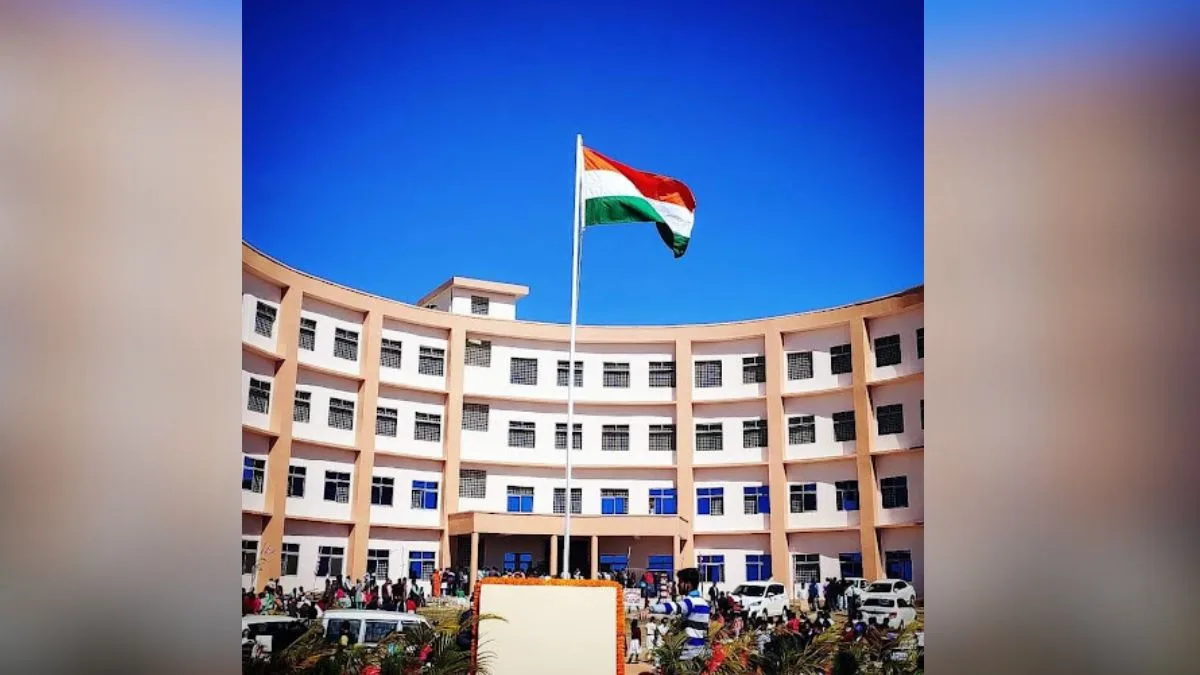
At the Central University of Jharkhand (CUJ), anthropology was not just discussed as a subject but as a living bridge between cultures, communities, and careers. As part of the ongoing Janjatiya Gaurav Varsh celebrations, the Department of Anthropology and Tribal Studies hosted a special lecture on “Careers in Anthropology and Tribal Studies”, bringing together scholars, students, and practitioners to reflect on how the discipline shapes both knowledge and society.
Dr. Rajkishor Mahato, head of the Anthropological Survey of India’s Ranchi field station, as the keynote speaker widened the horizon for young learners by mapping anthropology’s many directions. From policy planning in tribal welfare and grassroots development programs to research roles at global platforms like UNESCO and WHO, he stressed that anthropology today is not confined to the classroom. Forensic applications in law enforcement, cultural heritage management in tourism, and even corporate hiring for consumer studies and UX research show how the field has adapted to new times.
Advertisement
Yet, as Dr. Mahato reminded, anthropology’s strength lies in its methods. Fieldwork, he said, remains its backbone, and tools like observation, interviews, and Emic and Etic approaches make the discipline unique. By urging students to participate in group discussions and collaborative projects, he framed anthropology not as a distant science but as a practice rooted in lived human experience.
Prof. Rabindranath Sarma, dean of the School for the Study of Culture, added a deeper layer by linking anthropology to mythology, ideology, and technology. Myth, he said, is more than an ancient tale. It is a cultural narrative that holds values and collective memory together. Ideology, whether caste, tribal worldview, or nationalism, influence inclusion and identity. Technology, spanning indigenous farming knowledge to digital innovations, both empowers and challenges communities. Together, these strands make anthropology a discipline of connections.
The lecture was not only an academic exercise but also an invitation for students to imagine anthropology as a vibrant career. The presence of faculty members like Prof. Sucheta Sen Chaudhary, Dr. Shamsher Alam, and Dr. M. Ramakrishnan added to the dialogue, sharing experiences of how anthropological knowledge can shape livelihoods, empower marginalized voices, and open opportunities across institutions.
For many students, the session became an eye-opener. In a state where tribal heritage forms the heart of identity, anthropology offered itself as a tool of advocacy, research, and inclusion. It was less about choosing a career and more about embracing a way of seeing, one that studies humans to strengthen humanity.