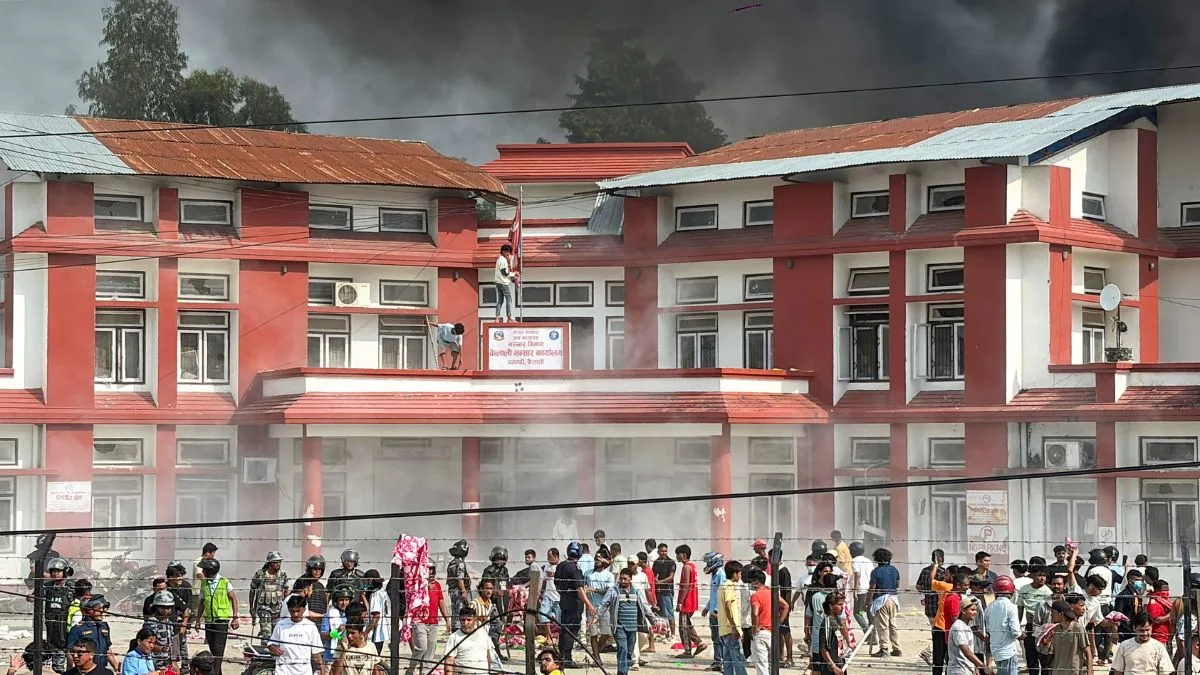
The turmoil in Kathmandu on Monday is more than a story of street protests. It is a reminder of how central digital freedoms have become to the fabric of modern society, and how easily governments misjudge the consequences of curbing them. The decision to block dozens of popular social media platforms triggered a chain reaction that left at least 19 people dead, many injured, and the credibility of the state deeply eroded.
Under mounting pressure, the Nepal government has now lifted the ban, but the reversal comes too late to undo the damage. Nepal’s leaders must recognise that social media is not just a technological novelty; it is a public square and digital access is synonymous with freedom and opportunity. Restricting it without building alternative avenues of expression or ensuring transparency will only inflame grievances. The official justification – regulating online spaces to counter misinformation, hate speech, and fraud – is not unique. Governments around the world are grappling with the same challenges.
Advertisement
Yet the bluntness of Nepal’s approach, abruptly cutting access to platforms used daily by millions, revealed not a policy of protection but one of control. In the digital age, social media is not a luxury. For young people in particular, it is their marketplace, classroom, newsstand, and stage. To disrupt that ecosystem is to attack livelihoods and identities all at once. The protests, led by self-identifying members of Generation Z, were not just about losing access to Instagram or YouTube.
The slogans carried through the streets – “enough is enough” and “end to corruption” – made it clear that discontent runs deeper. The social media ban became a spark, igniting anger over governance, transparency, and accountability. A generation that feels side-lined by traditional politics has found its voice online, and silencing that voice was bound to provoke confrontation. The state’s response has further entrenched the divide. Water cannons, rubber bullets, and curfews convey weakness, not authority.
Deploying the army to the streets of the capital is an admission that dialogue has failed. Instead of easing tensions, these measures have hardened perceptions of an authoritarian drift. Worse still, many citizens have simply turned to VPNs to bypass the ban, undercutting the very rationale for the crackdown. The government is left with blood on its hands and little to show in terms of effective regulation. The lesson here is not that digital spaces should remain lawless. Online platforms do carry risks, and states have a duty to protect citizens from malicious content.
But the method matters. Regulation requires trust, consultation, and proportionality. Heavy-handed decrees, enforced by bullets and batons, destroy that trust. In a fragile democracy, where citizens’ faith in institutions is already tenuous, such measures risk long-term instability. The tragedy in Kathmandu stands as a warning: in the 21st century, the legitimacy of a government rests not on its ability to control information, but on its capacity to engage with an empowered, connected, and impatient generation.