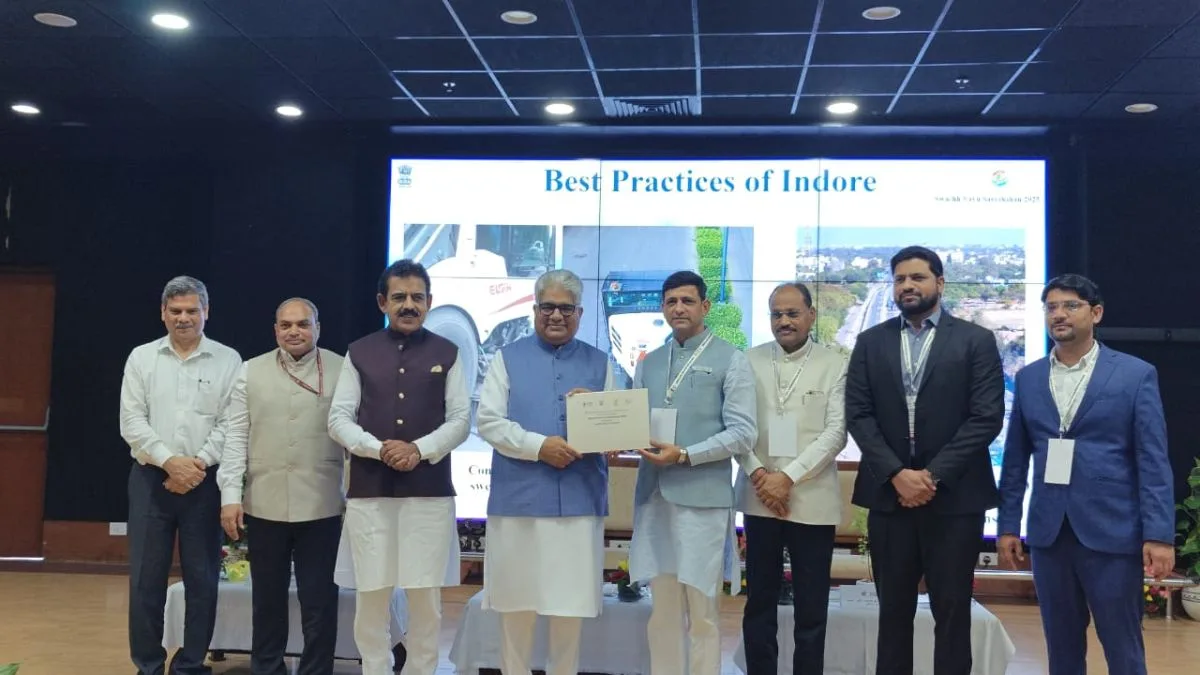
Indore once again topped the list of cities with clean air under the National Clean Air Programme (NCAP), launched by the government in 2019. The 2025 Swachh Vayu Sarvekshan awards, announced in July, were presented in New Delhi on Tuesday by Union Environment Minister Bhupender Yadav.
Among 130 NCAP cities, including those with populations of over 10 lakh, Indore secured the first position for the seventh year in a row. The city planted more than 16 lakh trees last year—an effort that entered the Guinness World Records—and has added nearly 120 electric buses and 150 CNG buses to its public transport fleet, according to an Environment Ministry statement.
Advertisement
The ministry noted that Jabalpur secured the second position with the setting up of an 11 MW waste-to-energy plant, while Agra and Surat shared the third spot. Surat also introduced incentives and tax benefits under its Electric Vehicle (EV) policy to encourage wider EV adoption and improve air quality.
In the category of cities with populations between 3 and 10 lakh, Amravati, Jhansi, Moradabad, and Alwar were among the awardees. Their initiatives included road infrastructure upgrades, large-scale plantation drives, management of demolition waste, and remediation of legacy waste, the ministry said.
Among the first-time winners was Alwar, which received a special congratulatory message from the minister, who represents the Alwar constituency in the Lok Sabha.
During the felicitation ceremony, the minister expressed the progress made through NCAP in the improvement of air quality in PM10 levels in 103 cities out of 130 cities.
Yadav congratulated the 64 cities that have shown 20 per cent reductions in PM10 levels in 2024-25 compared to the levels of 2017-18, and he commended the 25 cities that have achieved the 40 per cent reduction mark by 2024-25, a year earlier than the set target under the programme.