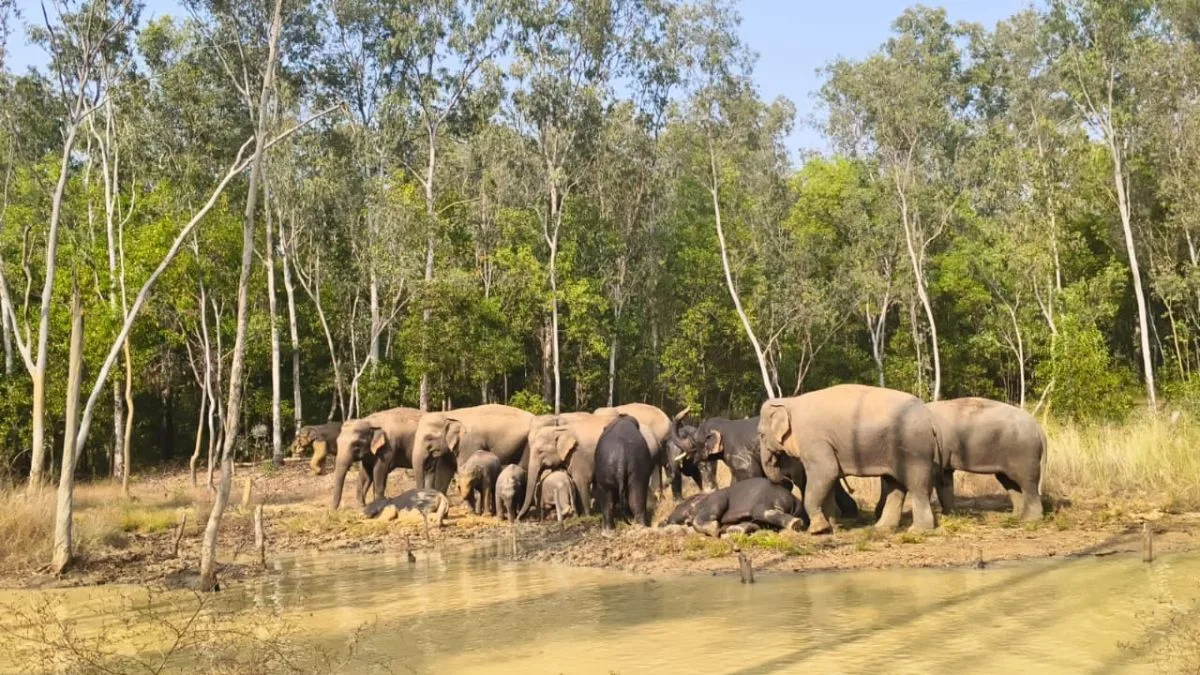
As traditional habitat corridors of elephants bear the maximum brunt of mining, industrialisation, infrastructure projects, and multiple man-made interference, Odisha continues to witness deteriorating human-elephant conflict almost on a daily basis, with disturbing reports of panicky people living in wooden scaffold platforms on treetops trickling in from forest-side villages.
As the sun vanishes from the skyline, alarm bells are virtually sounded for the forest-side villagers with the possibility of elephants striding into their habitation looming large. It’s time to go up to the raised wooden scaffolding on the treetops to escape from the elephants’ fury.
Advertisement
Of the 30 districts, as many as 26 districts are home to elephants, with depredation of these heritage elephants being experienced in major areas, with life, property at stake for people living in villages on the periphery of elephant habitats.
As dusk descends in the forested landscape, it’s high time for the people in the conflict zones to shift to the safety of temporary scaffold structures with ladders to climb up.
The elephant menace is growing alarmingly day by day. Living in kutcha dwelling houses will invite imminent danger for them. Instances of this nature may be few and far. But it brings into sharp focus the intensity of depredation that is being triggered by marauding elephants, laying bare human helplessness to challenge the mighty animals.
Odisha, with a population of 2,098 elephants, has apparently failed to keep intact the habitat zones of pachyderms. The adverse effect of loss of habitat has led the elephants to make their way to villages to trample croplands and attack humans, literally at will. The wild animals wander villages searching for food due to shrinking habitats. The protected parks and wildlife sanctuaries, which confer habitation corridors for the elephants, face the onslaught of massive encroachment from people who live and forage, or graze cattle in the forests. The human interference of this nature is giving rise to frequent man-pachyderm confrontations, said conservationist Biswajit Mohanty.
In 1979, there were 2,044 elephants, mostly confined to rich forested districts like Mayurbhanj, Keonjhar, Sambalpur, Angul, Sundargarh, and Cuttack. Today, after almost five decades, their number is stagnant, though the elephants have scattered to 24 districts. The elephants, originally from neighbouring Jharkhand and West Bengal, are also migrating to Odisha at periodic intervals, compounding the man-elephant conflict.
“It has become a risky proposition to stay in the house after sunset. The rampaging elephants are entering villages and destroying dwelling units at will. So we are climbing atop the tall trees with our families. Wooden frames erected in tree branches have become nocturnal homes, said locals of Banshapala village under Bhuvan & Juanga Pirh (BJP) forest range in Keonjhar district.
With the forest department doing precious little to ensure their lives’ safety, the locals have applied their rustic wisdom to save themselves from being gored to death by jumbos.
If forest officials are to be believed, elephants are attracted by mango trees, vegetable plants, and banana plantations when they stray into the villages. During day hours, the elephants’ movement is confined within the forest, while they stride their way into forest-side villages after sunset, said forest officials.
The skilled service group of elephant chasers and the Global Positioning System (GPS) tracking teams are on the job to ensure the safety of life and property of villagers living along the forest-side areas, added forest officials.