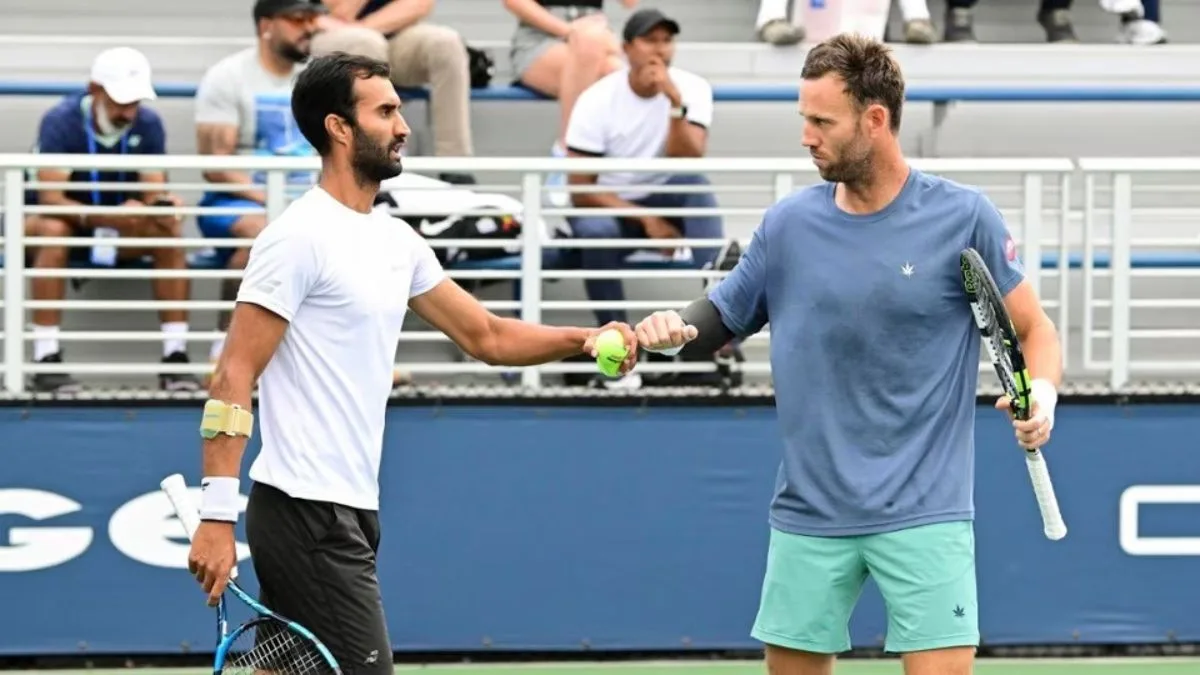
At 31, Yuki Bhambri is scripting a remarkable new chapter in Indian tennis, one that is no longer defined by injuries and setbacks, but by resilience and reinvention. Once hailed as India’s next big singles hope, Bhambri is now back in the spotlight after reaching his maiden Grand Slam semifinal at the 2025 US Open men’s doubles event.
Bhambri first announced himself as a teenager in 2009, when he became Junior World No.1 and captured the Australian Open boys’ title. In 2018, he broke into the Top-100 in ATP singles, raising hopes of an Indian singles breakthrough. But persistent knee injuries halted his progress, forcing him to spend long stretches away from the circuit.
Advertisement
“The physical pain was tough, but mentally, staying motivated when your ranking drops and you can’t compete is even harder,” Bhambri has admitted in the past. For a while, his future in the sport looked uncertain.
The turning point came when the Roundglass Tennis Academy (RGTA) in Chandigarh stepped in, offering him a state-of-the-art training base and the support of his lifelong mentor, Aditya Sachdeva. With an integrated programme, spanning sports science, physiotherapy, nutrition, yoga, mental conditioning and tactical coaching, Bhambri rebuilt his fitness and game.
That environment also shaped his decision to reinvent himself as a doubles specialist, a move that extended his career and opened up new opportunities at the elite level.
The hard work paid off in New York this year, where Bhambri and his partner New Zealand’s Michael Venus stormed into the US Open men’s doubles semifinals, his career-best performance at a Slam. For the Delhi-born player, it was more than a personal milestone; it was redemption after years of uncertainty.
Bhambri’s resurgence has had a ripple effect at home. His journey is already inspiring a younger generation of players training at RGTA, many of whom now see a pathway to international success without needing to relocate abroad full-time.
“Yuki has always had the mindset of a champion. At Roundglass, he found the environment to rebuild himself, and the results speak for themselves,” Sachdeva said.