The Congress on Thursday launched a scathing attack on the government’s ethanol blending policy, accusing it of benefiting select corporate entities; particularly those linked to Union minister Nitin Gadkari’s family.
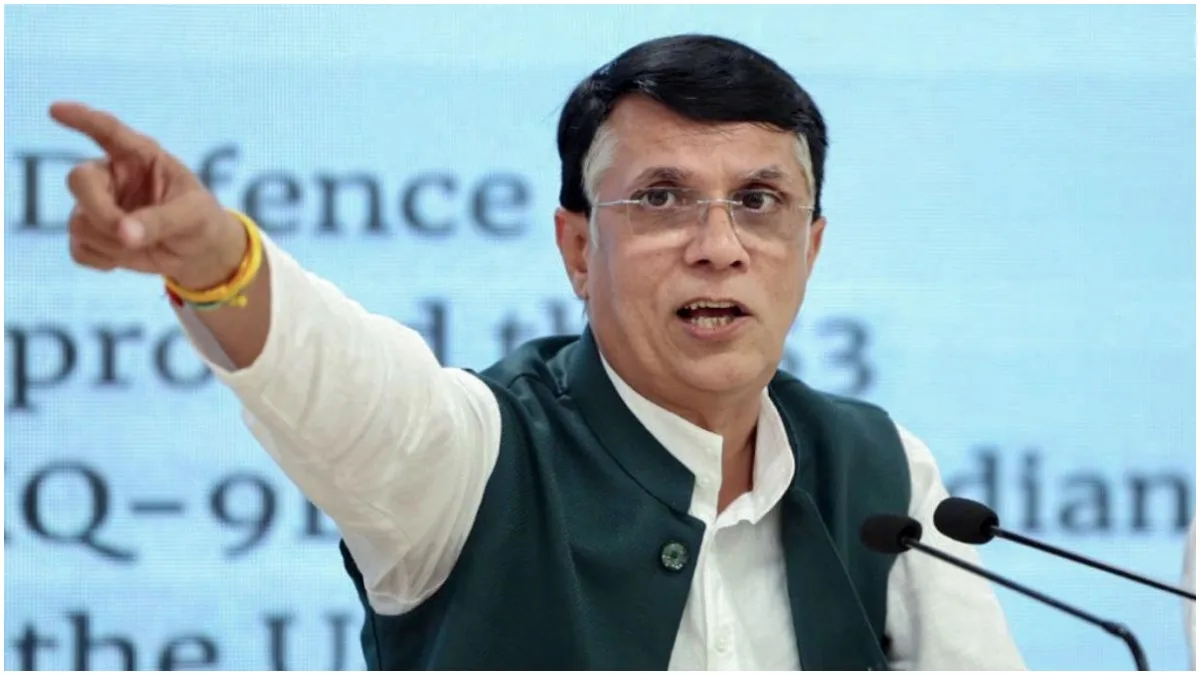
Congress spokesperson Pawan Khera said the policy has led to increased financial burden on common citizens while benefiting a few large corporations.
Advertisement
Making a statement at a press conference, he alleged that Gadkari’s sons, Nikhil and Sarang, are involved in ethanol production companies, including CIAN Agro Industries & Infrastructure Ltd and Manas Agro Industries.
According to reports, CIAN Agro’s revenue skyrocketed from Rs 17 crore to Rs 511 crore in just one year, with profits increasing 100 times during the same period. The company’s stock price surged 2184 percent from Rs37.45 to Rs 638 between January and August 2025.
The Congress party raised several questions regarding the government’s intentions behind the ethanol blending policy, including:
Does the policy benefit Gadkari’s family businesses or serve the public interest?
Why haven’t petrol prices decreased despite achieving 20% ethanol blending, and who is pocketing the profits?
How does the policy affect farmers’ income, particularly when ethanol plants buy grains from government stocks at lower prices?
What are the environmental implications of promoting sugarcane-based ethanol production?
Gadkari, meanwhile, has defended the policy by stating that it is aimed at reducing oil imports, supporting farmers, and promoting cleaner energy. However, critics argue that the policy has led to reduced mileage, higher maintenance costs, and increased financial burden on consumers.
The issue has met with mixed reactions in the political fraternity, with some expressing concerns over the policy’s impact on fuel prices, vehicle performance, and the environment. Others have questioned the government’s motives, alleging crony capitalism and favoritism towards select corporate entities.
Some of the key concerns surrounding the ethanol blending policy include:
Ethanol blending can reduce fuel efficiency by 2-5 percent, varying with car type.
Ethanol blending (E20) is linked to 25 percent reduced engine life and 25 percent higher maintenance costs.
Ethanol distilleries are “red category” polluters, and the government has weakened environmental rules to fast-track the policy.
Ethanol plants are not buying grains from local farmers at Minimum Support Prices (MSP), affecting farmers’ income and putting a strain on national food reserves.
The controversy surrounding the ethanol blending policy has raised several questions with many questioning the government’s motives and the impact on the environment, farmers, and consumers. As the government aims to increase ethanol blending to 30 percent by 2030, it’s expected that sooner the government will address these concerns and ensure that the policy benefits the public interest rather than just select corporate entities.