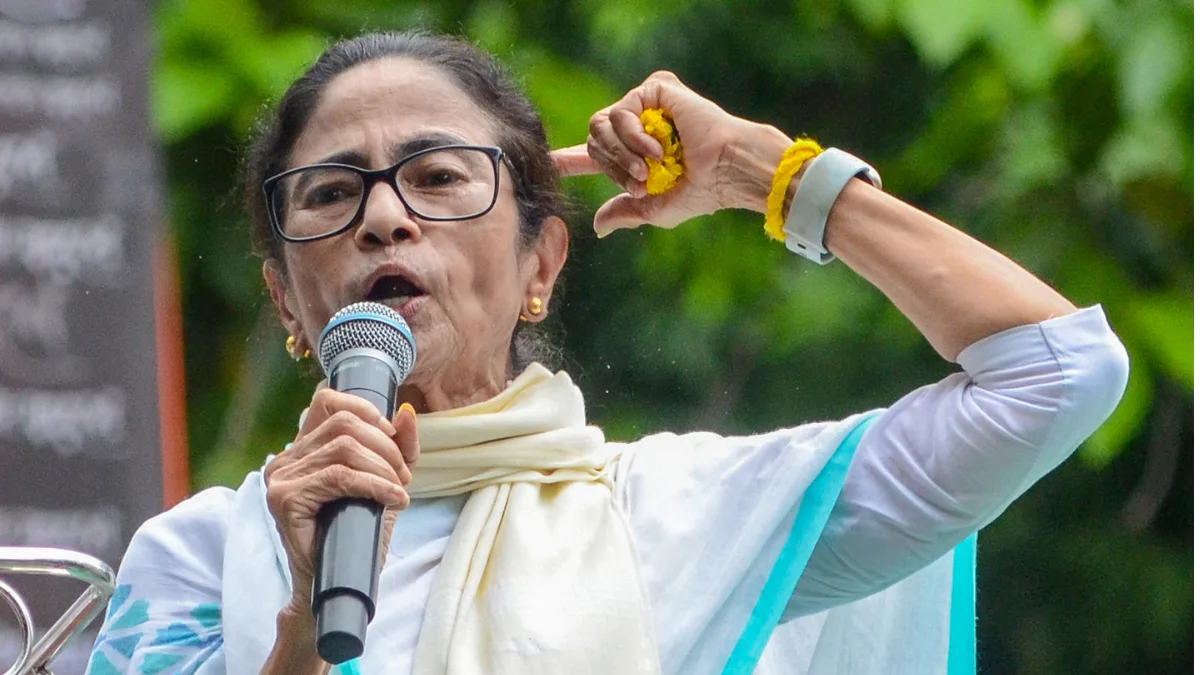
Mamata’s call for anti-BJP unity at Martyr’s Day rally junked by Congress, Left
Bengal BJP president Samik Bhattacharya said Mamata Banerjee should first focus on uniting her own party before attempting to forge an opposition alliance.
India’s sweeping ban on money-based online games has ignited one of the most polarising debates in recent memory, pitting the need for consumer protection against the economic promise of a booming industry.





Photo:IANS
India’s sweeping ban on money-based online games has ignited one of the most polarising debates in recent memory, pitting the need for consumer protection against the economic promise of a booming industry. The government has framed the move as a safeguard against addiction, financial ruin and psychological distress, citing cases of young people pushed into debt and despair by the lure of easy winnings.
For many families, the dangers of unchecked gambling are painfully real, and in that sense the ban reflects a genuine attempt to shield citizens from harm. Yet, the abruptness and breadth of the law raise difficult questions. The prohibition does not differentiate between games of chance and games of skill, despite multiple high court rulings and even a Supreme Court affirmation that fantasy sports and similar formats require talent and decision-making. By treating poker, fantasy cricket and pure gambling alike, the legislation erases a legal distinction that had underpinned the business models of hundreds of start-ups. The fallout has been swift.
Advertisement
Leading platforms valued in the billions have shut down their real-money operations, leaving thousands of employees uncertain about their future. Investors who once saw India as a sunrise sector for gaming innovation are now left nursing losses, while the exchequer stands to forfeit substantial tax revenue. A ban that seeks to protect vulnerable citizens also risks dismantling an industry that had created over 200,000 jobs and was contributing meaningfully to public finances. Critics warn of another danger ~ the migration of players to unregulated and underground channels.
Advertisement
Local bookies and offshore betting sites have long thrived in India, often operating through encrypted messaging groups with no oversight. In the absence of regulated domestic platforms, millions of users may now be pushed towards precisely these riskier avenues. Ironically, this could exacerbate the very problems the government set out to solve, leaving players more exposed than before. What is missing in the current framework is nuance. Other countries facing similar dilemmas have opted for stringent regulation rather than prohibition ~ introducing age checks, spending caps, algorithm audits and mandatory consumer warnings.
A balanced approach would have acknowledged the risks while preserving the benefits of innovation, employment and taxation. The intent to curb harm is laudable, but policy crafted in haste rarely achieves its desired outcome. By closing the door completely, India may find itself with the worst of both worlds: the loss of a promising industry and the rise of an unregulated underground economy. It is not too late for policymakers to revisit this decision and consider a regulatory pathway that protects citizens while fostering responsible growth. The challenge lies in finding that balance. A framework that combines safeguards with accountability could ensure that gaming in India remains an avenue of entertainment and entrepreneurship ~ without turning into a trap of despair.
Advertisement