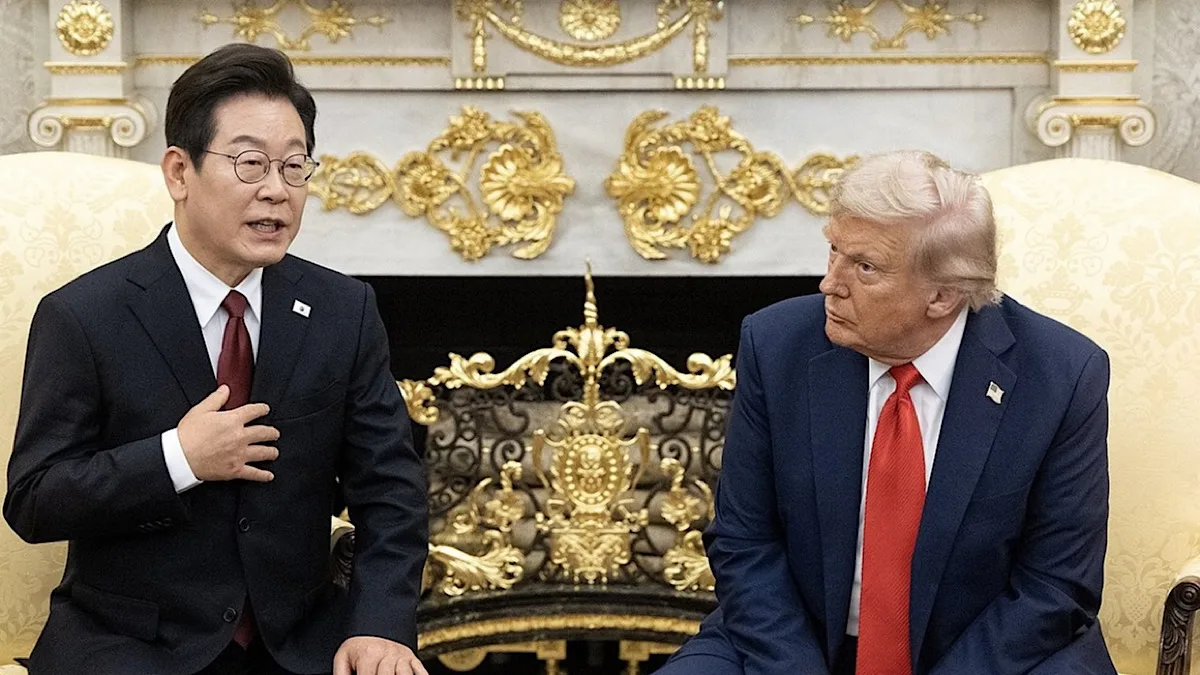
In Washington, South Korean President Lee Jae Myung faced his most delicate foreign policy test yet: navigating a first encounter with US President Donald Trump. The stakes were high. Mr Trump had already cast a shadow over the meeting with a cryptic remark about South Korea’s political turmoil, a statement that raised alarm in Seoul about whether domestic controversies might overshadow critical discussions on trade, defence, and security. Mr Lee, however, understood the moment demanded not confrontation but calculated diplomacy. By turning the meeting into a performance of charm, he managed to avert a damaging clash and left the Oval Office with what he most wanted ~ Mr Trump’s goodwill. The strategy was deliberate.
Mr Trump has long been sceptical of South Korea, frequently criticising its defence spending and trade surplus with the United States. Mr Lee himself is viewed warily in conservative circles, often caricatured as being too close to Beijing and too critical of Washington. Against this backdrop, his advisors had braced for a difficult session. Yet Mr Lee disarmed the US President with a mix of flattery and humour, praising Mr Trump’s rapport with Kim Jong Un and even joking about golf and skyscrapers in North Korea. By framing Mr Trump as the indispensable “peacemaker,” Mr Lee deftly appealed to his ego while advancing his own interest in opening dialogue with Pyongyang. This emphasis on North Korea was no accident.
Advertisement
For Mr Lee, restarting talks across the peninsula is central to his foreign policy, but he knows that Mr Trump – who has met Kim three times and still speaks fondly of their relationship – retains a unique influence. By encouraging Mr Trump to assume the role of mediator, Mr Lee positioned himself as a willing partner while sidestepping the uncomfortable reality that neither Washington nor Seoul has been able to coax Pyongyang back to serious negotiations. Yet, the carefully staged harmony came at a cost. Contentious issues ~ tariffs, defence burden-sharing, and the future of US troops in South Korea ~ were left largely unaddressed. Instead, the optics were filled with South Korea’s headline investment pledges and promises of new aircraft purchases, symbols that fed Mr Trump’s narrative of a “fair deal” without resolving structural disagreements. Mr Lee’s calculation was pragmatic.
In an era when international diplomacy is as much about personalities as policies, he ensured that South Korea avoided a humiliating clash. The lesson here is that diplomacy sometimes requires restraint, even fawning, to safeguard national interests. But the deeper challenges remain unresolved. North Korea shows no sign of relinquishing its nuclear programme. Trade disputes could resurface. And Mr Trump’s unpredictability means today’s goodwill may vanish tomorrow. For now, Mr Lee has bought time and preserved space for quieter negotiations. But South Korea’s real test lies ahead: converting the optics of Oval Office charm into durable policy gains on security and trade. Until then, the diplomacy of flattery may be all that stands between Seoul and renewed confrontation.