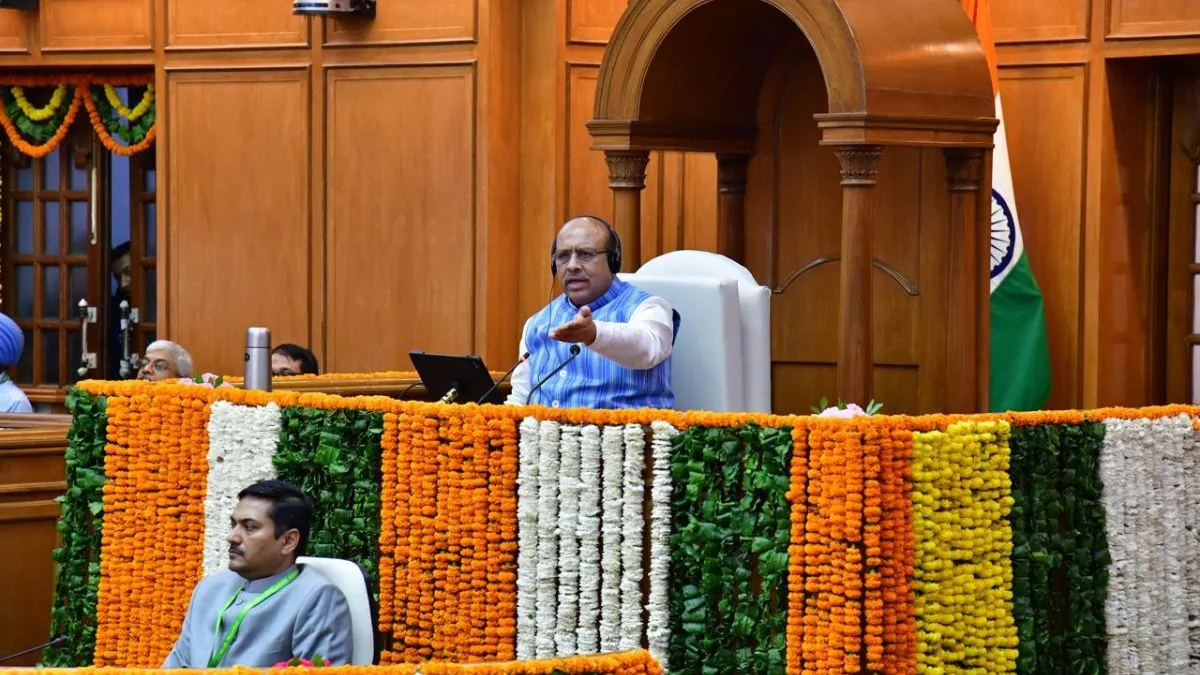
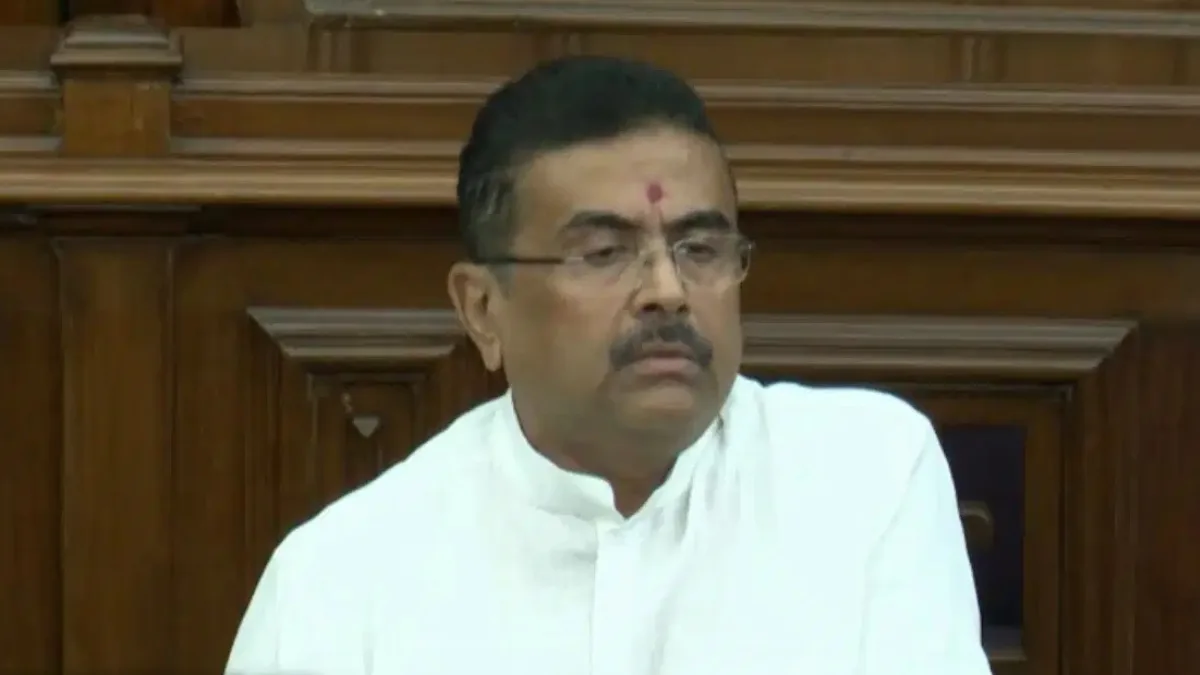
Delhi Assembly Speaker Vijender Gupta on Wednesday denied the existence of a ‘fansi ghar’ (gallows room) on the Assembly premises, accusing the Aam Aadmi Party (AAP) of distorting history.
“There is no history of any such space. There was never an execution room here,” Gupta said during a guided tour for the media, aimed at clarifying what he called a misrepresentation of facts.
Advertisement
During the media briefing, Gupta recounted the 115-year history of the Delhi Legislative Assembly.
Gupta noted that the original architectural drawings are preserved in the National Archives of India. He added that these maps contain no reference to any gallows; instead, they mark the spaces in question as two tiffin rooms, located on either side of the Speaker’s chamber. These service rooms, he emphasized, have been wrongly portrayed as a “gallows house,” a claim he said has no basis in historical records.
Calling it a case of misrepresenting India’s political history, Delhi Assembly Speaker Vijender Gupta on Wednesday invoked Rule 271 to revisit the discussion on the so-called ‘faansi ghar’ (gallows room) raised in the House a day earlier. He sought a formal response from Aam Aadmi Party (AAP) leaders regarding the authenticity of claims linked to the Assembly premises.
Responding on behalf of the AAP, Burari MLA Sanjeev Jha acknowledged that historical records often contain gaps and that historians themselves differ on several facts.
He said that while examining space for constructing chambers for different committee chairpersons in the current assembly, officials had discovered a tunnel and three rooms containing items such as footwear, ropes, and marbles.
“These objects were allegedly used by the British to verify whether a person had actually died after being hanged,” Jha claimed, citing the reference given to such marbles in the book written by Bhai Harbans Singh, who wrote the biography of Shaheed Bhagat Singh.
Jha urged the Speaker to send the recovered artifacts to the Archaeological Survey of India (ASI) for authentication. “The Speaker should order an investigation and have these items examined by ASI,” he said.