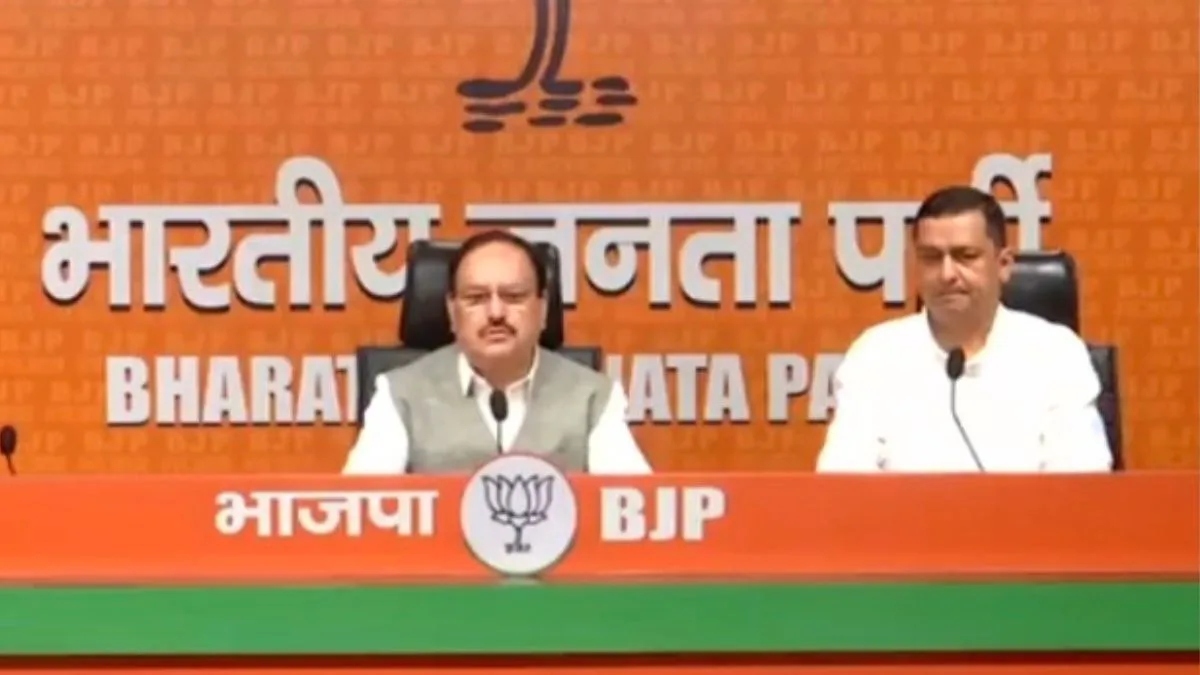
Senior tribal leader and former union minister Arvind Netam launched a scathing critique of both Central and State governments on Tuesday, accusing mainstream political parties of systematically ignoring the concerns of India’s tribal communities. Speaking at a press conference in Jagdalpur, Netam said that while several social groups receive policy attention and media coverage, the Adivasi voice is often left unheard. “From Parliament to the streets, selective advocacy dominates the national narrative, while genuine tribal issues are sidelined,” he stated.
Expressing concern over alleged organised religious conversions in Bastar and Abujhmad, Netam claimed that certain Christian missionary groups were misusing foreign funding to carry out conversions under the pretext of welfare services. “These activities are disrupting the cultural and spiritual fabric of tribal society,” he warned.
Advertisement
Highlighting the role of civil society, Netam remarked, “The Rashtriya Swayamsevak Sangh (RSS) is the only organisation consistently working against forced conversions in tribal regions.” He recounted his recent participation as chief guest at an RSS event in Nagpur, where he raised the issue of conversions and sought cooperation from RSS chief Mohan Bhagwat to protect tribal identity and traditions in Bastar.
He also raised serious concerns about the Supreme Court’s recent verdict granting daughters equal rights in ancestral property. Netam argued that such decisions, if applied uniformly without consideration of tribal customary laws and landholding patterns, could lead to social unrest. “Our traditions, clan based land systems, and religious customs must be understood before imposing changes through court rulings,” he cautioned.
Calling for greater transparency in tribal welfare spending and scrutiny of foreign missionary funding, Netam questioned, “Are government schemes so ineffective that our people must rely on outside help?” He urged both the judiciary and policy makers to ensure that tribal laws, culture, and religious practices are respected while framing decisions, warning that failure to do so may lead to alienation and legal disputes.