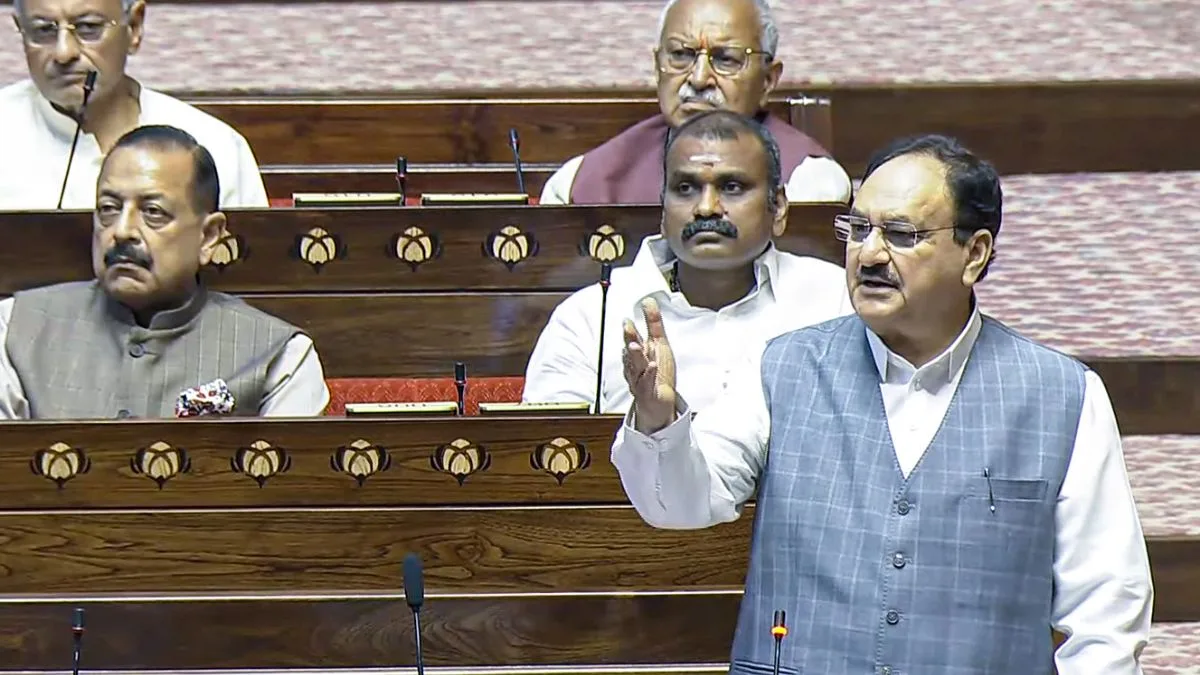
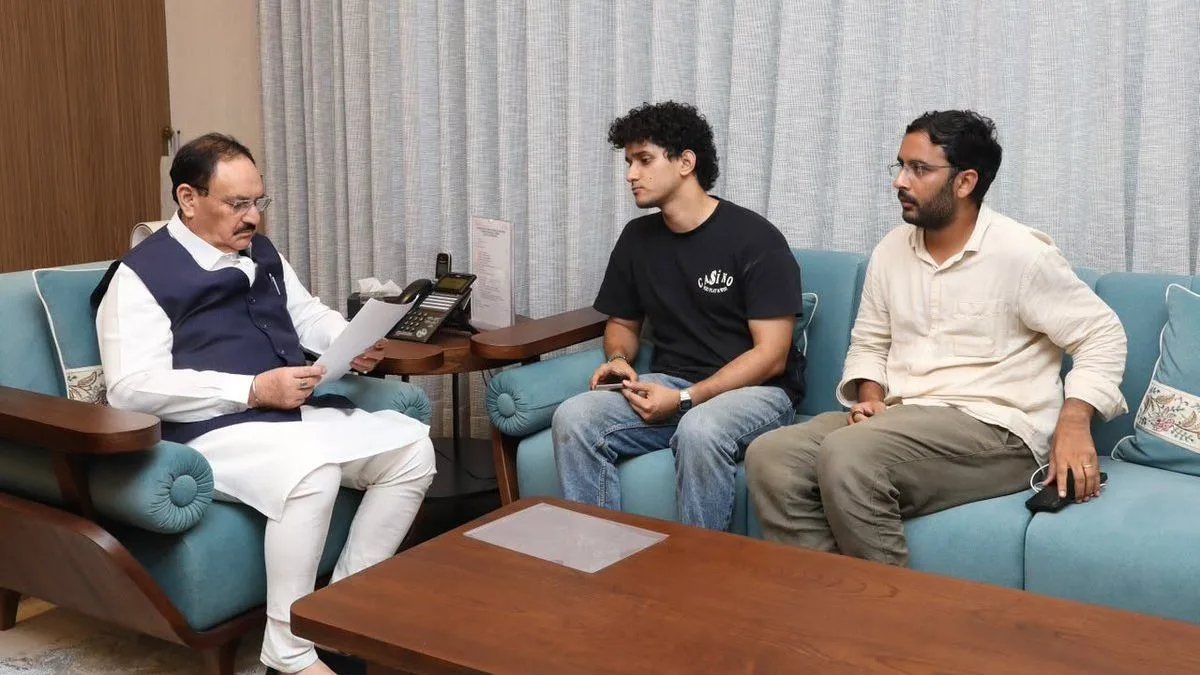
Accusing the previous Congress-led UPA governments of not taking any action despite repeated terror attacks during their term, Leader of the House in the Rajya Sabha, J P Nadda on Wednesday said those questioning the April 22 Pahalgam terror attack should first reflect on how they dealt with terrorism.
Speaking during a special discussion in the Rajya Sabha on India’s strong, successful and decisive ‘Operation Sindoor’ in response to terrorist attack in Pahalgam, Nadda hit out at the UPA governments, saying that no stern steps were taken after major terror attacks like the 2005 Delhi blasts, the 2006 Varanasi and Mumbai train bombings, adding that despite these incidents, trade and tourism with Pakistan continued.
Advertisement
“…The then government took no action in 2005 Delhi Serial bomb blasts, 2006 Varanasi terror attack, 2006 Mumbai local trains bomb blasts….the point is – terror and trade and tourism continued between India and Pakistan then,” Leader of the House in the Rajya Sabha said.
“On July 28, 2005, Harkat-ul-Jihad al-Islami bombed the Shramjeevi Express — 14 were killed, 62 injured. No action was taken. The Delhi serial blasts killed 67 and injured over 200. No action was taken. In March 2006, Harkat-ul-Jihad targeted Varanasi’s Sankat Mochan Temple and railway station — 28 dead, 101 injured. No action was taken,” the BJP MP said.
“Those questioning Pahalgam should first reflect on how they dealt with terrorism,” the Leader of the House in the Rajya Sabha J P Nadda said.
“Today, terrorism in Jammu and Kashmir is no longer local — it’s entirely foreign-sponsored. And the life of a terrorist now averages just 7 days. This is the result of the Modi Government’s zero tolerance policy against terror. Mallikarjun Kharge was asking, “What happened to the terrorists of Pahalgam?” Let me tell him — With Operation Mahadev, they’ve been buried deep,” Nadda said.
“For the first time after 1947, a PM publicly declared that the culprits of the Uri terror attack would not be spared. And within three days, surgical strikes were carried out — destroying terrorist launchpads across the border. No PM since Independence has responded like this. This is the political will of Prime Minister Narendra Modi,” he said.
Nadda hailed the armed forces and security personnel, crediting Prime Minister Narendra Modi’s “decisive leadership” for transforming India’s response to terror.
“Between 2004 and 2014, India saw a non-reactive and indecisive government that responded to terror attacks with dossiers, not deterrence,” Nadda said, citing a series of high-casualty attacks during the UPA regime – including the 2005 Delhi bombings, 2006 Mumbai train blasts, 2008 Jaipur and Ahmedabad attacks, and the 26/11 Mumbai attacks.
He said during this phase, despite repeated terror strikes claimed by Pakistan-based outfits like Lashkar-e-Toiba, Harkat-ul-Jihad-al-Islami, and Indian Mujahideen, the then government continued confidence-building measures with Pakistan – opening trade routes, increasing flights, and resuming dialogue.
“They served biryani while bullets came from across the border,” Nadda said.
He said the country witnessed 7,217 incidents in 2004-2014, while under PM Modi, the terror incidents declined to 2,150 (2015–2025). In civilian deaths, under UPA, the country witnessed the deaths of 1,060 civilians as compared to 542 (under the Modi government) – a reduction of 49 per cent.
Referring to the recent Pahalgam attack, the BJP MP said Operation Sindoor stands as a testament to India’s new doctrine. “We went 300 km inside Pakistan, destroyed major terror infrastructure of Jaish, LeT, Hizbul – and not a single Indian civilian was harmed. Under the UPA, talks and terror ran parallel.”
“Under PM Modi, ‘terror and talks cannot go together’ became the doctrine,” Nadda said, citing steps like suspension of the SAARC Visa Exemption Scheme for Pakistani nationals, suspension of the Indus Water Treaty, closure of trade and aggressive global diplomacy.