Jharkhand horror: Father allegedly hacks three minor daughters to death in Giridih
Police are investigating the motive behind the deaths of three sisters in Giridih after their father was arrested. A forensic team has joined the probe.
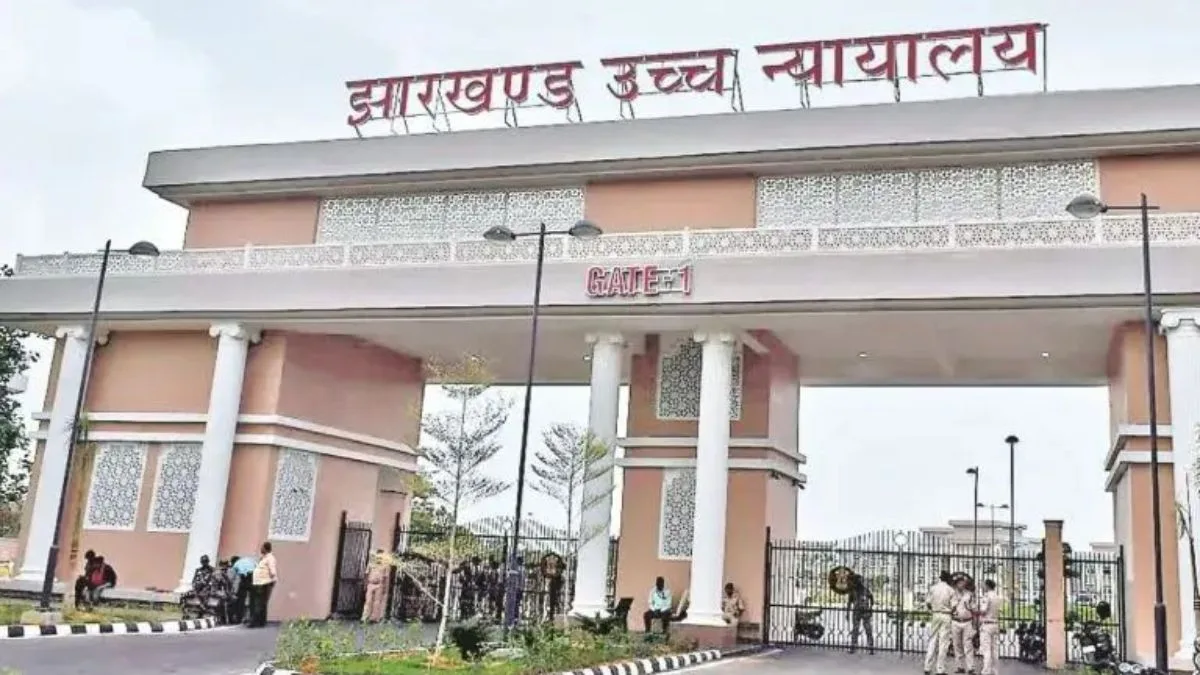
In a landmark verdict with far-reaching social consequences, the Jharkhand High Court has quashed a decade-old government order that had denied recognition to several project schools—mostly girls’ high schools—across Jharkhand’s most backward and tribal districts.




File Photo
In a landmark verdict with far-reaching social consequences, the Jharkhand High Court has quashed a decade-old government order that had denied recognition to several project schools—mostly girls’ high schools—across Jharkhand’s most backward and tribal districts. The court found the 2010 rejection order “non-speaking” and violative of natural justice, directing the government to reconsider each case afresh within six months.
These schools, opened under the Bihar government’s 1981 Project School Scheme, were part of a planned expansion in underserved blocks, especially in tribal regions such as Santhal Pargana, Palamu, Latehar, Giridih, Dumka, and Godda. While the earlier phases of the scheme — 1981–82 and 1984–85 — were officially recognised, the third phase launched in 1988–89 remained in bureaucratic limbo, despite the schools functioning continuously and enrolling students for decades.
Advertisement
The High Court observed that these schools fulfilled an undeniable educational need in disadvantaged areas, and that refusal of recognition amounted to a denial of fundamental rights. “When educational need in an area is found as a matter of fact, the government cannot deny that fundamental right on the ground of policy gaps,” the court stated, invoking Articles 21-A and 46 of the Constitution.
Advertisement
What adds urgency to the matter is that most of these schools were for girls and located in tribal-dominated belts where formal education opportunities are scarce.
Many had lands donated by the local community in the name of the Governor and had been conducting matriculation exams through the Jharkhand Academic Council (JAC) under interim court directions. Students had continued to pass out year after year, without the schools themselves being formally acknowledged. This dissonance between practice and paperwork lay at the heart of the petitions filed before the court.
The court noted that the denial order passed in 2010 by the Director of Secondary Education lacked clarity, reasoning, and evidence. It referenced Supreme Court rulings that stress on active application of mind and principles of natural justice while rejecting or accepting administrative claims.
In particular, judgments such as LIC vs A. Masilamani and Kranti Associates vs Masood Khan were cited to underline how decisions must show a reasoned process and cannot simply rest on procedural assertions. The petitioners’ advocates had argued that the rejection relied on a narrow interpretation of old letters and did not take into account the legal and administrative evolution post-bifurcation.
They submitted that earlier recognitions, school listings from the JAC itself, and community-supported infrastructure were evidence enough of the legitimacy of these institutions.
While the JAC maintained that it did not have recognition papers for these schools, it confirmed that examinations had been conducted under the court’s interim orders and that enrollment figures, even if irregular, demonstrated ongoing activity. Some schools showed lower enrollment in junior classes but disproportionately high Class IX and X numbers, which raised eyebrows but also signalled the practical need for senior education facilities in the absence of alternatives.
The state, in its defence, argued that the scheme was intended to close in two phases, ending in 1985, and that no provision existed for schools launched later. It claimed the petitioners’ schools never formally applied to the Supreme Court-mandated three-member committee set up earlier for recognition review. The High Court, however, rejected these contentions, stating that the state could not deny recognition where its documents and policies show implicit acknowledgment. It also reminded the government of its obligation under Article 46 to protect and promote education in tribal and backward areas.
The verdict not only restores the petitioners’ right to be heard but also reopens a crucial debate on the state’s educational policy in neglected regions. The court has now directed the Director of Secondary Education to hear each school’s case separately, examine their documents afresh, and issue reasoned decisions within six months. Until that process is completed, the JAC has been directed to continue conducting examinations under existing arrangements.
The order marks a potential turning point for grassroots education in Jharkhand’s most neglected areas. For the thousands of tribal and rural girls studying in these schools, it is more than just a legal correction. It is an affirmation of their right to learn, to grow, and to be seen—not as statistical footnotes in a lost policy file, but as citizens with a rightful place in the republic’s promise.
Advertisement