President Murmu to embark on three-nation visit on Sunday
President Murmu will visit Moldova on 20 July at the invitation of the President of Moldova Maia Sandu. This is the first ever visit by an Indian President to Moldova.
The President said this while addressing a gathering after presenting Swachh Survekshan awards at a function organized in the national capital.




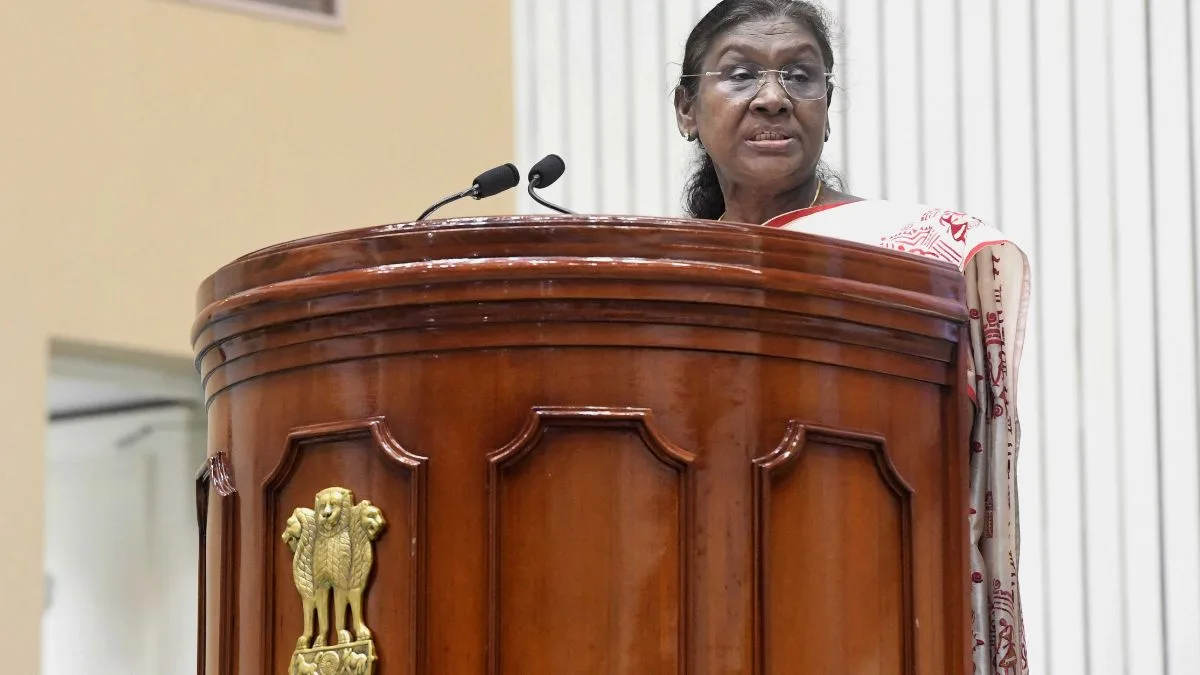
Photo: IANS
Terming pollution caused by plastic and electronic waste as a big environmental challenge for India, President Droupadi Murmu on Thursday expressed hope that with proper efforts, the country would be able to reduce its plastic emissions significantly.
The President said this while addressing a gathering after presenting Swachh Survekshan awards at a function organized in the national capital.
Advertisement
The central government banned some items containing single-use plastic in the year 2022. In the same year, the government issued guidelines for Extended Producer Responsibility for plastic packaging. It is the responsibility of all stakeholders, including producers, brand owners, and importers, to ensure that these guidelines are fully followed.
Advertisement
Swachh Survekshan has proven to be a successful experiment in assessing and encouraging the efforts made by our cities towards cleanliness, she, according to an official release, added.
President Murmu was also pleased to note that the world’s largest cleanliness survey was conducted by the Ministry of Housing and Urban Affairs for the year 2024, with participation from various stakeholders, state governments, urban bodies, and approximately 14 crore citizens.
She said that our cultural and spiritual consciousness has emphasized cleanliness since ancient times. The tradition of keeping our homes, places of worship, and the surroundings clean was an integral part of our lifestyle. Father of the Nation Mahatma Gandhi used to say, “Cleanliness is next to godliness”.
He, she said, considered cleanliness as the cornerstone of religion, spirituality, and civic life.
The President said that she had started her journey of public service with work related to cleanliness. As the Vice President of the Notified Area Council, she used to visit wards every day and supervise the cleanliness work.
Minimizing wastage by using minimum resources and re-using them for same purpose or other purpose, has always been the part of our lifestyle. The basic principles of circular economy and systems of reduce-reuse-recycle are modern and widespread forms of our ancient lifestyle, she added.
For example, the traditional lifestyle of tribal communities is simple. They use less resources and stay in harmony with the weather and environment, and in partnership with other community members. They do not waste natural resources. The modern systems of circularity could be strengthened by adopting such behaviour and traditions, the President observed.
Talking about waste management, she said that the first and most important step in the waste management value chain is source segregation.
All stakeholders and every household need to pay utmost attention to this step. Zero-waste colonies are setting good examples, she underlined.
Also, the President appreciated the School Level Assessment initiative, started with the objective that students adopt cleanliness as a life value.
It would have very beneficial and far-reaching results, she emphasized. The President said that efforts related to cleanliness have economic aspects, cultural dimensions, and geographical aspects.
Advertisement