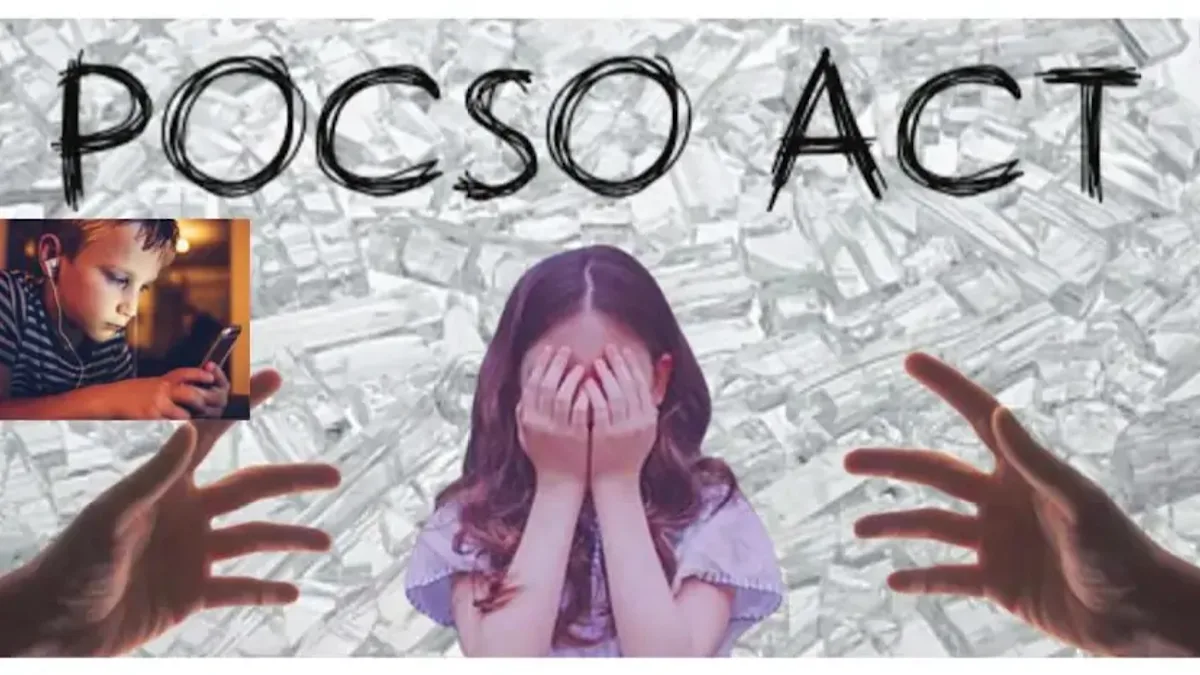
India prohibits Child Sexual Abuse Material (CSAM) under strong laws like the Protection of Children from Sexual Offences (POCSO) Act, yet ignores the alarming issue of children accessing adult pornography and being exposed to it at a very young age ~ a serious legal and moral gap. The US Supreme Court, on June 27, up held a Texas law aimed at blocking children from seeing online por n ography. The court’s 6-3 majority opinion held that the law “advances the state’s important interest in shielding children from sexually explicit content.”
Adults watching adult pornography is a personal choice and may not be illegal. A child watching adult pornography is entirely different ~ distressing and unnecessary. Yet, in India today, children of all ages under 18 can easily watch adult content ~ usually through smartphones owned by them or their parents. Children and adolescents now have more access to pornography than any generation in history. They are growing up in a digital environment where sexually explicit content is often just one click away, unfiltered and unmonitored.
Advertisement
Early exposure to pornography impacts not just their understanding of relationships and sexuality, but also their mental health, behaviour, and longterm development. UNICEF has cautioned that early exposure to pornography can lead to poor mental health, increased sexism and objectification, sexual violence, and other adverse outcomes. “Unprotected From Porn” (Carroll et al., 2025), published by the Wheatley Institute and the Institute for Family Studies, found that over 97 per cent of boys and 78 per cent of girls aged 12–18 have viewed pornography, mostly repeatedly and “existing research confirms that most pornography harms most children most of the time”. In India, adult pornography is not legally banned. This permissiveness, obviously meant for adults, is inadvertently harming children. CSAM is rightly criminalised under the POCSO Act, but adult content is freely available and easily accessible ~ without any age checks or safeguards. As the European Commission has pointed out, current “click-away” popups ~ where users merely self-declare they are over 18 ~ are ineffective and unacceptable. It facilitates objectification, promotes unrealistic sexual expectations, and damages their ability to form healthy, respectful relationships.
Protecting the best interests of the child is the foundational standard in child protection law and policy worldwide. The states are already intervening, just as they do for alcohol, tobacco, and gambling to restrict children’s access to adult content. Texas enacted H. B. 1181 in 2023, requiring pornographic websites to verify that their users are adults to address their concern that the internet makes too accessible to minors “hardcore pornographic content and videos,” many of which depict “sexual violence, incest, physical aggression, sexual assault, non-consent, and teens,” as such pornography is “addictive,” has harmful “developmental effects on the brain,” and leads to “risky sexual behaviors.”
The US Supreme Court’s June 27 judgement upheld this law. Violators are subject to a civil penalty of up to $10,000 per day that the website is noncompliant, as well as an additional penalty of up to $250,000 if any minors access covered sexual material as a result of the violation. Texas argues that technology has improved significantly in the last 20 years, allowing online platforms to easily check users’ ages with a quick picture. At least 21 other States have enacted similar legislation. The European Commission is currently investigating some major pornography platforms under the Digital Services Act, citing their lack of “appropriate” age verification methods.
The Commission has also launched ‘public consultations to formulate guidelines for the protection of minors online’. The UK is enforcing its new Online Safety Act, which mandates all sites and apps that allow pornography ~ including social media, search engines, and gaming services ~ must use highly effective age verification checks, by July 2025. If any platform fails to comply, it faces stiff fines or court orders that could block the service altogether. Ofcom, the UK’s media regulator rightly observed: “For too long children have been only a click away from harmful pornography online.” Australia passed the Online Safety Amendment (Social Media Minimum Age) Act in 2024. It mandates that social media platforms block access for children under 16. Platforms that fail to comply could face fines of up to $32 million. The implementation is to begin in December 2025. Some even ridiculed the idea that age verification is not possible and that children can easily mislead regulators on the Internet.
Australia accepted the challenge and launched an independent ‘Age Assurance Technology Trial’ to evaluate whether AI-driven, privacy-preserving age-check systems can effectively prevent minors from accessing harmful online content, including pornography, social media, and gambling platforms. The 9-month trial is testing 60 different technologies such as bio metric age estimation, device-level age verification, and parental consent tools. These systems are being assessed in lab and real-world environments for compliance with global standards like ISO/IEC FDIS 27566-1 (Age Assurance Framework) and IEEE 2089.1 (AgeAppropriate Digital Services).
Over 1,000 school students and 53 organisations took part in the trial, led by the nonprofit ‘Age Check Certification Scheme’. Preliminary findings, released in June, confirm that “Age assurance can be done”; there are no “substantial technological limitations” and “found a plethora of approaches that fit different use cases.” A multi-layered AI-based system appears to have enabled age verification ~ one layer using a selfie or short video, which is processed by trained algorithms to determine whether someone appears underage ~ within seconds. India must urgently enact a national law to protect its children from online pornography if not from social media, then at the very least from explicit content. Legislation should ban access to adult pornography for children under 18, or at minimum, under 16.
It must mandate both platform-level and device-based age verification using reliable AI systems to ensure accuracy. Platforms that fail to comply should face substantial fines and, if necessary, access restrictions to ensure accountability. The National Commission for Protection of Child Rights (NCPCR) should take the lead in drafting such legislation and enforcing online child safety as a national priority. Beyond regulation, the government should also promote greater parental awareness of practices such as delaying smartphone use among younger children. Parents cannot fight this battle alone. With effective laws, innovative technology, and public awareness, it is possible to reduce exposure and delay access until children are mature enough to understand. Australian Prime Minister Anthony Albanese’s words offer a reminder for all societies and lawmakers: “We want our kids to have a childhood, and parents to know we have their backs.”
(The writer is a transparency and quality advocate and author. The opinions are persona)