A week-long programme was held here with an aim to equip researchers and professionals with practical exposure to state-of-the-art geospatial surveying and data analysis tools, aligning technical education with national development goals.
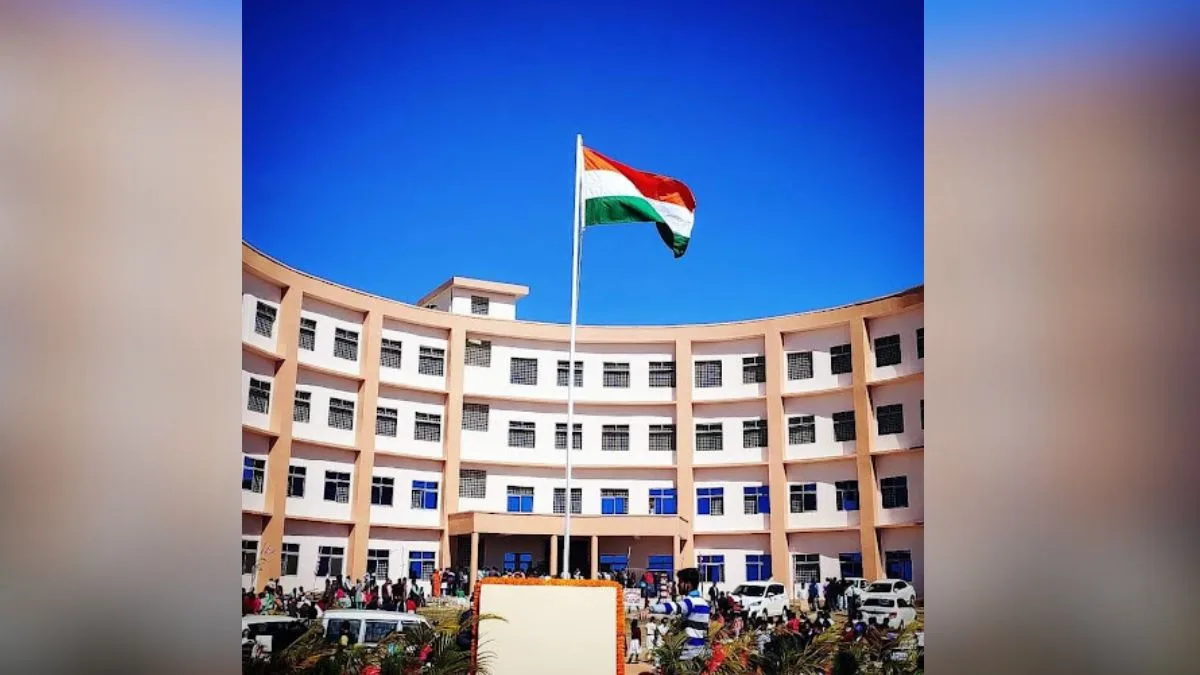
The Central University of Jharkhand (CUJ), Ranchi, has launched the national training programme on “Advanced Surveying with Resistivity Meter, LiDAR, Drone, and Geoprocessing Tools”, bringing together geospatial experts, scholars, and professionals from across the country. The programme is being jointly organised by CUJ’s Department of Geoinformatics, the Indian Society of Geomatics (ISG) – Ranchi Chapter, and Vigyan Bharati, Jharkhand.
Advertisement
Inaugurating the event, Chief Guest Dr Dal Chand Jhariya, former head of the Geology Department at NIT Raipur, emphasised the urgent need for field-based geospatial training to tackle environmental, geological, and development-related challenges. “Building a technically skilled human resource base is essential to solving 21st-century problems,” he said.
In his presidential address, Prof Manoj Kumar, Dean of the School of Natural Resource Management at CUJ, noted the critical applications of geospatial tools in agriculture, urban planning, disaster risk reduction, and natural resource management. “We must encourage our students and researchers to embrace data-driven innovation,” he said.
Vice Chancellor Prof Kshiti Bhusan Das conveyed his best wishes for the programme’s success, calling it a milestone in promoting research, innovation, and technical excellence among the youth.
The training module, as explained by programme convener Dr B R Parida, includes classroom sessions, field demonstrations using resistivity meters, drones, and LiDAR devices, along with hands-on geoprocessing practice through Python programming.
Senior ISG representative Prof A C Pandey highlighted ISG’s interdisciplinary contributions to geospatial science, while Vigyan Bharati’s Dr Chandra Shekhar Dwivedi underlined the organisation’s mission to foster scientific awareness and indigenous technology. He also anchored the session.
The inaugural session concluded with a vote of thanks by Dr Kiran Jalem. A total of 59 participants from institutions such as NIT Raipur, NIT Rourkela, Vidyasagar University, and Banaras Hindu University are participating in the workshop, which continues through 12 July.