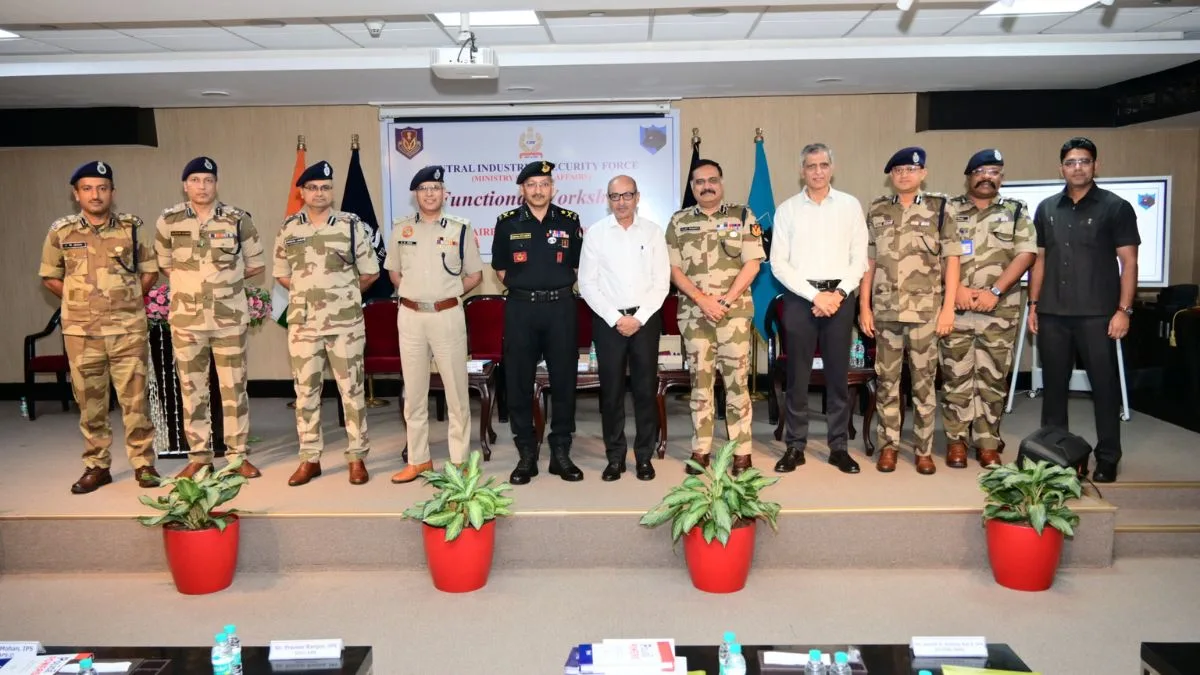
In a significant initiative to strengthen and streamline airport security, the Central Industrial Security Force (CISF) hosted a high-level workshop bringing together key stakeholders from civil aviation and VIP security to improve the overall passenger experience.
According to the CISF, digitized Standard Operating Procedures (SOPs) are currently under development. These will enable smarter and faster responses to emerging security concerns.
Advertisement
With a collaborative vision for a secure future, Special Director General (Airport Sector), CISF, Praveer Ranjan, emphasized the importance of “continuous knowledge upgradation through inter-agency deliberations” to remain ahead in innovation and excellence in aviation security.
Vijay Prakash, Inspector General, Airport Sector-I, CISF, stressed the need for “seamless coordination, intelligence-led interventions, technological integration, and, most importantly, having an ear to the ground to effectively anticipate and address ever-evolving challenges.”
The workshop also focused on the theme of “Training Synergy Among Stakeholders,” advocating for unified training programs involving all airport personnel—from security staff to airline crew—aimed at delivering a consistent and professional experience across all passenger touchpoints.
Joint exercises and regular reviews of security protocols will ensure alignment among stakeholders, leading to a more efficient and less confusing experience for travelers, regardless of the airport.
Further discussions were held on expanding the network of Aviation Security Training Institutes (ASTIs) to Tier-2 and Tier-3 cities, addressing the growing demand for trained personnel and ensuring uniform security standards nationwide.
Regarding VIP security, the CISF highlighted the implementation of a “layered protection” model to ensure the safety of high-profile individuals while minimizing disruptions to regular airport operations.
The “Passenger Grievance Redressal Mechanism” was also thoroughly reviewed. The goal is to “balance customer expectations without compromising on security.” All stakeholders agreed on the importance of “prompt response, a humane attitude, and a proactive approach” in addressing passenger concerns.
The workshop also featured deliberations on enhancing threat assessment capabilities through modern technology, including the use of artificial intelligence for data analysis and predictive risk management.
The “Functional Workshop of Airport Sector,” held at CISF’s Airport Sector Headquarters on June 27, saw participation from security heads of 69 airports and representatives from major organizations, including the Ministry of Civil Aviation (MoCA), Directorate General of Civil Aviation (DGCA), Bureau of Civil Aviation Security (BCAS), Airports Authority of India (AAI), Delhi Police, Bureau of Immigration (BOI), Special Protection Group (SPG), National Security Guard (NSG), Delhi International Airport Limited (DIAL), and leading airlines.
To make security checks more seamless, discussions were held around integrating facial recognition with biometric Airport Entry Passes (AEPs), CCTV networks, Automatic Number Plate Recognition (ANPR), and FASTag systems for vehicles. These upgrades are expected to facilitate faster airport entry and reduce waiting times at checkpoints.