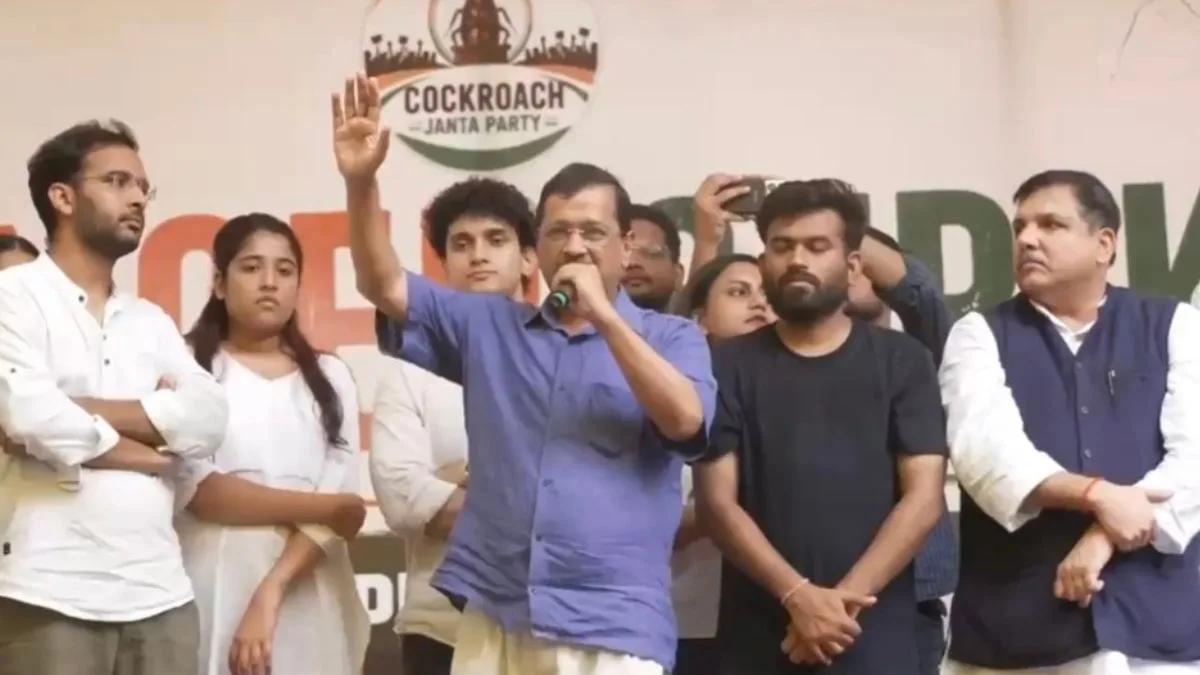
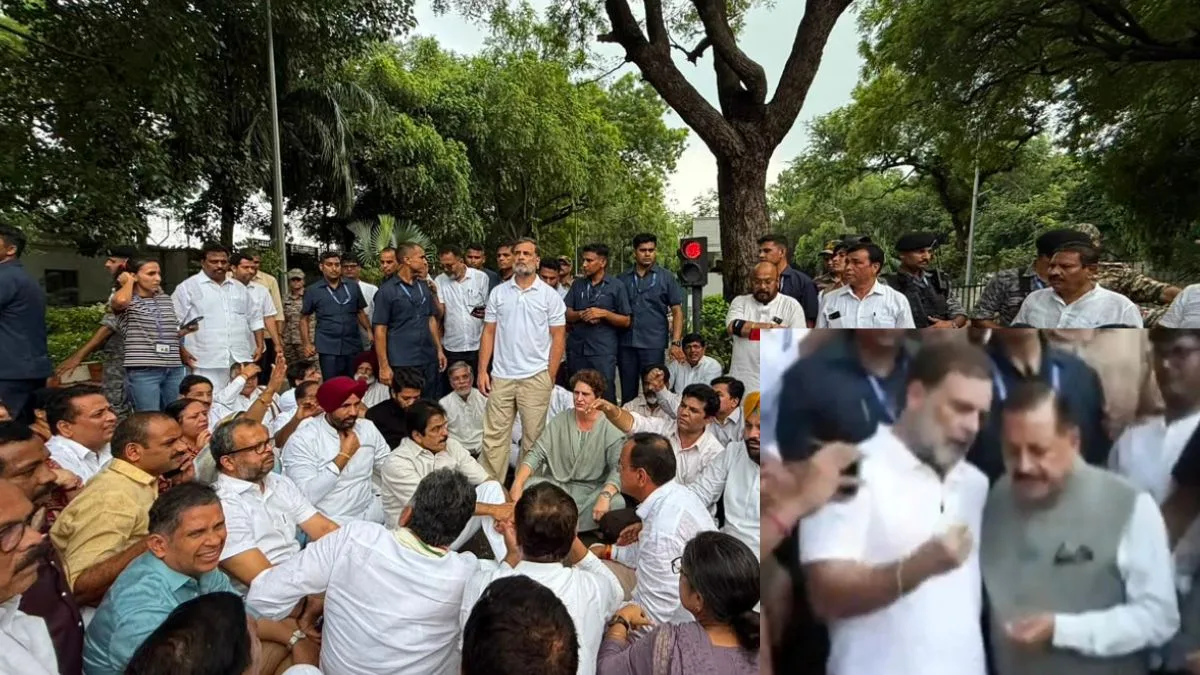
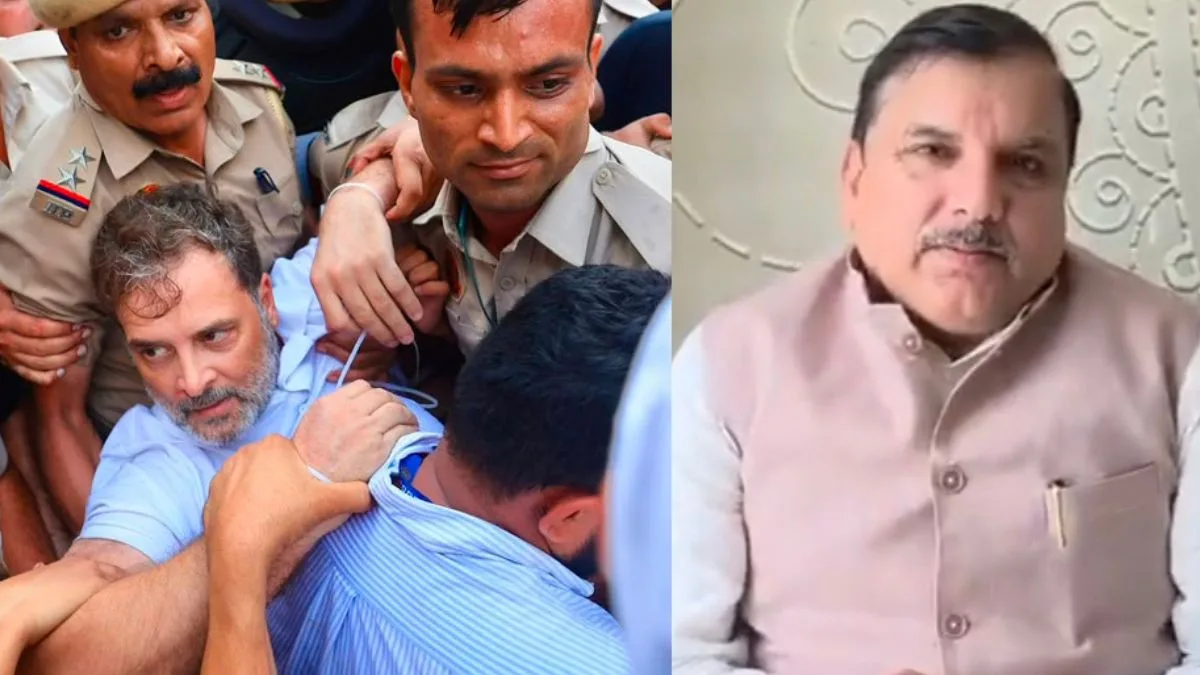
CJP’s Parliament march loses its script at Jantar Mantar, splinters into scattered protests
Student groups and Opposition workers formed a sizeable crowd, but the promised procession towards Parliament never emerged as one organised march.
Delhi government, led by Chief Minister Rekha Gupta, has launched a citywide campaign to clean and desilt all the stormwater drains of the city to ensure that the national capital is flood-free during the rainy season.





Photo: SNS
Delhi government, led by Chief Minister Rekha Gupta, has launched a citywide campaign to clean and desilt all the stormwater drains of the city to ensure that the national capital is flood-free during the rainy season.
As part of this effort, Environment and Industries Minister Manjinder Singh Sirsa on Tuesday conducted a detailed inspection of the Wazirpur Industrial Area, accompanied by local MLA Poonam Sharma and senior officers of Industries and the Delhi State Industrial and Infrastructure Development Corporation Ltd (DSIIDC) to ensure the drain cleaning has been properly done.
Advertisement
Sirsa said, “Delhi will not come to a standstill this monsoon. We have mobilised our entire governance machinery—from local representatives to officers—to ensure every drain is cleaned and every street stays functional,” he added.
Advertisement
The Minister reviewed the drain cleaning work already completed in the area and expressed satisfaction at the pace and quality of the de-silting that has been carried out.
He noted that the cleaning has been done on a war-footing, with special focus on ensuring that open drains and thousands of potholes are being systematically fixed.
Importantly, Sirsa issued strict instructions to completely avoid manual drain cleaning and to utilise mechanised equipment such as super sucker machines, procured by the Delhi government to ensure safety and efficiency.
The minister pointed out that despite the presence of industrial waste and sewage in the vicinity, the drains in Wazirpur are free-flowing, which clearly reflects the intent and ground-level action of the Delhi government.
Sirsa praised MLA Sharma for her relentless on-ground efforts and coordination with officials, adding that the results seen are due to the persistent follow-up and field presence of the elected representatives and the officials.
In a step, with a vision of reimagining Delhi’s industrial areas, the state government has also taken a landmark step by reinstating the concessionaire system for redevelopment of all industrial areas under a Public-Private Partnership (PPP) model.
The move follows longstanding demands from industrialists and is inspired by the success of similar redevelopment efforts in the Narela and Bawana industrial areas.
Under this model, private concessionaires will be responsible for long-term maintenance and infrastructure upgrades, ensuring a cleaner and more sustainable industrial ecosystem.
Sirsa stated, “Redevelopment and monsoon preparedness go hand in hand. Our goal is not only to prevent waterlogging, but to make the city’s industrial zones future-ready with upgraded civic and drainage infrastructure.”
Advertisement