Logo

Humayun Kabir to contest from Rejinagar & Naoda, unveils list of more candidates

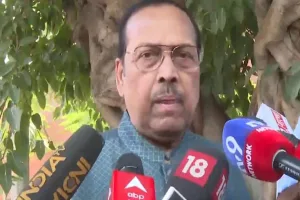
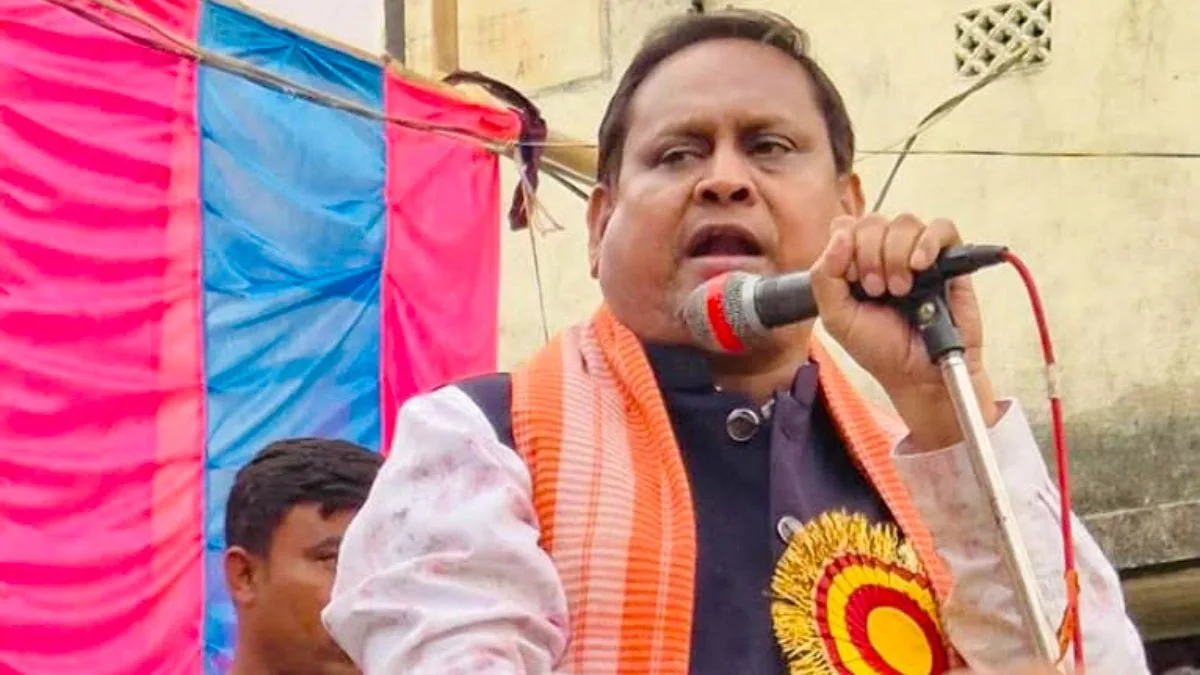
Amid an increasingly crowded electoral field in West Bengal, expelled Trinamul Congress leader Humayun Kabir on Wednesday announced his second list of candidates for his newly floated Janata Unnayan Party(JUP).

Statesman News Service | Kolkata |

Amid an increasingly crowded electoral field in West Bengal, expelled Trinamul Congress leader Humayun Kabir on Wednesday announced his second list of candidates for his newly floated Janata Unnayan Party(JUP).

He also confirmed that he will contest from two Assembly constituencies Rejinagar and Naoda in Murshidabad district. Addressing a Press conference, Kabir said his party would field candidates in 182 seats across the state, with the remaining list to be unveiled on 22 March. He has already declared candidates in phases, including an earlier list of nine nominees and a subsequent announcement covering four constituencies in Malda district. In the latest development, Kabir confirmed that he will contest from Rejinagar and Naoda Assembly constituencies. This marks a shift from his earlier indication of contesting from Beldanga alongside Rejinagar.

Notably, he has opted out of contesting from Bharatpur, the seat he currently represents, fuelling political speculation. Political observers have raised questions over his decision to contest from two seats within Murshidabad rather than his traditional stronghold. The move has drawn comparisons with Leader of Opposition Suvendu Adhikari, who is contesting from Nandigram and Bhabanipur, the latter widely seen as a direct challenge to Chief Minister Mamata Banerjee.

However, unlike Adhikari’s high-profile electoral strategy, Kabir’s choice has prompted questions about whether it reflects a defensive approach amid uncertainty over his electoral prospects. Kabir, who was expelled from the Trinamul Congress few days ago, had earlier announced his intent to consolidate anti-TMC and anti-BJP forces. He has been attempting to forge an understanding with Left parties and the Indian Secular Front (ISF), even extending deadlines for alliance discussions ~ from 10 March to 15 March. However, talks have yet to yield a concrete outcome.

Acknowledging the limitations of a solo fight, Kabir indicated that his party is open to coordination with like-minded forces. “We are announcing candidates for Malda and Murshidabad now. The full list will be released on 22 March,” he said, adding that the All India Majlis-e-Ittehadul Muslimeen (AIMIM) may contest in a few seats. With multiple parties already in the fray, Kabir’s evolving strategy and constituency choices are expected to add another layer of complexity to the electoral contest in key districts of north Bengal.

Explosives seized in Birbhum ahead of polls

Birbhum Police have seized 10,000 gelatin sticks and 360 detonators from a tractor in the Nalhati area. Local villagers stopped the vehicle after becoming suspicious and informed Nalhati Police Station.

Statesman News Service | Birbhum |

Birbhum Police have seized 10,000 gelatin sticks and 360 detonators from a tractor in the Nalhati area. Local villagers stopped the vehicle after becoming suspicious and informed Nalhati Police Station.

The seizure of such a large quantity of explosives ahead of the upcoming Assembly polls in Birbhum district has created a major stir.

The matter has also been reported by Birbhum Police to the Chief Electoral Officer (CEO) and the Election Commission of India (ECI).

Central forces have already arrived in Birbhum district for poll duty and are engaged in voter confidence-building activities, including flag marches in various sensitive areas.

The incident occurred in Kadasir village under Nalhati Police Station in Birbhum.

Police said the seized explosives included 10,000 gelatin sticks and 360 detonators. However, no arrests have been made in connection with the incident.

Local residents said that a tractor loaded with explosives was passing through Kadasir village late at night when villagers stopped it. The driver managed to escape. Upon inspection, the villagers discovered the explosives, leading to commotion in the area. They immediately informed the police, who reached the spot and seized both the explosives and the tractor.

Questions are being raised about who was transporting the explosives, for what purpose, and to which destination. Nalhati Police Station has begun an investigation.

This is not the first seizure of explosives meant for mining purposes in Birbhum district. The National Investigation Agency (NIA) has previously investigated similar cases and arrested several local Trinamool Congress (TMC) leaders from Nalhati and Mohammad Bazar.

Explosives intended for mining purposes have also been used by various extremist groups for subversive activities in the country in the past.

Samples of the seized explosives are being sent to the Central Forensic Laboratory for testing by Nalhati Police Station.

Ex-IPS Kabir seeks security after getting life threats as Domkal TMC candidate

Former IPS officer and outgoing Trinamul Congress MLA Humayun Kabir, once known for his tough policing and crackdown on organised crime, today expressed apprehension over threats to his life soon after being named the party’s candidate from Domkal in Murshidabad district.

Statesman News Service | Kolkata |

Former IPS officer and outgoing Trinamul Congress MLA Humayun Kabir, once known for his tough policing and crackdown on organised crime, today expressed apprehension over threats to his life soon after being named the party’s candidate from Domkal in Murshidabad district.

Kabir, a 2003-batch IPS officer of the West Bengal cadre, had earned a reputation of taking on hardened criminals, including the arrest of notorious gangster “Hathkata Dilip.” Now re-entering the electoral fray, he has been fielded from Domkal instead of Debra, where he had previously contested.

Soon after reaching Murshidabad, Kabir approached the district Superintendent of Police seeking enhanced security. Alleging continued threats from criminal networks he had dismantled during his tenure in the district, he said, “The head of a murder syndicate is still active and is trying to eliminate me. I have received multiple threats, and there is a serious risk to my life.”

Kabir has extensive administrative experience in Murshidabad, having spent nearly five years in the district. He served as Sub-Divisional Police Officer (SDPO) of Kandi for two years and later as Superintendent of Police for almost three years. Domkal, he said, is a familiar terrain. “I am aware of the syndicates operating here, their networks, and the local demographics,” he added. Thanking the party leadership for fielding him from the constituency, Kabir expressed gratitude to party chairperson Mamata Banerjee and national general secretary Abhishek Banerjee. He also called upon party workers to intensify grassroots efforts, ahead of the Assembly polls.

Domkal has long been considered a sensitive constituency with a history of electoral violence. During the last Assembly elections, the area reportedly witnessed one of the highest numbers of political killings within a short span. However, Kabir claimed that during his tenure as SP, only one murder case was reported from the area. His remarks come at a time when political tensions are rising in several parts of Murshidabad ahead of the polls.

‘Angry’ Israel, ‘Blind’ Iran: Trump ‘defends’ Tehran after Qatar LNG strike; promises no more attacks on South Pars

Qatar expels Iranian officials after fresh missile strikes hit key LNG sites, while Trump signals possible US retaliation if energy infrastructure faces further attacks in the region.

Statesman News Service | Mumbai |

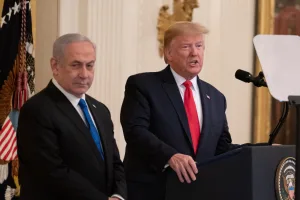
US President Donald Trump on Wednesday (local time) said the United States had no prior information about the strike on Iran’s South Pars Gas Field, distancing Washington from the escalation that has now drawn in Qatar’s key energy infrastructure.

In a statement posted on Truth Social, Trump suggested that Israel carried out the strike on South Pars “out of anger” over recent developments in the region. He added that only a limited portion of the large gas field had been hit.

“Israel, out of anger for what has taken place in the Middle East, has violently lashed out at a major facility known as the South Pars Gas Field in Iran. A relatively small section of the whole has been hit.”

The comments come at a time when tensions in West Asia have sharply intensified, with missile strikes now hitting critical energy facilities in both Iran and Qatar, raising concerns over global fuel supply and wider regional fallout.

Trump also said that neither the US nor Qatar had any role in the attack, and claimed that Iran acted without full knowledge of the situation when it retaliated. He warned that Israel would refrain from targeting the South Pars field again unless Iran chose to escalate further by attacking Qatar.

At the same time, the US President issued a strong warning to Tehran. He said Washington would respond with overwhelming force if Qatar’s energy assets were targeted again, even if it meant acting independently.

“The United States knew nothing about this particular attack, and the country of Qatar was in no way, shape, or form, involved with it, nor did it have any idea that it was going to happen. Unfortunately, Iran did not know this, or any of the pertinent facts pertaining to the South Pars attack, and unjustifiably and unfairly attacked a portion of Qatar’s LNG Gas facility. NO MORE ATTACKS WILL BE MADE BY ISRAEL pertaining to this extremely important and valuable South Pars Field unless Iran unwisely decides to attack a very innocent, in this case, Qatar – In which instance the United States of America, with or without the help or consent of Israel, will massively blow up the entirety of the South Pars Gas Field at an amount of strength and power that Iran has never seen or witnessed before. I do not want to authorize this level of violence and destruction because of the long term implications that it will have on the future of Iran, but if Qatar’s LNG is again attacked, I will not hesitate to do so. Thank you for your attention to this matter. President DONALD J. TRUMP”

Missile strikes hit Qatar’s Ras Laffan, LNG facilities damaged

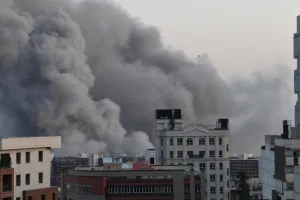
The remarks followed reports from Qatar’s Ministry of Defence that ballistic missiles fired by Iran struck Ras Laffan Industrial City, causing significant damage. The attack marks the second such strike within 12 hours on what is considered the world’s largest liquefaction hub.

QatarEnergy later confirmed that multiple LNG installations were also hit in subsequent attacks early Thursday, leading to fires and further destruction. Emergency teams were deployed to control the situation, and no casualties have been reported so far.

“In addition to the previous attack on Ras Laffan Industrial City on Wednesday that resulted in extensive damage to the Pearl GTL (Gas-to-Liquids) facility, QatarEnergy confirms that in the early hours of Thursday, several of its Liquefied Natural Gas (LNG) facilities were the subject of missile attacks, causing sizeable fires and extensive further damage. Emergency response teams were deployed immediately to contain the resulting damage with no reported casualties,” it stated.

In response, Qatar has taken diplomatic action against Iran. The country has declared military and security officials at the Iranian Embassy persona non grata and asked them to leave within 24 hours, according to its Ministry of Foreign Affairs.

Gold, silver rates today (19 March 2026): Latest city-wise prices and global trends

Festive buying sentiment gets a boost as bullion prices cool off across India, with southern cities still commanding a premium over northern markets despite the overall decline.

Statesman News Service | New Delhi |

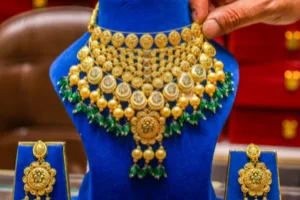
Gold and silver prices saw a sharp drop on Thursday, offering relief to buyers on Gudi Padwa, a day traditionally associated with fresh purchases of precious metals.

The fall comes amid profit booking by traders and weak physical demand. The correction in bullion prices has come as a breather after recent highs, just as festive buying picks up across the country.

According to bullion trackers, gold prices declined by more than ₹3,000 to ₹1,53,800 per 10 grams, while silver dropped by over ₹5,300 to ₹2,48,170 per kilogram.

In the global market, however, the trend was slightly positive. Spot gold edged up 0.4% to $4,835.55 an ounce in Singapore, while silver gained 0.7% to $75.87, Bloomberg reported.

Gold price today in India: Metro cities show slight variations

Gold rates remained largely aligned across major cities, with southern markets continuing to stay slightly higher than northern counterparts.

  • Mumbai: ₹1,53,520 per 10 grams
  • Delhi: ₹1,53,250 per 10 grams
  • Bengaluru: ₹1,53,640 per 10 grams
  • Chennai: ₹1,53,970 per 10 grams
  • Hyderabad: ₹1,53,760 per 10 grams
  • Kolkata: ₹1,53,320 per 10 grams

Chennai recorded the highest gold rate among metros, while Delhi remained on the lower side of the price band.

Silver price today: Chennai, Hyderabad lead the chart

Silver prices also reflected minor regional differences, though the overall trend remained stable across cities after the sharp drop.

  • Mumbai: ₹2,47,720 per kg
  • Delhi: ₹2,47,290 per kg
  • Bengaluru: ₹2,47,920 per kg
  • Chennai: ₹2,48,440 per kg
  • Hyderabad: ₹2,48,110 per kg
  • Kolkata: ₹2,47,390 per kg

Chennai and Hyderabad reported the highest silver rates, while Delhi and Mumbai remained slightly lower.

Note: These are average market rates. Actual prices may vary depending on local jewellers, making charges, and taxes.

Equal in the eyes of the law

Anyone in politics has a greatly elevated moral obligation to perform his due diligence.

Ishrat Husain | New Delhi |

Anyone in politics has a greatly elevated moral obligation to perform his due diligence. Common decency requires politicians to act with extreme moral trepidation at all times, ever mindful of the possibility that they may not trample the rights of the morally innocent. Sometimes, politicians are guilty of pervasive gross legal and moral negligence. Law treats equally, both politicians and non-politicians. But the scope of discretion is available to courts in the execution of laws.

It is difficult to deny that this discretion may be hit by a forceful public perception. However, it is difficult to claim that courts may be hesitant to use this discretion in favour of politicians under undue pressure of public opinion. Of course, a court does not discriminate between the politicians and non-politicians. However, it is observed that politicians as accused and convicted are deprived of their statutory rights being a politician or otherwise infamous. Courts are not influenced by the media trial at all, they go by the law, not perceptions of the public.

In some cases, there is such a public outrage where courts rarely use discretion in favour of a politician-accused than ordinarily is used in the favor of a common accused. Accidentally, if a decision of court looks alike to public perception, it appears that the court seems to succumb to public pressure created by the media that, of course, is not strictly true. For instance, in the Navjot Sidhu v. State of Punjab (2007) case, the Court held that Sidhu was convicted for an offence committed much prior to his entry into politics. He had resigned from his office immediately. He did not take benefit of clinging on to his office by merely filing an appeal.

The court a l s o observed that conviction of the appellant was liable to be suspended as he had chosen a moral path and set high standards of public life and if his conviction was not suspended, he would suffer irreparable damage. It clearly shows that if he may have been convicted for an offence committed after his entry into politics, he would not have got relief from the court. What is the law on the point? Under section 389, Criminal Procedure Code (now 430 of BNSS) an appellate court can exercise power to grant bail to a convicted person pending his appeal. It must be clarified that the Appellate Court has the power to suspend the sentence of the accused or its execution but does not have the power to suspend conviction.

In June 2017, a crime was committed against a 17-year-old girl, in Unnao district of Uttar Pradesh, one of the most horrific in India in recent years. Culprit (Kuldeep Singh Sengar) was sentenced to life imprisonment by a Delhi trial court in December 2019. Further, in March 2020, he was also found guilty of culpable homicide and criminal conspiracy in the victim father’s death. Sengar filed an appeal in the Delhi High Court. On 23 December 2025, the High Court suspended the life sentence and granted bail to Sengar pending appeal. Court granted bail according to law. The court directed the convict to furnish a personal bond with sureties of Rs 15 lakh and imposed harsh conditions, including remaining in Delhi, not approaching within a radius of five kilometers of the survivor’s residence, and refraining from contacting, intimidating, or influencing the survivor or her family during the pendency of the appeal.

The Unnao case survivor and her family had strongly opposed the High Court’s decision to grant bail to Sengar and there was a huge public outrage on the issue. The CBI filed a Special Leave Petition (SLP) before the Apex court against the High Court’s decision. Sengar was denied bail by the Hon’ble Supreme Court on 29 December 2025. The Supreme Court stayed the operation of the Delhi High Court order which had suspended the life sentence awarded to Sengar. Sengar was convicted for a heinous crime that cannot be equated with any other crime specifically the cases imposed out of politics of vendetta. Section 389 does not differentiate among the offences so far as the right to suspension of sentence and bail on appeal is concerned.

Senior Samajwadi Party leader Mohammad Azam Khan and his son Abdullah Azam were convicted on 17 November 2025 and sentenced to jail terms of up to seven years by a special MP/MLA magistrate court in a 2019 case related to obtaining two PAN cards using different dates of birth. Appeal was filed against this conviction in a special MP/MLA session court. Bail application was also filed under section 489 and the hearing of the appeal is in progress but without grant of bail. There is catena of cases where the Supreme Court in the light of section 389 took a liberal approach. Apex Court ruled that the appellate court may grant bail during the pendency of appeal under section 389 even without going into the merits of the case (Joginder Singh v. State of Punjab 1977).

The Supreme Court held the need for granting bail or suspension of sentence under section 389 and observed that that so long as the appellate court is not in a position to hear the appeal of the accused expeditiously, ordinarily convicted person should be released on bail unless there are cogent grounds for refusing the bail (Bhagwan Rama Shinde v. State of Gujrat, 1999). Recently, the High Court had ordered in the penultimate para that the “petitioner shall not approach this court before a minimum period of three years from the date of conviction” (Krishan Kumar v. State of Haryana 2022). In the instant case, the Supreme Court held that seeking relief of suspension of sentence and release on bail is a statutory right of the appellant and no appellant can be debarred from renewing his prayer for suspension of execution of sentence for a particular period.

It is for the court to grant such prayer but the law does not permit time-specific debarment. The Supreme Court annulled the observation of the High Court as it was contrary to the provision contained in Section 389, CrPC. While politics offers power and the potential for impact, the demerits are substantial and often outweigh the benefits for those not fully committed to the lifestyle. However, politicians should have the same rights after conviction or even as an accused as available to ordinary accused or convicted person.

(THE WRITER IS PROFESSOR, DEPARTMENT OF LAW, ALIGARH MUSLIM UNIVERSITY.)

Surviving Judicial Scrutiny

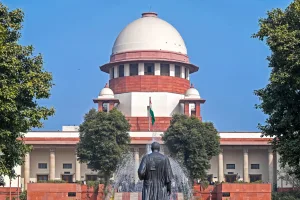
On 27 February 2026, a Special Court at Rouse Avenue in New Delhi discharged all 23 accused in the CBI’s prosecution concerning the Delhi Excise Policy.

SUNIL GORADIA | New Delhi |

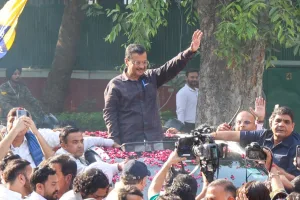
On 27 February 2026, a Special Court at Rouse Avenue in New Delhi discharged all 23 accused in the CBI’s prosecution concerning the Delhi Excise Policy. The list included former Chief Minister Arvind Kejriwal, former Deputy Chief Minister Manish Sisodia, and BRS leader K. Kavitha. The decision arrived after years of investigation, high-profile arrests, and extended pre-trial incarceration.

Yet the court concluded that the case did not warrant even the framing of charges. The distinction between discharge and acquittal is neither semantic nor technical. It goes to the heart of how criminal law functions. An acquittal follows trial. Evidence is examined, witnesses are cross-examined, and the prosecution’s case is tested against the standard of proof beyond reasonable doubt. A discharge, by contrast, is a threshold determination. It is governed by Sections 227 and 239 of the Code of Criminal Procedure, 1973, which require the court to assess whether the material placed on record discloses sufficient grounds to proceed. The standard is low. The court does not weigh evidence meticulously. It asks whether, assuming the prosecution’s material to be true, a case is made out. In this instance, the court answered that question in the negative.

The Legal Standard at the Stage of Charge:

The jurisprudence governing discharge is well settled. In State of Bihar v. Ramesh Singh (1977), the Supreme Court held that at the stage of framing charges, the court need only determine whether there is a strong suspicion that the accused has committed an offence. The evaluation is preliminary and not a mini-trial. Later, in Union of India v. Prafulla Kumar Samal (1979), the Court clarified that while the judge may sift and weigh the evidence for a limited purpose, the court must not conduct a roving inquiry into the merits. More recently, in Sajjan Kumar v. CBI (2010), the Supreme Court reiterated that if the material on record gives rise to grave suspicion against the accused, charges must be framed. The threshold is deliberately modest because the detailed assessment is reserved for trial. It is against this doctrinal backdrop that the discharge of Kejriwal and Sisodia assumes significance. If even a prima facie case cannot be discerned, the implication is that the prosecution’s material failed to generate the “grave suspicion” contemplated in precedent. According to reports of the order, the Special Court found no overarching criminal conspiracy and no concrete evidence establishing criminal intent in the formulation or imple – mentation of the policy. It also noted inconsistencies within the chargesheet and found that certain assertions were not supported by witness testimony. Particularly in relation to Sisodia, the court is understood to have observed the absence of evidence linking him directly to unlawful gain or procedural manipulation. The court also appears to have been unpersuaded by the prosecution’s reliance on the statement of an approver without adequate corroboration. Indian courts have historically treated accomplice testimony with caution. Section 133 of the Indian Evidence Act permits conviction on the uncorroborated testimony of an accomplice, but Illustration (b) to Section 114 reflects a rule of prudence requiring corroboration. In politically sensitive cases, courts have tended to apply that prudence rigorously.

A Pattern in High-Profile Prosecutions:

The discharge order in the Delhi excise matter is not without precedent. Indian criminal history contains several instances where high-profile prosecutions faltered at preliminary stages or collapsed before full adjudication. One prominent example is the disproportionate assets case against Mayawati. In 2012, the Supreme Court set aside proceedings initiated by the CBI, holding that the agency had exceeded the scope of the reference under which it was directed to investigate. The ruling underscored that even investigative enthusiasm must operate within defined legal boundaries. Similarly, in the 2G spectrum allocation case, although not discharged at the threshold stage, all accused, including senior political figures such as A. Raja, were acquitted by the Special CBI Court in 2017 after trial. The court found that the prosecution had failed to establish its allegations with reliable evidence. While that case proceeded to trial, it revealed the risks inherent in prosecutions driven by expansive narratives that struggle to translate into admissible proof. In the entertainment industry, the criminal proceedings arising from the death of actor Sushant Singh Rajput led to multiple investigative angles, including allegations under the Narcotic Drugs and Psychotropic Substances Act. Several accused persons were granted relief at early stages due to insufficient material linking them to specific offences. Though factually distinct, these episodes illustrate a recurring pattern: high public intensity, prolonged investigation, and judicial insistence on evidentiary discipline. These cases do not suggest systemic collapse. They do, however, highlight a recurring tension between investigative ambition and judicial scrutiny.

Arrest, Custody, and the Cost of Process:

One of the most disquieting aspects of the Delhi excise case is the duration of pre-trial custody. Sisodia spent approximately 530 days incarcerated before securing bail. Kejriwal was in custody for about 156 days before the Supreme Court of India granted relief in September 2024. Bail jurisprudence in India has evolved significantly in recent years, with the Supreme Court repeatedly affirming that “bail is the rule and jail the exception.” In Satender Kumar Antil v. CBI (2022), the Court emphasised the need to prevent routine arrests and prolonged detention in cases where investigation can proceed without custody. Yet the lived reality often diverges from principle. In complex financial or corruption cases, courts tend to adopt a cautious approach to bail. When such cases subsequently fail to cross even the prima facie threshold, questions inevitably arise regarding proportionality. The criminal processor itself becomes punitive. Discharge, though legally justified where material is insufficient, does not remedy the time already spent in detention. Nor does it erase reputational consequences. The power to arrest and prosecute carries with it an obligation of restraint.

Institutional Credibility and Political Context:

The Central Bureau of Investigation occupies a distinctive position within India’s law enforcement architecture. Though formally insulated by statutory and judicial safeguards, it functions under the administrative control of the Union government. This structural reality has long fueled debate about its deployment in politically sensitive matters. The Supreme Court’s description of the agency as a “caged parrot” in Vineet Narain v. Union of India (1998) continues to resonate in public discourse. The discharge in the Delhi excise case will inevitably be read through this lens. The investigation originated amid intense political contestation between the Aam Aadmi Party and the Bharatiya Janata Party. The Indian National Congress, too, had at the time pressed for central intervention and supported calls for an investigation into the policy. The entry of the Enforcement Directorate added another layer of complexity, given the agency’s expansive powers under the Prevention of Money Laundering Act. Whether or not political motivation can be established is a separate question. Courts adjudicate on evidence, not on political narratives. However, when a prosecution involving senior elected officials collapses at the stage of charge framing, it amplifies existing scepticism about selective enforcement. It bears emphasis that the matter is not closed. The CBI has challenged the discharge before the Delhi High Court. The High Court may examine the record differently and conclude that the threshold for framing charges has indeed been met. Appellate review is an integral part of criminal procedure. Nonetheless, the fact that a trial court found the evidentiary foundation insufficient is consequential. It underscores that investigative volume does not equate to evidentiary strength. Lengthy chargesheets a n d expansive allegations must still satisfy the elementary requirement of coherence and substantiation.

The Larger Lesson:

Criminal prosecution is among the most coercive powers exercised by the State. It entails arrest, detention, public censure, and prolonged uncertainty. The legitimacy of this power depends on disciplined adherence t o evidentiary standards. The threshold at the stage of framing charges is intentionally modest to avoids premature termination of potentially valid prosecutions. When a case fails even at that stage, it signals a structural weakness in the prosecutorial foundation. For Kejriwal and Sisodia, the discharge offers immediate relief, though subject to appellate scrutiny. For the investigative apparatus, it presents a moment of reflection. The rule of law is not measured solely by the capacity to prosecute, but by the willingness to accept judicial correction when prosecution falls short. If the High Court upholds the discharge, the episode will join a line of cases in which the judiciary has intervened to prevent a trial from proceeding without adequate basis. If it reverses the order, the prosecution will have another opportunity to test its allegations in open court. Either way, the case reaffirms a principle that lies at the core of criminal justice: suspicion, however grave, must be anchored in demonstrable evidence. Without that anchor, even the most high-profile case cannot survive judicial scrutiny.

(THE WRITER IS AN AUTHOR, LEGAL COMMENTATOR AND EDITOR-INCHIEF OF INDIACOMMENTARY.COM)

US intel sounds alarm on India-Pak flashpoint, flags Pakistan’s expanding missile capability

US assessment flags Pakistan’s advancing missile programme, ISIS-K activity and Taliban tensions as key risks shaping South Asia’s fragile security environment.

Statesman News Service | New Delhi |

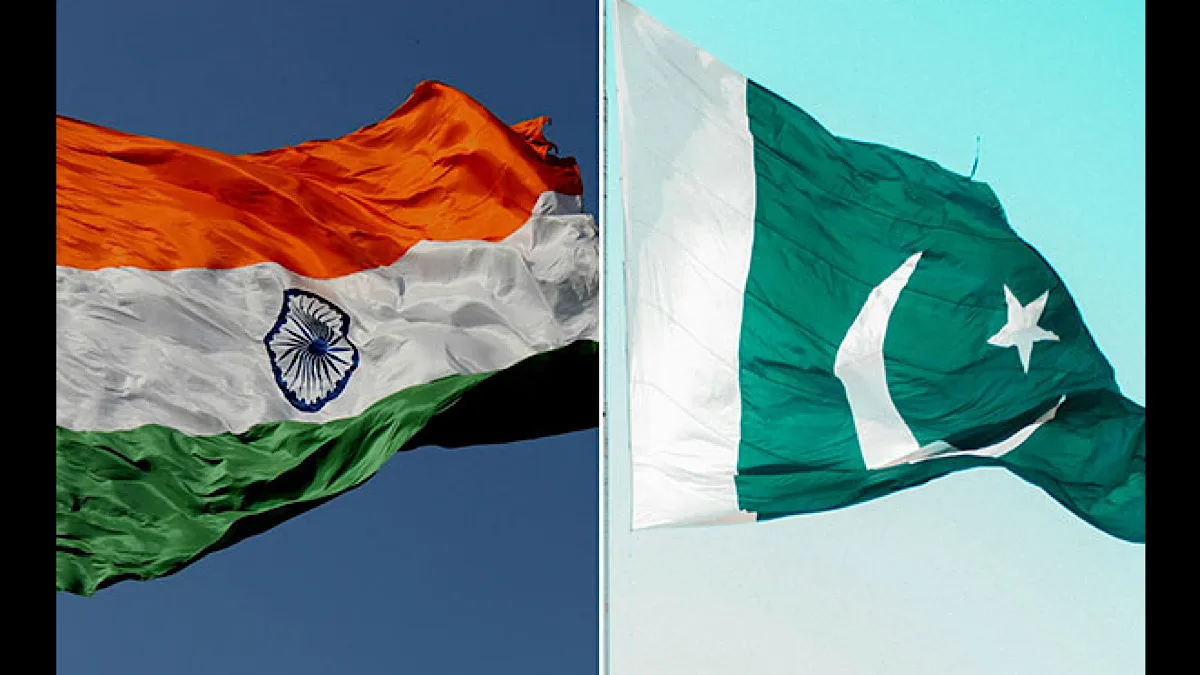
A fresh assessment by the US intelligence community says recent nuclear tensions between India and Pakistan were brought down after intervention by US President Donald Trump. But the report also makes it clear that the region is far from stable.

The 2026 Annual Threat Assessment notes that even if both countries seem unwilling to slide back into open conflict, the risk has not gone away. The bigger worry, it says, is that terrorist groups could still trigger a fresh crisis at any time.

Past attacks, present risks

The report points to the April 2025 terror attack near Pahalgam in Jammu and Kashmir as a reminder of how quickly things can spiral. That attack left 26 people dead after gunmen came down from the hills and opened fire on tourists in Baisaran Valley.

Such incidents, the assessment says, show how fragile the situation remains between the two nuclear-armed neighbours.

“President Trump’s intervention de-escalated the most recent nuclear tensions, and we assess that neither country seeks to return to open conflict,” said the report, while cautioning that “conditions exist for terrorist actors to continue to create catalysts for crises.”

Wider security concerns in the region

The assessment also looks beyond India-Pakistan ties. It says, “ISIS-K maintains a foothold in the region and aspires to conduct external attacks.” At the same time, the Taliban has acted against the group and may have stopped some plots.

There are also concerns about Pakistan’s missile programme. The report says Islamabad is working on more advanced systems, which could eventually allow it to hit targets beyond South Asia.

Tensions between Pakistan and the Taliban are another flashpoint. The report refers to ongoing clashes and says the situation is unlikely to settle unless the Taliban cuts links with militant groups that target Pakistan.

After the Pahalgam attack, India launched ‘Operation Sindoor’ on the night of May 6 and 7, striking nine terror camps in Pakistan and Pakistan-occupied Kashmir. More than 100 militants were killed in the operation, including members of Jaish-e-Mohammed, Lashkar-e-Taiba and Hizbul Mujahideen.

Time to junk the UPSC route

The recent declaration of the UPSC Civil Services Examination (CSE) 2025 final results on 6 March has once again triggered a nationwide media frenzy over the “toppers’ journeys”.

DR. RAMANAND | New Delh |

The recent declaration of the UPSC Civil Services Examination (CSE) 2025 final results on 6 March has once again triggered a nationwide media frenzy over the “toppers’ journeys”. Social media erupts with motivational taglines, videos, and memes celebrating their success and struggles. Families and communities distribute sweets, treating the achievement as a collective social triumph rather than a personal one.

Toppers’ stories are portrayed with the grandeur of Olympic medal wins or major sporting accomplishments yet these successes, if truly achievements in a broader sense, remain deeply personal and have limited tangible social impact. Without delving into precise numbers, the 2025 results selected 948 candidates from a pool of roughly 10 lakh applicants. In a previous article in the Indian Express, I had examined how the civil services have become synonymous with prestige in India, often overshadowing other vital professions. Building on that critique, the 2025 results provide a fresh lens to examine the over-glorification of both the exam and the services it feeds into.

This is not to diminish the hard work of the selected candidates. Rather, it challenges the dominant societal narrative: UPSC toppers are frequently portrayed as demigods. Media profiles dissect their “strategies” from daily routines to book lists as if cracking the exam unlocks the secrets of life itself. This narrative ignores the significant role of randomness and privilege embedded in the process. Many toppers, such as those with medical or engineering backgrounds emerge from stable, privileged educational ecosystems. The exam inherently favours candidates with access to quality coaching, strong English proficiency, and the financial and temporal resources for multiple attempts.

For average aspirants from rural areas or economically weaker sections, the odds remain heavily stacked against them. The 2025 results tell the same familiar story, yet the relentless emphasis on “inspirational” narratives glosses over these systemic barriers. We celebrate the rare exceptions while millions of aspirants burn out in isolation, grappling with severe mental health crises. Reports from coaching hubs like Delhi’s Mukherjee Nagar consistently highlight alarming rates of depression and suicide. Yet the glorification machine rolls on unabated.

The examination structure itself perpetuates a built-in hierarchical system that undervalues true talent, efficiency, and domain expertise. A candidate who scores a mere fraction of a mark higher than others is elevated to a position of superiority that lasts for decades. This hierarchy often overrides humanity, knowledge, and practical skills: a person with minimal understanding of a domain can issue commands to those with far superior expertise. Even more troubling is the service allocation process, which largely disregards competency and relies instead on accidental performance in a single exam cycle.

This not only harms the lives of those who will be governed but also discourages genuine future governance talent. The 2025 batch will enter a system where debates on lateral entry and reforms continue, yet core issues such as accountability, innovation, and performance remain unaddressed. Over-glorification breeds unrealistic expectations: new recruits anticipate a hero’s welcomes, only to confront the daily grind of paperwork, political pressures, and frequent transfers. This mismatch fosters cynicism and inefficiency. The economic costs are equally stark.

Lakhs of young people devote their prime years to UPSC preparation, forgoing skill development in high-growth fields such as AI, sustainability, or entrepreneurship. India’s demographic dividend risks becoming a liability when talent is funneled into a single, hypercompetitive exam that selects barely 0.1 per cent of applicants. The 2025 results underscore this skew: many toppers hail from IITs or NLUs, diverting valuable technical and intellectual capital from innovation and the private sector into administration. Imagine the potential impact if that talent were channeled elsewhere. This year also saw several individuals falsely claiming to have cleared the exam and around 6–7 candidates publicly celebrating successes they never achieved.

These incidents highlight the immense public pressure and allure of UP SC glorification. A major structural flaw attracting widespread attention is the role of the District Magistrate, who consolidates enormous power with minimal accountability. A generalist with limited domain expertise or practical experience commands entire departments at the district level, often leading to inefficiencies and poor decision-making. This over-accumulation of power invites misuse, as accountability mechanisms remain weak. Ultimately, we must confront and reform this colonial era system, which has failed to adapt to contemporary realities.

It neither produces true domain experts nor effectively trains a modern workforce. One of the boldest moves this government has taken was Lateral Entry but due to systematic resistance of the bureaucracy and opposition of certain political groups, it could not translate into reality as it should have. The over emphasis on conservative bureaucracy often stops the growth of other systems. We need a more robust module which can take the place of the UPSC.

(The writer is director of the Center of Policy Research and Governance.)

Bhajan Clubbing shatters myth of secularization

Across the country, young Indians are flocking to concerts that blend devotional bhajans with contemporary rhythms and songs. The popularity of “bhajan clubbing” is not a passing cultural fad.

MKAR JOSHI AND PRANAV GUPTA | New Delhi |

Across the country, young Indians are flocking to concerts that blend devotional bhajans with contemporary rhythms and songs. The popularity of “bhajan clubbing” is not a passing cultural fad. Rather, it conf irms a long- standing dimension of Indian society: religious practice is ubiquitous, and youngsters have merely adapted rather than giving up on faith and practice. We analyze data from a nationally representative survey to demonstrate that young Hindus, including Gen Z, remain highly religious. For years now, a familiar claim has circulated in public debates: as India becomes more educated, urban, and economically mobile, younger generations are drifting away from religion.

This is a narrative borrowed largely from Western societies, where modernization coincided with declining religious participation, and was then loosely applied to India. Contrary to this familiar Western reality, our analysis shows that young Indians report relatively high levels of religiosity. We analyze data from a nationally representative survey – India Political and Social Attitudes Study – conducted by us among 7,382 respondents across 18 states in 2025. We asked respondents how often they engage in religious practices ranging from daily rituals to weekly observance and festival participation, including both public and private activities. In this article, we restrict our analysis to the 6,187 Hindu respondents in the sample.

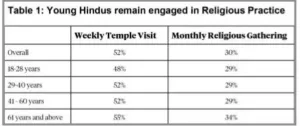
As the country’s largest religious group with diverse forms of practice, Hindus offer a useful lens to examine generational change in religious life. We find that a substantial proportion of young Hindus actively participate in religious life. The reported levels of regular religious observance among GenZ Hindus (those aged between 18 and 28 in 2025) are only marginally lower than older cohorts. A majority of Gen Z respondents (55 per cent) reported that they prayed daily, and around half (48 per cent) reported visiting a temple at least once a week.

Screenshot

These figures are only marginally lower than the overall proportion across cohorts: 59 per cent of Hindu respondents reported praying daily, and 52 per cent pray at a temple at least once a week. The marginally lower levels among the youth should not be misconstrued as disengagement. Only a minuscule minority reported ‘never’ or ‘rarely’ undertaking various religious activities. Beyond private activities, young Indians are also engaging in socially embedded forms of participation. About three of ten (29 per cent) Gen Z respondents said they attend a religious gathering such as a Katha, Bhajan or Sangat at least once a month. This is why the enthusiasm for Bhajan Clubbing should not be viewed merely as a passing trend.

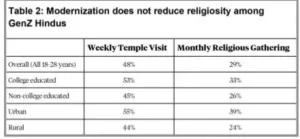
The secularization theory predicts that religious practice will decline due to modernization forces such as urbanization, upward economic mobility, and expansion in education. Contrary to this expectation, we find that a relatively similar proportion of college and non-college-educated youngsters actively engage in religious practice. For example, college-educated Indians (53 per cent) are slightly more likely to pray at a temple at least once a week than those with lower levels of education (45 per cent). Similarly, college education does not reduce attendance at public religious gatherings. It is evident that modern education and religious life coexist in contemporary India. Urbanization shows a comparable pattern.

Urban youth were at least as likely-and in some cases slightly more likely-to report engagement in religious practice. A majority of urban Gen Z respondents report visiting temples at least once a week (55 per cent), compared to 44 per cent among rural youth. The gap is even wider for socially embedded participation: nearly four in ten urban youth (39 per cent) attend religious gatherings such as kathas or bhajans each month, versus just one in four rural youth (24 per cent). Rather than crowding religion out of everyday life, urban environments appear to provide new social spaces and opportunities for collective religious participation.

Finally, religious participation among the youth is not confined to particular social groups. Across General, OBC, SC, and ST respondents, engagement remains widespread, even though frequency and modes of participation vary somewhat. Religion in India continues to function as a shared social institution rather than a shrinking remnant of tradition. Taken together, these findings challenge the common assumption that modernization naturally produces secularization. India’s trajectory looks very different from the Western historical experience that often dominates sociological thinking. Rather than abandoning religion, young Indians-including collegeeducated and those from urban areas – continue to embrace religion.

The Secularization myth persists partly because it offers a simple story: development replaces tradition. But social change is rarely so linear. The IPSAS evidence suggests that modern India is not becoming less religious. Young Hindus still gather in temples, enthusiastically celebrate festivals, engage in both public and private religious activities, and maintain strong religious identities. Borrowed historical templates cannot provide an accurate understanding of Indian society and belief structures. Moreover, it requires shedding commonly used binaries and adopting nuance. In this case, our survey suggests that modernity is not erasing faith. The enthusiastic embrace of Bhajan Clubbing is therefore not an anomaly. It is a visible expression of an enduring religious impulse finding new cultural forms. The medium has changed; the commitment endures.

(The writers are, respectively, a sociologist and researcher at University of Maryland, College Park, and a doctoral candidate in Political Science at the University of California, Berkeley.)

ICU Traps

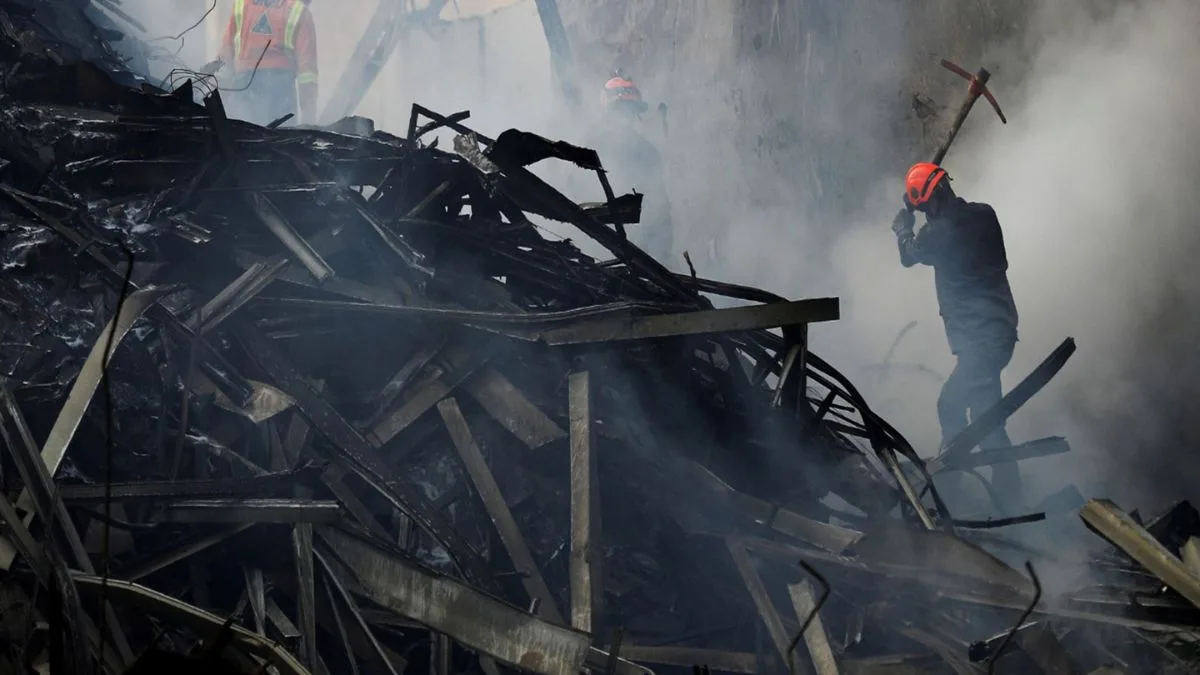
Shortly after midnight in the city of Cuttack, flames reportedly spread through a trauma intensive care unit at SCB Medical College and Hospital, killing 12 patients who could neither run nor resist the smoke filling their ward.

Statesman News Service | New Delhi |

Shortly after midnight in the city of Cuttack, flames reportedly spread through a trauma intensive care unit at SCB Medical College and Hospital, killing 12 patients who could neither run nor resist the smoke filling their ward. The tragedy, which also injured medical staff attempting rescues, was not simply a freak accident. It is another grim reminder that in many Indian hospitals, life-saving spaces can quickly become death traps. The danger is structural.

Intensive care units depend on a dense web of electrical equipment ~ ventilators, monitors, infusion pumps and air-conditioning ~ often operating around the clock. Add oxygen lines, old wiring and overcrowded wards, and the risk of fire multiplies dramatically. When an emergency erupts in such an environment, evacuation becomes painfully slow because the patients inside are unconscious, immobile or dependent on machines. This vulnerability has been exposed repeatedly across India. Fires in hospital ICUs and neonatal units in states such as Maharashtra, Uttar Pradesh and Rajasthan over the past decade have killed patients who were already fighting for survival.

Each disaster is followed by familiar rituals: compensation announcements, administrative inquiries and promises of stricter oversight. Yet the cycle keeps repeating. One reason is the chronic gap between regulation and enforcement. India’s hospital infrastructure is governed by rules on fire exits, electrical load management and emergency preparedness. In practice, however, compliance checks are sporadic and often treated as paperwork exercises rather than rigorous inspections. Government hospitals in particular struggle with overcrowding and ageing infrastructure, while private facilities sometimes prioritise expansion over safety upgrades. Responsibility ultimately lies with both state governments and hospital administrators.

In Odisha, Chief Minister Mohan Charan Majhi has ordered a judicial inquiry into the Cuttack fire. Investigations may identify a short circuit or technical fault, but the deeper issue is institutional complacency. Electrical systems in high-risk areas like ICUs require constant auditing, modern circuit protection and dedicated maintenance teams. These are not luxuries; they are basic safeguards. Equally crucial is emergency preparedness. Fire drills in many hospitals exist only on paper. Staff members are rarely trained to move ventilated patients quickly, cut oxygen lines safely or coordinate with fire services during a crisis. When seconds matter, such gaps can determine whether patients survive or suffocate. India’s healthcare system is expanding rapidly, from new medical colleges to upgraded district hospitals.

Yet expansion without safety discipline merely enlarges the scale of potential tragedy. Hospitals are supposed to be sanctuaries where the sick seek protection from danger outside. When those spaces themselves become hazardous, public trust in the healthcare system erodes. The deaths in Cuttack should therefore not fade into another statistic in India’s long list of hospital fires. If this tragedy leads to a nationwide overhaul of electrical safety, fire audits and emergency training in critical care units, the victims may yet force a long overdue reform. Otherwise, the next ICU fire is not a question of if, but when.

New Hollywood

When the film industry gathers for its annual night of self-congratulation, the ceremony is usually remembered for glamour, spectacle and predictable triumphs. Yet the latest Academy Awards told a different story.

Statesman News Service | New Delhi |

When the film industry gathers for its annual night of self-congratulation, the ceremony is usually remembered for glamour, spectacle and predictable triumphs. Yet the latest Academy Awards told a different story. The victories of filmmakers such as Paul Thomas Anderson and Ryan Coogler signaled not merely a celebration of cinema, but a subtle shift in Hollywood’s cultural mood. For decades, Anderson was regarded as one of America’s most respected directors without an Oscar to his name.

From Boogie Nights to The Master, his films were admired by critics but rarely rewarded by the Academy. His eventual sweep with One Battle After Another therefore carried symbolic weight. It was less about a single film’s triumph than about an institution finally acknowledging the endurance of a filmmaker who had quietly shaped modern American cinema. A similar sense of overdue recognition marked the awards given to Coogler and actor Michael B. Jordan for Sinners. Coogler had already proven his cultural reach through films like Fruitvale Station and Black Panther. Jordan had built a career that straddled independent drama and blockbuster franchises.

Their success suggested that Hollywood’s gatekeepers are gradually catching up with a generation of artists who had already won the audience long ago. But the significance of the ceremony extended beyond individual careers. The evening unfolded against a turbulent backdrop: wars dominating international headlines, renewed debates over immigration in the United States, and an entertainment industry wrestling with the disruptive power of artificial intelligence. The Oscars stage has always doubled as a platform for cultural commentary, and this year was no exception. References to war, political leadership and the moral responsibility of artists surfaced repeatedly in acceptance speeches and presentations.

In that sense, the awards functioned as a snapshot of Hollywood’s anxieties. The film industry remains a global cultural force, yet it is increasingly aware of the fragility of its own ecosystem. Writers, actors and technicians have spent the past two years debating how algorithms and generative AI might reshape creative labour. When presenters emphasised that animation and filmmaking are human crafts rather than “prompts,” the message was unmistakable: Hollywood is defending the value of human creativity at a moment when technology threatens to commodify it.

There was another layer to the ceremony’s symbolism. Alongside the emergence of new winners came tributes to older legends such as Robert Redford and Diane Keaton. The contrast felt deliberate. One generation of storytellers is leaving the stage while another steps forward, carrying the industry’s evolving values with it. Taken together, the night suggested that Hollywood is entering a transitional era. The Academy is recognising voices it once overlooked, confronting technological uncertainty, and responding to a world whose political tensions increasingly seep into art. For an institution long accused of living in its own bubble, that may be the most meaningful change of all.

An Unnecessary War

As American representatives negotiated with their Iranian counterparts in Geneva, an armada of US warships, led by USS Gerald R. Ford, the world’s largest warship, sailed towards the Middle-East.

DEVENDRA SAKSENA | New Delhi |

As American representatives negotiated with their Iranian counterparts in Geneva, an armada of US warships, led by USS Gerald R. Ford, the world’s largest warship, sailed towards the Middle-East. The scenario in February 2026 was uncannily similar to the one in June 2025, when talks on nuclear disarmament had lulled Iran into complacency, catching it unawares when Israel, and later the US, attacked it. However, Iran was much better prepared for the 28 February US and Israeli onslaught – it gave back almost as good as it received.

Iran’s supreme leader of 36 years, Ayatollah Ali Khamenei, along with Iran’s top political and military leadership, were all killed in an Israeli missile attack; bomb attacks destroyed Iran’s navy and grounded its air force; diminished its missile capability and arms industry; the Iranian debacle was capped by the sinking of its warship, near the coast of Sri Lanka. Along with military targets, US and Israeli bombs hit hospitals and residences in Iran, leading to around 1200 civilian deaths; the nadir was reached, when a US Tomhawk missile hit a school, snuffing out the life of 138 innocent Irani schoolchildren. Iran has retaliated by targeting US bases in the Middle-East, and attacking Israel and other Arab countries. Even though most Iranian missiles and drones were successfully intercepted, yet some crucial targets were hit, including US bases in the Middle-East, particularly Qatar, and Saudi Arabian oil installations.

Falling debris from missiles damaged malls and luxury hotels across the Arabian peninsula, and two Iranian missiles were intercepted in Turkish air space. Iran, on its part, has denied targeting Turkey or other Arab countries. Interestingly, just before the invasion, Prime Minister Narendra Modi, was on a State visit to Israel, where he confabulated with the Israeli Prime Minister, and also addressed the Israeli Parliament (Knesset). Modi’s hosts admitted that before launching their strikes, they had to wait for the Indian leader’s departure. There has been considerable collateral damage. Iran has blockaded the Straits of Hormuz that connect the Persian Gulf to the Gulf of Oman.

The Straits are 167 kilometres long, and a mere 39 kilometres across at their narrowest. Almost 20 per cent of the world’s oil, and 20 per cent of global LNG transits through this tiny corridor. The Iranian blockade has resulted in an immediate spike in oil prices, with crude touching US$120 per barrel on 9 March. Should the blockade continue, a global oil and LNG shortage is inevitable. As of today, gas prices have risen sharply in India, and gas shortages have hit restaurants, catering and other establishments – even gas-fired crematoriums have shut down in several Indian cities. Share markets are falling round the globe; the Sensex fell from 82,419 on 26 February to 77,510 on 9 March, with investors losing Rs.22 lakh crore in the process.

The South Korean share index fell by 12 per cent in a single day, and the US share market is falling daily. Dubai airport has been hit more than once, and airlines are intermittently cancelling flights, to and from the Gulf. Countries like India have deployed planes to evacuate their citizens from Gulf countries. Shipping costs have escalated sharply, as marine insurers are cancelling ongoing contracts, due to the enhanced war risk. As exports to the Gulf region become undeliverable, returned export consignments are piling up in Indian ports. Chipmaking is suffering in South Korea because helium gas from Qatar, is not available. Just before the US launched its murderous assault, a survey by the Economist and YouGov found that only 27 per cent Americans supported a strike on Iran.

Approval ratings spike once a war starts, but an NBC News survey, has found that 54 per cent of respondents disapproved of President Trump’s handling of the situation in Iran. This is to be expected, as there is no clear objective behind the US invasion of Iran. Many reasons have been offered by Trump and his cabinet; in the beginning the ostensible rationale for the strike was destruction of Iran’s nuclear weapons and missiles, which does not wash, because after the June war, Trump had victoriously declared that Operation Midnight Hammer had obliterated Iran’s nuclear programme. More recently, in an interview with Fox News on 22 February, Steve Witkoff, U.S. Special Envoy to the Middle East, had claimed that Iran was only a week away from producing industrial-grade bomb-making uranium, only to be contradicted by Trump, two days later, who said that Iran’s nuclear programme had been “ blown to smithereens.”

More importantly, even before the war started, Oman, which mediated in the Geneva talks, between US and Iran, had said that there had been an unprecedented breakthrough in nuclear negotiations, with Iran having agreed to zero stockpiling of uranium, and converting existing enriched material into fuel. Earlier this year, in the wake of murderous repression of protests by the Iranian regime, Trump had assured protestors that help was at hand, and that he would punish Ali Khamenei, the Iranian Supreme Leader. Khamenei is dead, but the war goes on with increased ferocity. Lately, Trump is taking the Israeli line that Operation Epic Fury was a pre-emptive strike on Iran, as Iran was about to attack Israel and the US. Thus, it is difficult to find a clear motive for the US attack on Iran, which may be the reason that the American public is not enamoured of Trump’s misadventure.

Trump is hard put to explain the reason for attacking Iran to the US public; he delivered the longest State of the Union address in history on 24 February, covering an array of his policies on the US economy, crime, trade, immigration and foreign policy ~ but mentioned Iran only in passing. Perhaps, the rationale for the American-Israeli invasion lies in realpolitik. The “axis of resistance” of terrorist organizations ~ Hezbollah in Lebanon, Hamas in Gaza, the Houthis in Yemen ~ built by the Iranian regime, were a permanent thorn in the flesh of Arab governments, but particularly Israel. After smashing Hamas, the Americans and Israelis are targeting both Hezbollah and Iran, simultaneously.

There are two more important, though unstated reasons for the American belligerence; first are Iran’s oil reserves, which the US would like to control, and second is the US desire to crush Iran militarily, so that Israel is the unchallenged boss of the Middle-East ~ ready to protect US interests against everyone. As the Iran war enters a decisive phase, no country stands with Iran ~ even its clients and steadfast supporters, China and Russia, only mouth platitudes. Supposedly neutral countries like India have kept mum. Apparently, no country wants to draw Trump’s ire, the buzz being that a statement in support of Iran will serve no purpose except that of antagonising Trump.

Israel is a country which ploughs a lonely furrow, and does not let international law stand in the way of how it achieves its goals. Also, Israel does not mind using its vast arsenal on the least provocation, and has full US financial and military support for whatever it does. In this backdrop, the entire world should ponder what could be done to stop the unnecessary bloodshed, and certain economic ruin for the world economy. On Trump’s part, he may mull over what Benjamin Franklin, statesman, polymath and one of the Founding Fathers of the USA, wrote to his friend, US Representative Josiah Quincy: “May we never see another War! for in my Opinion there never was a good War, or a bad Peace.”

(The writer is a retired Principal Chief Commissioner of Income-Tax)

US-Israel-Iran Updates: Trump administration seeks USD 200 billion from Congress for Iran war

Qatar’s diplomatic move and Saudi Arabia’s warning signal a wider regional shift, as attacks on energy hubs and US intelligence assessments reshape the conflict narrative.

Statesman News Service | New Delhi | Updated :

The US-Israel-Iran conflict that began on February 28 has now spread far beyond direct strikes between the main rivals, with Gulf states openly reacting to the fallout. On Thursday, Qatar moved sharply against Iran’s embassy staff, while Saudi Arabia said stopping attacks on countries outside the conflict was now its immediate priority.

The latest developments also point to a wider regional strain on security and energy infrastructure. Even as Washington told lawmakers that Iran’s capabilities have been badly damaged, US officials also made it clear that Tehran remains dangerous, resilient and capable of rebuilding over time.

Live Updates

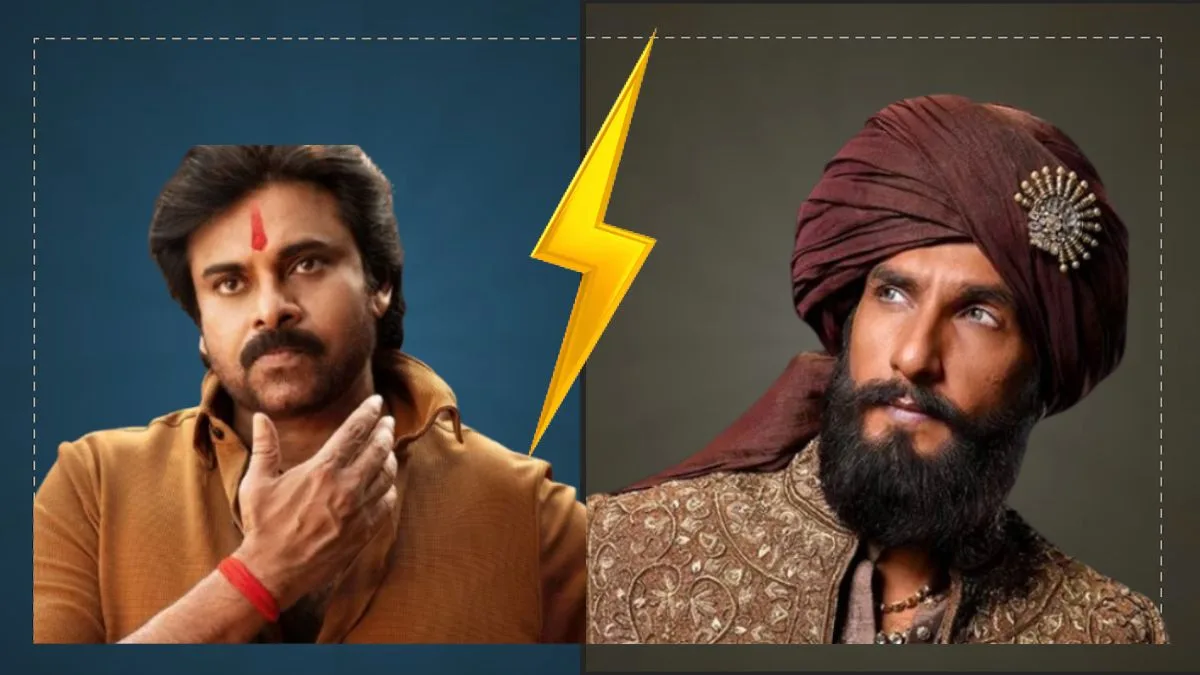
Pawan Kalyan and Ranveer Singh lock horns again: Who will rule the screens this time in their third legendary face-off?

Fans are already picking sides as Pawan Kalyan’s mass-action magic takes on Ranveer Singh’s international panache. March 19 promises chaos, memes, and record-breaking ticket battles.

Statesman News Service | New Delhi |

If you thought the Pawan Kalyan-Ranveer Singh face-offs were over, think again! The Telugu superstar and Bollywood’s firecracker are all set to clash at the box office once more. On March 19, 2026, fans finally get to see ‘Ustaad Bhagat Singh’ and ‘Dhurandhar 2’ hitting theaters on the same day. And, this marks their third direct showdown over 15 years.

For decades, the curious trend of these two stars sharing big release windows has fascinated trade analysts and movie buffs alike. It’s a peek into how films from different industries compete, and how audiences pick sides when regional power meets Bollywood glamour.

Clash no. 1: Panjaa vs Ladies vs Ricky Bahl

The saga started on December 9, 2011. Pawan Kalyan’s stylish action thriller ‘Panjaa’ directed by Vishnuvardhan hit screens alongside Ranveer Singh’s sophomore effort ‘Ladies vs Ricky Bahl’.

‘Panjaa’ was massive project with budget of ₹33 crore. And it opened to roaring crowds with 85-95% occupancy across theaters worldwide. Weekdays saw slight dip to 60-75%. But the buzz remained strong.

Meanwhile, ‘Ladies vs Ricky Bahl’ quietly made its mark, ending its run with a gross of ₹49.40 crore worldwide and a net of ₹32.97 crore.

Also Read: Big relief for ‘Dhurandhar 2’: Madras High Court blocks ISPs and cable operators from unauthorised broadcast

Today, ‘Panjaa’ is remembered for its cult status and technical brilliance. ‘Ladies vs Ricky Bahl’ earned “Average” tag at box office. That first clash set the tone that Pawan Kalyan dominated Telugu heartlands and Ranveer Singh made a steady impression in Hindi markets.

Clash no. almost 2: Agnyaathavaasi vs Padmaavat

Although not a same-day face-off, January 2018 saw Pawan Kalyan’s Agnyaathavaasi and Ranveer Singh’s Padmaavat competing for audience attention in the same month.

The release window created a frenzy for screens and box office space and proved that whether day-and-date or not, the stars’ films always make waves when schedules collide.

Clash no. 2: Bro vs Rocky Aur Rani Kii Prem Kahaani

Fast forward to July 28, 2023. This one was bigger and more competitive. Pawan Kalyan’s fantasy drama ‘Bro’ went toe-to-toe with Ranveer Singh and Alia Bhatt’s romantic extravaganza ‘Rocky Aur Rani Kii Prem Kahaani’.

‘Bro’ earned a worldwide gross of ₹114 crore powered largely by loyal fans in Telugu-speaking states. It played across 14,095 shows. Meanwhile, ‘Rocky Aur Rani Kii Prem Kahaani’ flexed its international muscle by grossing ₹357.50 crore worldwide with ₹175 crore from overseas markets, and massive 61,000+ shows globally.

The numbers made one thing clear that Pawan Kalyan’s appeal is unshakable in his core market while Ranveer Singh thrives in multiplexes and international circuits.

Clash no. 3: Ustaad Bhagat Singh vs Dhurandhar 2

Now, all eyes are on March 19, 2026. This is shaping up to be the biggest ticket war yet.

Pawan Kalyan returns with ‘Ustaad Bhagat Singh’, directed by Harish Shankar. Ranveer Singh answers with ‘Dhurandhar 2’, spy-action sequel helmed by Aditya Dhar.

Unlike earlier clashes, the pan-India release trend means the two films will directly compete for screens in major cities.

Gone are the days of mostly separate markets. Now, Telugu, Hindi, and regional audiences will all make their choices on the same day.

‘Dhurandhar 2’ advance sales erupt: Ranveer Singh’s revenge thriller smashes ₹200 crore barrier before release!

Fans are queuing up hours before showtimes, and tickets are vanishing in minutes. ‘Dhurandhar 2’ is already shaping up to rewrite the record books even before hitting theaters.

Statesman News Service | New Delhi |

Dhurandhar 2 Advance Sales: ‘Dhurandhar 2: The Revenge’ has officially turned into frenzy. From special previews to the first day advance bookings, Ranveer Singh-starrer much-awaited action spectacle is already setting stage for a historic box office storm.

Even before official release, ‘Dhurandhar 2’ has created ripples across theaters. Paid previews on March 18 alone raked in a staggering ₹47.90 crore. Fans snapped up almost every block seat in major cities.

Also Read: Big relief for ‘Dhurandhar 2’: Madras High Court blocks ISPs and cable operators from unauthorised broadcast

The excitement is palpable especially in hotspots like Delhi-NCR and Mumbai where theaters are already reporting sold-out shows.

Day 1 advance sales: A record in the making

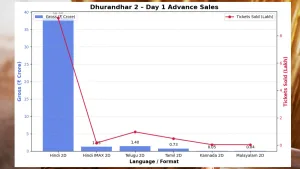
Advance bookings for Day 1 (March 19) have crossed ₹40.30 crore, with over 9.5 lakh tickets sold across 17,000+ shows.

That’s right. The first-day rush showed signs of a blockbuster opening.

Dhurandhar 2 Day 1 Advance Sales

Here’s a quick peek at the numbers without block seats:

– Hindi 2D: ₹38.25 crore, 9,30,710 tickets

– Hindi IMAX 2D: ₹1.25 crore, 15,238 tickets

– Telugu 2D: ₹1.39 crore, 96,205 tickets

– Tamil 2D: ₹72.85 lakh, 47,733 tickets

– Kannada 2D & Malayalam 2D: Smaller yet impressive grosses

Overall, the All-India Day 1 advance gross is ₹41.74 crore with over 10.95 lakh tickets booked.

The frenzy isn’t limited to India. Overseas pre-sales have already crossed ₹80 crore. This just adds to the blockbuster buzz.

Combine this with domestic sales. And the total opening weekend pre-sales are comfortably over ₹200 crore.

CBFC drops bombshell in ‘KD’ song row; says ‘Sarke Chunar Teri Sarke’ was NEVER submitted for certification

The song was released online and quickly faced strong criticism, leading to its removal from public view. Amid the debate, the certification body clarified its role and addressed confusion about digital content approval.

Statesman News Service | New Delhi |

The buzz around ‘KD: The Devil’ has suddenly turned into a storm. The track, ‘Sarke Chunar Teri Sarke’, is now at the center of controversy, and drama is not slowing down anytime soon.

The song was released on March 15 in multiple languages. At first, it gained attention fast. Viewers shared it widely, and it quickly went viral. But the excitement did not last long.

Soon after its release, many social media users began criticising the lyrics and choreography. Several people described the content as suggestive. The online reactions grew louder by the hour, and discussions spread across platforms.

Also Read: ‘Choli Ke Peeche’ vs ‘Sarke Chunar’: Rakshitha slams backlash against ‘KD: The Devil’ song, calls out industry hypocrisy

Because of the intense backlash, the makers of ‘KD: The Devil’ reportedly removed the song from public view on YouTube. The video was shifted to private mode. Later, when users tried to access it, they saw an “unavailable” message instead of the video.

CBFC breaks silence with clear statement

As the debate grew, the Central Board of Film Certification (CBFC) stepped forward with an official clarification. The board stated that it had not received any application to certify the song from ‘KD: The Devil’.

The CBFC made it clear that the song was never submitted for certification. According to the board, there is often confusion about content released on digital platforms. It emphasised that online content does not automatically come under its review process.

The Chairperson of the CBFC explained that material released directly on digital platforms does not require certification unless it is formally submitted for theatrical release. The board said it should not be held responsible for content that was never sent for examination.

The statement also mentioned that the organisation is committed to responsible evaluation of cinema, including the portrayal of women in films. At the same time, it highlighted that the board is frequently drawn into debates that fall outside its jurisdiction.

To avoid misunderstanding, the CBFC clarified that concerns related to the song should be directed to the creators and the respective digital platform, not the certification body.

Nora Fatehi and Sanjay Dutt featured in the track

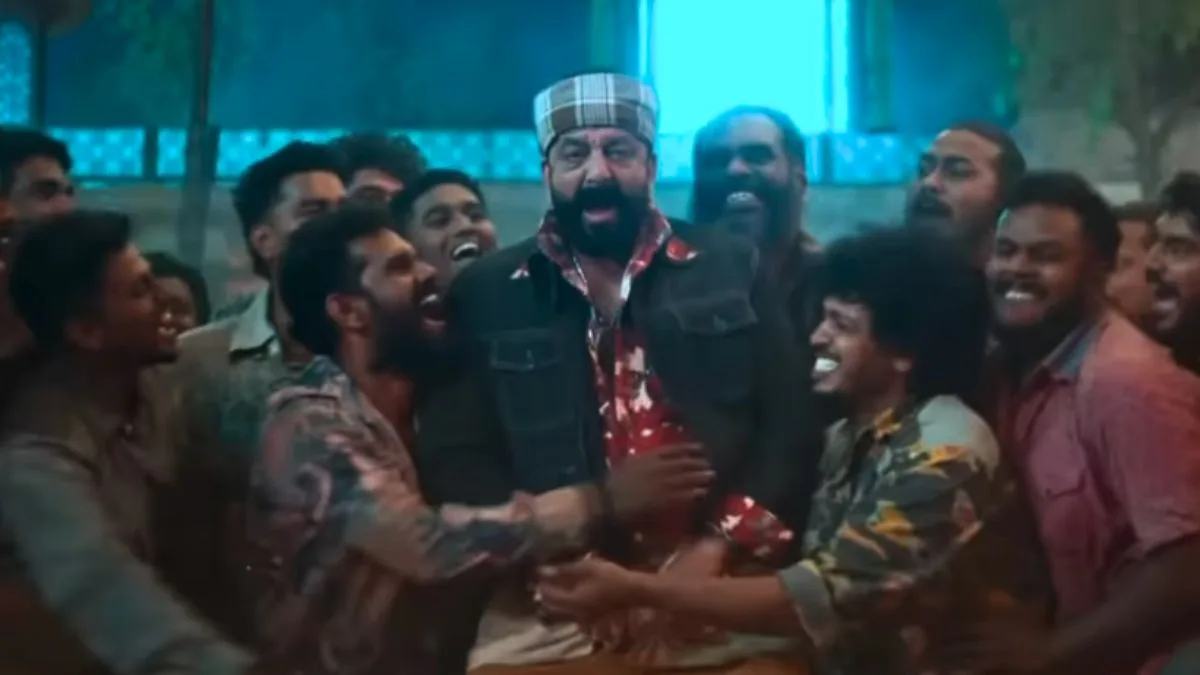
The song features Nora Fatehi and Sanjay Dutt, which added more attention to the release. Their presence made the track even more visible in entertainment circles. However, the controversy soon shifted focus from stars to content itself.

The music for the song was composed by Arjun Janya. While the team had planned a strong digital launch, the unexpected backlash changed the situation completely.

Public figures and organisations join the debate

The controversy did not remain limited to online comments. Several organisations and public personalities also reacted to the issue. All Indian Cine Workers Association (AICWA) expressed concern about the song’s presentation.

Well-known names such as Kangana Ranaut and Armaan Malik also voiced their opinions.