Logo

‘Cyber Swachhta Kendra’ launched to prevent cyber attacks

PTI | New Delhi |

At a time when cyber attacks are increasing by day, the government through its Computer Emergency Response Team (CERT-in) on Tuesday launched "Cyber Swachhta Kendra" — a new desktop and mobile security solution for a secure cyber space in the country.

The new solution will notify, enable cleaning and secure systems of end-users to prevent further infections.

"Launched 'Cyber Swachhta Kendra' (Botnet Cleaning and Malware Analysis Centre), an imp milestone in various initiatives taken on Cyber Security," tweeted Union IT and Electronics Minister Ravi Shankar Prasad.

"Launched USB Pratirodh, which will control the unauthorised usage of removable USB storage media devices like pen drives, external hard drives. Launched App Samvid, to protect Desktops from suspicious applications from running," the minister added.

USB Pratirodh is a desktop security solution that controls the usage of removable storage media like pen drives, external hard drives and other USB-supported mass storage devices. 

M-Kavach tool offers a comprehensive mobile device security solution for Android devices addressing threats related to mobile phones. 

The move comes at a time when over 50,300 cybersecurity incidents like phishing, website intrusions and defacements, virus and denial of service attacks have been observed in the country during 2016.

"As per the information reported to and tracked by Indian Computer Emergency Response Team (CERT-In), a total number of 44,679, 49,455 and 50,362 cyber security incidents were observed during the years 2014, 2015 and 2016, respectively," Minister of State for Electronics and IT PP Chaudhary said in a written reply to the Lok Sabha earlier this month.

The Cyber Swachhta Kendra is part of the government of India's Digital India initiative under the Ministry of Electronics and Information Technology (MeitY). 

The Cyber Swachhta Kendra complies with the objectives of the National Cyber Security Policy which aims at creating a secure cyber eco-system in the country. 

The botnet and malware cleaning analysis centre was announced in 2015 with an outlay of Rs 100 crore.

According to the new website of the analysis centre, it will operate in close coordination and collaboration with internet service providers and product/antivirus companies. 

‘Cyber Swachhta Kendra’ launched to prevent cyber attacks

PTI | New Delhi |

At a time when cyber attacks are increasing by day, the government through its Computer Emergency Response Team (CERT-in) on Tuesday launched "Cyber Swachhta Kendra" — a new desktop and mobile security solution for a secure cyber space in the country.

The new solution will notify, enable cleaning and secure systems of end-users to prevent further infections.

"Launched 'Cyber Swachhta Kendra' (Botnet Cleaning and Malware Analysis Centre), an imp milestone in various initiatives taken on Cyber Security," tweeted Union IT and Electronics Minister Ravi Shankar Prasad.

"Launched USB Pratirodh, which will control the unauthorised usage of removable USB storage media devices like pen drives, external hard drives. Launched App Samvid, to protect Desktops from suspicious applications from running," the minister added.

USB Pratirodh is a desktop security solution that controls the usage of removable storage media like pen drives, external hard drives and other USB-supported mass storage devices. 

M-Kavach tool offers a comprehensive mobile device security solution for Android devices addressing threats related to mobile phones. 

The move comes at a time when over 50,300 cybersecurity incidents like phishing, website intrusions and defacements, virus and denial of service attacks have been observed in the country during 2016.

"As per the information reported to and tracked by Indian Computer Emergency Response Team (CERT-In), a total number of 44,679, 49,455 and 50,362 cyber security incidents were observed during the years 2014, 2015 and 2016, respectively," Minister of State for Electronics and IT PP Chaudhary said in a written reply to the Lok Sabha earlier this month.

The Cyber Swachhta Kendra is part of the government of India's Digital India initiative under the Ministry of Electronics and Information Technology (MeitY). 

The Cyber Swachhta Kendra complies with the objectives of the National Cyber Security Policy which aims at creating a secure cyber eco-system in the country. 

The botnet and malware cleaning analysis centre was announced in 2015 with an outlay of Rs 100 crore.

According to the new website of the analysis centre, it will operate in close coordination and collaboration with internet service providers and product/antivirus companies. 

‘Cyber Swachhta Kendra’ launched to prevent cyber attacks

PTI | New Delhi |

At a time when cyber attacks are increasing by day, the government through its Computer Emergency Response Team (CERT-in) on Tuesday launched "Cyber Swachhta Kendra" — a new desktop and mobile security solution for a secure cyber space in the country.

The new solution will notify, enable cleaning and secure systems of end-users to prevent further infections.

"Launched 'Cyber Swachhta Kendra' (Botnet Cleaning and Malware Analysis Centre), an imp milestone in various initiatives taken on Cyber Security," tweeted Union IT and Electronics Minister Ravi Shankar Prasad.

"Launched USB Pratirodh, which will control the unauthorised usage of removable USB storage media devices like pen drives, external hard drives. Launched App Samvid, to protect Desktops from suspicious applications from running," the minister added.

USB Pratirodh is a desktop security solution that controls the usage of removable storage media like pen drives, external hard drives and other USB-supported mass storage devices. 

M-Kavach tool offers a comprehensive mobile device security solution for Android devices addressing threats related to mobile phones. 

The move comes at a time when over 50,300 cybersecurity incidents like phishing, website intrusions and defacements, virus and denial of service attacks have been observed in the country during 2016.

"As per the information reported to and tracked by Indian Computer Emergency Response Team (CERT-In), a total number of 44,679, 49,455 and 50,362 cyber security incidents were observed during the years 2014, 2015 and 2016, respectively," Minister of State for Electronics and IT PP Chaudhary said in a written reply to the Lok Sabha earlier this month.

The Cyber Swachhta Kendra is part of the government of India's Digital India initiative under the Ministry of Electronics and Information Technology (MeitY). 

The Cyber Swachhta Kendra complies with the objectives of the National Cyber Security Policy which aims at creating a secure cyber eco-system in the country. 

The botnet and malware cleaning analysis centre was announced in 2015 with an outlay of Rs 100 crore.

According to the new website of the analysis centre, it will operate in close coordination and collaboration with internet service providers and product/antivirus companies. 

Eating mercury-rich seafood may up ALS risk

PTI | New York |

Seafood lovers, take note! Eating fish rich in mercury may put you at risk of developing motor neurone diseases such as amyotrophic lateral sclerosis (ALS), scientists have warned.

People who eat food items such as sharks and swordfish – that are very high in mercury – are at increased risk of developing the incurable disease that takes away the ability of nerve cells to interact with the body's muscles.

The exact cause of ALS is unknown but some previous studies suggest mercury might be a risk factor, researchers said.

"For most people, eating fish is part of a healthy diet.

But questions remain about the possible impact of mercury in fish," said Elijah Stommel from Dartmouth College in the US.

As many as 518 people were quizzed on how much fish and seafood they consumed each year, of which 294 had ALS.

Participants reported the types of fish they ate and whether they were purchased from stores or caught during fishing.

A total of 61 per cent of people with ALS were in the top 25 per cent of estimated mercury intake, compared to 44 per cent of people who did not have ALS.

Those in the top 25 per cent for estimated annual mercury intake were at double the risk for ALS compared to those with lower levels according to the findings.

Researchers then estimated the annual exposure to mercury by looking up the average mercury levels in the types of fish and the frequency that the participants reported eating them.

The levels of mercury found in toenail samples from participants with ALS were compared to those without ALS.

Experts are urging people to think carefully about the food they eat and choose food with lower mercury levels.

"Whilst these findings raise an intriguing theory that eating certain types of fish may be linked to a slightly higher incidence of ALS, the results would need to be independently verified," said Dr Brian Dickie, from the Motor Neurone Disease Association in the US.

"Mercury may represent a risk factor for neurodegenerative conditions such as ALS but, if so, it is a very small risk and certainly not a primary cause of the disease," he added.

Eating mercury-rich seafood may up ALS risk

PTI | New York |

Seafood lovers, take note! Eating fish rich in mercury may put you at risk of developing motor neurone diseases such as amyotrophic lateral sclerosis (ALS), scientists have warned.

People who eat food items such as sharks and swordfish – that are very high in mercury – are at increased risk of developing the incurable disease that takes away the ability of nerve cells to interact with the body's muscles.

The exact cause of ALS is unknown but some previous studies suggest mercury might be a risk factor, researchers said.

"For most people, eating fish is part of a healthy diet.

But questions remain about the possible impact of mercury in fish," said Elijah Stommel from Dartmouth College in the US.

As many as 518 people were quizzed on how much fish and seafood they consumed each year, of which 294 had ALS.

Participants reported the types of fish they ate and whether they were purchased from stores or caught during fishing.

A total of 61 per cent of people with ALS were in the top 25 per cent of estimated mercury intake, compared to 44 per cent of people who did not have ALS.

Those in the top 25 per cent for estimated annual mercury intake were at double the risk for ALS compared to those with lower levels according to the findings.

Researchers then estimated the annual exposure to mercury by looking up the average mercury levels in the types of fish and the frequency that the participants reported eating them.

The levels of mercury found in toenail samples from participants with ALS were compared to those without ALS.

Experts are urging people to think carefully about the food they eat and choose food with lower mercury levels.

"Whilst these findings raise an intriguing theory that eating certain types of fish may be linked to a slightly higher incidence of ALS, the results would need to be independently verified," said Dr Brian Dickie, from the Motor Neurone Disease Association in the US.

"Mercury may represent a risk factor for neurodegenerative conditions such as ALS but, if so, it is a very small risk and certainly not a primary cause of the disease," he added.

Eating mercury-rich seafood may up ALS risk

PTI | New York |

Seafood lovers, take note! Eating fish rich in mercury may put you at risk of developing motor neurone diseases such as amyotrophic lateral sclerosis (ALS), scientists have warned.

People who eat food items such as sharks and swordfish – that are very high in mercury – are at increased risk of developing the incurable disease that takes away the ability of nerve cells to interact with the body's muscles.

The exact cause of ALS is unknown but some previous studies suggest mercury might be a risk factor, researchers said.

"For most people, eating fish is part of a healthy diet.

But questions remain about the possible impact of mercury in fish," said Elijah Stommel from Dartmouth College in the US.

As many as 518 people were quizzed on how much fish and seafood they consumed each year, of which 294 had ALS.

Participants reported the types of fish they ate and whether they were purchased from stores or caught during fishing.

A total of 61 per cent of people with ALS were in the top 25 per cent of estimated mercury intake, compared to 44 per cent of people who did not have ALS.

Those in the top 25 per cent for estimated annual mercury intake were at double the risk for ALS compared to those with lower levels according to the findings.

Researchers then estimated the annual exposure to mercury by looking up the average mercury levels in the types of fish and the frequency that the participants reported eating them.

The levels of mercury found in toenail samples from participants with ALS were compared to those without ALS.

Experts are urging people to think carefully about the food they eat and choose food with lower mercury levels.

"Whilst these findings raise an intriguing theory that eating certain types of fish may be linked to a slightly higher incidence of ALS, the results would need to be independently verified," said Dr Brian Dickie, from the Motor Neurone Disease Association in the US.

"Mercury may represent a risk factor for neurodegenerative conditions such as ALS but, if so, it is a very small risk and certainly not a primary cause of the disease," he added.

Goats from plains of Punjab survive in cold desert

SP Sharma | Jammu |

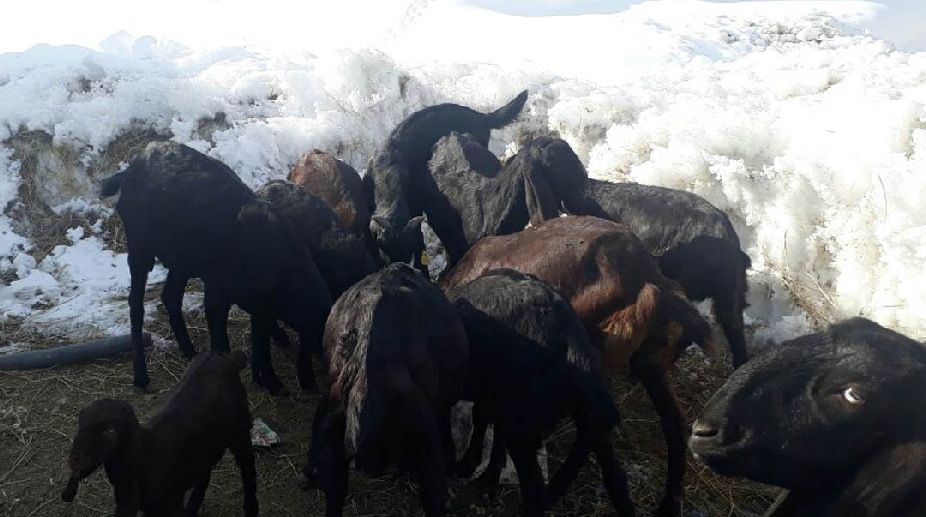
Having been carried to the cold desert of Kargil at a height of 8780 ft. from the 798 ft. plains of Punjab on experimental basis, the Beetal goats have survived their first harshest winter. Twelve goats of the variety were transported to Kargil last summer from the Guru Angad Dev Veterinary and Animal Science University (GADVASU), Ludhiana, as a part of experiment to improve the quality of local goats.

Scientists of the GADVASU had dispatched these goats to the sheep husbandry department at Kargil with fingers crossed as they were uncertain whether these goats that were breeded in the harsh summer temperature touching 48.3 degrees Celsius would survive in the -17 degrees Celsius freezing cold in Kargil. However, the first ever experiment has succeeded with only one goat succumbing to this winter’s unprecedented snowfall in the cold desert of Ladakh.

Dr. Zakir Hussain, chief veterinary scientist at Kargil, said that the goats have not only survived the freezing cold but have given birth to three offspring.

Encouraged with success of the experiment, Hussain said that the department plans to bring more Beetal goats to Kargil when the snowbound Zojila Pass reopens.

He said that for cross breeding of the local goats, the department proposes to this time bring the Beetal goats from Hoshiarpur in Punjab that is the home for this variety of goat.

Residents of the cold desert rear goats to meet their requirement of milk but the yield from the local variety is only about 200 ml against the average of 3.5 liters of the Beetal goat. Moreover, rearing goat is economical in the cold desert rather than the cow.

The Beetal goat is generally found in Punjab and the adjoining areas in Pakistan.  

According to Sandeep Kaswan, assistant professor in the department of livestock production management at GADVASU, Beetal is the most important goat breed of Trans-Gangetic  plain region of India and Pakistan’s Punjab province. The main focus of GADVASU was on conservation of Beetal goats and dissemination of pure germ plasm to goat rears.

The local variety of cow in Kargil has relatively less milk yield and thus is considered uneconomical.

The Hill Development Council has given a green signal for bringing more Beetal goats to Kargil to boost milk production.

Goats from plains of Punjab survive in cold desert

SP Sharma | Jammu |

Having been carried to the cold desert of Kargil at a height of 8780 ft. from the 798 ft. plains of Punjab on experimental basis, the Beetal goats have survived their first harshest winter. Twelve goats of the variety were transported to Kargil last summer from the Guru Angad Dev Veterinary and Animal Science University (GADVASU), Ludhiana, as a part of experiment to improve the quality of local goats.

Scientists of the GADVASU had dispatched these goats to the sheep husbandry department at Kargil with fingers crossed as they were uncertain whether these goats that were breeded in the harsh summer temperature touching 48.3 degrees Celsius would survive in the -17 degrees Celsius freezing cold in Kargil. However, the first ever experiment has succeeded with only one goat succumbing to this winter’s unprecedented snowfall in the cold desert of Ladakh.

Dr. Zakir Hussain, chief veterinary scientist at Kargil, said that the goats have not only survived the freezing cold but have given birth to three offspring.

Encouraged with success of the experiment, Hussain said that the department plans to bring more Beetal goats to Kargil when the snowbound Zojila Pass reopens.

He said that for cross breeding of the local goats, the department proposes to this time bring the Beetal goats from Hoshiarpur in Punjab that is the home for this variety of goat.

Residents of the cold desert rear goats to meet their requirement of milk but the yield from the local variety is only about 200 ml against the average of 3.5 liters of the Beetal goat. Moreover, rearing goat is economical in the cold desert rather than the cow.

The Beetal goat is generally found in Punjab and the adjoining areas in Pakistan.  

According to Sandeep Kaswan, assistant professor in the department of livestock production management at GADVASU, Beetal is the most important goat breed of Trans-Gangetic  plain region of India and Pakistan’s Punjab province. The main focus of GADVASU was on conservation of Beetal goats and dissemination of pure germ plasm to goat rears.

The local variety of cow in Kargil has relatively less milk yield and thus is considered uneconomical.

The Hill Development Council has given a green signal for bringing more Beetal goats to Kargil to boost milk production.

Japan zoo culls 57 monkeys carrying ‘invasive’ genes

PTI | Tokyo |

A Japanese zoo has culled 57 native snow monkeys by lethal injection after finding that they carried genes of an "invasive alien species", officials said on Tuesday.
The Takagoyama Nature Zoo in the city of Futtsu in Chiba prefecture east of Tokyo, housed 164 simians which it believed were all pure Japanese macaques.

But the operator and local officials discovered about one-third were crossbred with the rhesus macaque, which in Japan is designated an "invasive alien species".

A city official told on Tuesday that Japanese law bans the possession and transport of invasive species, including the crossbreeds, and that culling of them is allowed under the law.

He said the monkeys were put to death by lethal injection over about one month ending early February.

The zoo operator held a memorial service for the monkeys at a nearby Buddhist temple to appease their souls, he added.

Snow monkey-rhesus macaque crossbreeds were designated for culling when Japan's environment law was revised in 2013.

"They have to be killed to protect the indigenous environment," an official with the Chiba prefectural government said.

But Japan's Environment Ministry said exceptions can be made, such as cases in which zoos apply for permission to keep them.

"There are many zoos in the country, which rear animals that became classified as invasive species after the law was created," a ministry official said.

Though the killing of the monkeys may appear cruel, environmentalists said it is crucial not to allow any contacts between foreign and native species lest the natural balance be upset.

Junkichi Mima, spokesman for conservation group WWF Japan, said invasive species cause problems "because they get mixed in with indigenous animals and threaten the natural environment and ecosystem".

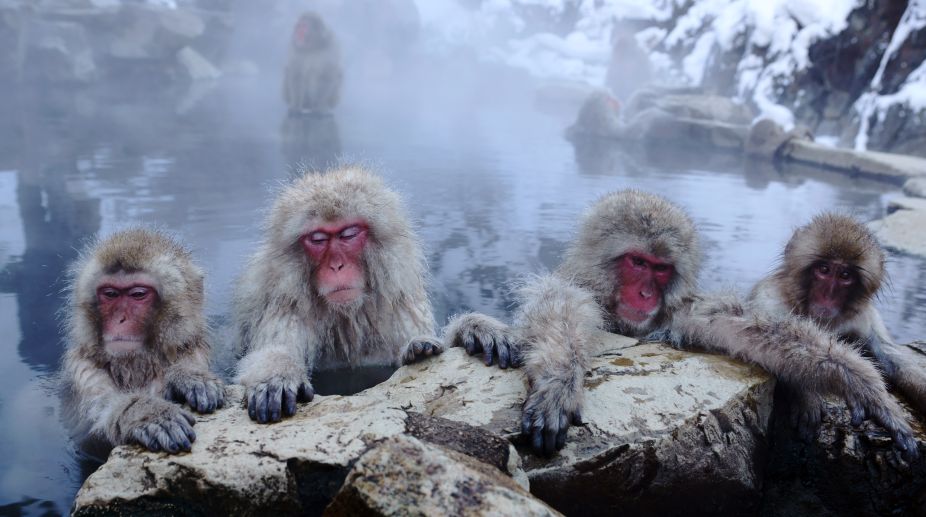
The snow monkey, known in Japan as Nihonzaru (Japanese macaque), is brown in colour with a red face, and the mountainous area near the zoo is designated as a wild habitat for them.

The zoo started feeding wild snow monkeys in 1957 and held dozens in a rough fence, the city official said.

But in the 1990s, the rhesus macaque, which originates in China and Southeast Asia, started to increase in the area.

Chiba prefecture said that since 2005 it has culled wild ones in a bid to stamp them out.

The Takagoyama zoo conducted DNA testing on its snow monkeys and discovered the mixture.

Japan zoo culls 57 monkeys carrying ‘invasive’ genes

PTI | Tokyo |

A Japanese zoo has culled 57 native snow monkeys by lethal injection after finding that they carried genes of an "invasive alien species", officials said on Tuesday.
The Takagoyama Nature Zoo in the city of Futtsu in Chiba prefecture east of Tokyo, housed 164 simians which it believed were all pure Japanese macaques.

But the operator and local officials discovered about one-third were crossbred with the rhesus macaque, which in Japan is designated an "invasive alien species".

A city official told on Tuesday that Japanese law bans the possession and transport of invasive species, including the crossbreeds, and that culling of them is allowed under the law.

He said the monkeys were put to death by lethal injection over about one month ending early February.

The zoo operator held a memorial service for the monkeys at a nearby Buddhist temple to appease their souls, he added.

Snow monkey-rhesus macaque crossbreeds were designated for culling when Japan's environment law was revised in 2013.

"They have to be killed to protect the indigenous environment," an official with the Chiba prefectural government said.

But Japan's Environment Ministry said exceptions can be made, such as cases in which zoos apply for permission to keep them.

"There are many zoos in the country, which rear animals that became classified as invasive species after the law was created," a ministry official said.

Though the killing of the monkeys may appear cruel, environmentalists said it is crucial not to allow any contacts between foreign and native species lest the natural balance be upset.

Junkichi Mima, spokesman for conservation group WWF Japan, said invasive species cause problems "because they get mixed in with indigenous animals and threaten the natural environment and ecosystem".

The snow monkey, known in Japan as Nihonzaru (Japanese macaque), is brown in colour with a red face, and the mountainous area near the zoo is designated as a wild habitat for them.

The zoo started feeding wild snow monkeys in 1957 and held dozens in a rough fence, the city official said.

But in the 1990s, the rhesus macaque, which originates in China and Southeast Asia, started to increase in the area.

Chiba prefecture said that since 2005 it has culled wild ones in a bid to stamp them out.

The Takagoyama zoo conducted DNA testing on its snow monkeys and discovered the mixture.

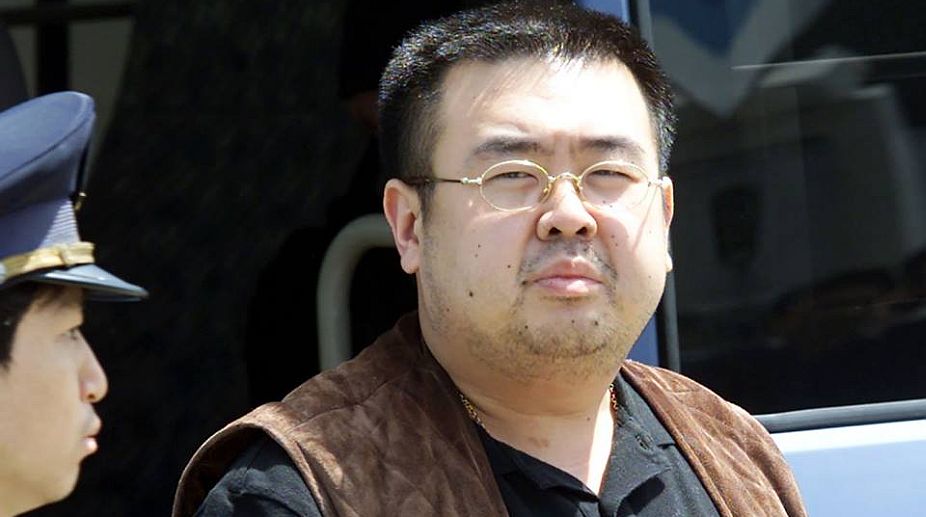
Malaysia waits for Kim Jong-nam’s son to identify body

IANS | Kuala Lumpur |

Malaysian authorities are waiting for the son of self-exiled North Korean Kim Jong-nam to identify if the man murdered last week at the Kuala Lumpur airport was his father and the half-brother of Pyongyang leader Kim Jong-un, the media reported on Tuesday.

Police Chief Abd Samah Mat did not confirm if Kim Han-sol has already reached Malaysia but said so far no family member has claimed the body, according to Channel News Asia.

Mat added any family member who claims the body will be taken to the Kuala Lumpur Hospital to identify the remains and provide a DNA sample, and only after positive identification will the body be handed over and the North Korean Embassy will be informed.

The police chief's statement comes after a convoy of four unregistered vehicles escorted by around 30 Special Task Force personnel was seen arriving early Tuesday at the hospital.

alaysian authorities said autopsy results will be released on Wednesday.

Earlier, North Korean Ambassador Kang Chol had said they do not trust the Malaysian probe and had called for a joint investigation into the incident, Efe news reported.

He had also accused Malaysia of violating international norms by carrying out the tests without permission from the North Korean authorities.

Malaysian Prime Minister Najib Razak denied the allegations and defended the professional expertise of Malaysian police and forensic experts.

On February 13, Kim Jong-nam, who was travelling on a diplomatic passport under the name of Kim Chol, was attacked by two women at the Kuala Lumpur airport.

The two women, an Indonesian and a Vietnamese, have been arrested. They said they were hired by some "unknown" people to "play a prank" on the victim.

The Malaysian police also arrested a Malaysian man and a North Korean chemist while a search and arrest warrant have been issued against four other North Korean nationals. They apparently left for Pyongyang shortly after the alleged murder.

Kim Jong-nam was born on May 10, 1971, in Pyongyang, and was the son of the late North Korean dictator Kim Jong-il and actress Song Hye-rim.
 

Malaysia waits for Kim Jong-nam’s son to identify body

IANS | Kuala Lumpur |

Malaysian authorities are waiting for the son of self-exiled North Korean Kim Jong-nam to identify if the man murdered last week at the Kuala Lumpur airport was his father and the half-brother of Pyongyang leader Kim Jong-un, the media reported on Tuesday.

Police Chief Abd Samah Mat did not confirm if Kim Han-sol has already reached Malaysia but said so far no family member has claimed the body, according to Channel News Asia.

Mat added any family member who claims the body will be taken to the Kuala Lumpur Hospital to identify the remains and provide a DNA sample, and only after positive identification will the body be handed over and the North Korean Embassy will be informed.

The police chief's statement comes after a convoy of four unregistered vehicles escorted by around 30 Special Task Force personnel was seen arriving early Tuesday at the hospital.

alaysian authorities said autopsy results will be released on Wednesday.

Earlier, North Korean Ambassador Kang Chol had said they do not trust the Malaysian probe and had called for a joint investigation into the incident, Efe news reported.

He had also accused Malaysia of violating international norms by carrying out the tests without permission from the North Korean authorities.

Malaysian Prime Minister Najib Razak denied the allegations and defended the professional expertise of Malaysian police and forensic experts.

On February 13, Kim Jong-nam, who was travelling on a diplomatic passport under the name of Kim Chol, was attacked by two women at the Kuala Lumpur airport.

The two women, an Indonesian and a Vietnamese, have been arrested. They said they were hired by some "unknown" people to "play a prank" on the victim.

The Malaysian police also arrested a Malaysian man and a North Korean chemist while a search and arrest warrant have been issued against four other North Korean nationals. They apparently left for Pyongyang shortly after the alleged murder.

Kim Jong-nam was born on May 10, 1971, in Pyongyang, and was the son of the late North Korean dictator Kim Jong-il and actress Song Hye-rim.
 

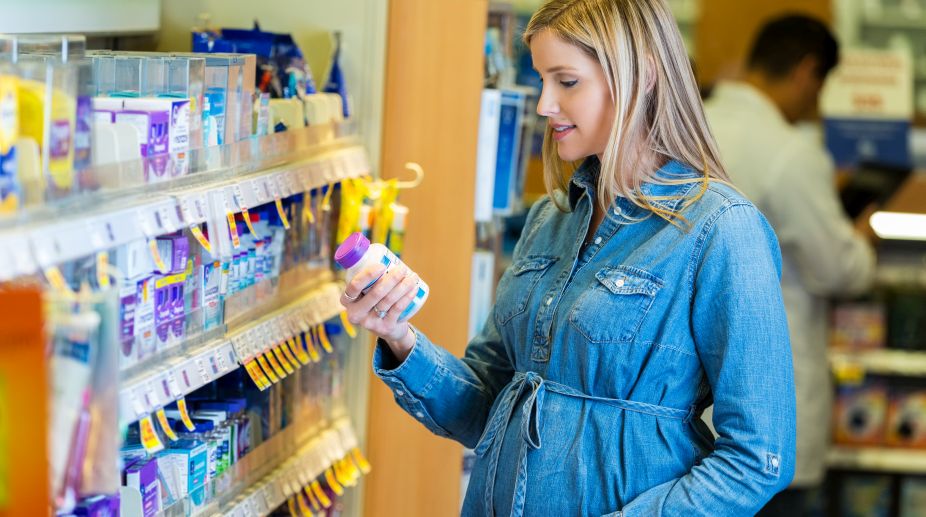
Pregnant Beyonce suffers bad morning sickness

IANS |

Singer Beyonce Knowles, who is expecting twins, is reportedly suffering from a bad bout of morning sickness.

According to a source in the know, Beyonce is having a difficult second pregnancy and is surprised how tough it has been for her to carry twins as it is completely different from her first pregnancy when she was carrying daughter Blue Ivy Carter.

"When she was carrying Blue Ivy, it all went super easy, and she flew through the pregnancy with hardly any side affects," the source told hollywoodlife.com.

"Bey has been hit really badly with bouts of morning sickness, which she hardly suffered last time. 

"And, it doesn't just occur in the morning. She's suddenly slammed with these overwhelming feelings of dizziness and sickness at totally random times throughout the day too," the source added.

Pregnant Beyonce suffers bad morning sickness

IANS |

Singer Beyonce Knowles, who is expecting twins, is reportedly suffering from a bad bout of morning sickness.

According to a source in the know, Beyonce is having a difficult second pregnancy and is surprised how tough it has been for her to carry twins as it is completely different from her first pregnancy when she was carrying daughter Blue Ivy Carter.

"When she was carrying Blue Ivy, it all went super easy, and she flew through the pregnancy with hardly any side affects," the source told hollywoodlife.com.

"Bey has been hit really badly with bouts of morning sickness, which she hardly suffered last time. 

"And, it doesn't just occur in the morning. She's suddenly slammed with these overwhelming feelings of dizziness and sickness at totally random times throughout the day too," the source added.

‘Common food-borne bacteria may up early miscarriage risk’

PTI | Washington |

Moms-to-be, take note! Listeria, a common food-borne bacterium, may pose a greater risk of miscarriage in the early stages of pregnancy than previously thought, a new study has warned.

Researchers at the University of Wisconsin-Madison in the US studied how pathogens affect foetal development and change the outcome of pregnancy.

"For many years, listeria has been associated with adverse outcomes in pregnancy, but particularly at the end of pregnancy," said Ted Golos, professor at UW-Madison.

"What was not known with much clarity before this study is that it appears it is a severe risk factor in early pregnancy," said Golos.

Pregnant women are warned to avoid many of the foods – among them unpasteurised milk and soft cheese, raw sprouts, melon and deli meats not carefully handled – that can harbour listeria, because the bacterium is known to cause miscarriage and stillbirth, and spur premature labour, researchers said.

Those severe outcomes have resulted in a zero-tolerance regulatory policy in the US for listeria in ready-to-eat foods, they said.

However, when it occurs, listeria infection in pregnancy may go unnoticed. The few recognisable symptoms are nearly indistinguishable from the discomfort most newly pregnant women feel.

"It is striking that mom does not get particularly ill from listeria infection, but it has a profound impact on the foetus," said Golos.

Sophia Kathariou, a professor at North Carolina State University, provided a strain of listeria that caused miscarriage, stillbirth and premature delivery in at least 11 pregnant women in 2000.

Four pregnant rhesus macaques were fed doses of the listeria comparable to what one might encounter in contaminated food.

Bryce Wolfe, a UW-Madison graduate student and lead author of the study, monitored the speed and progression of listeria's spread.

None of the monkeys showed obvious signs of infection before their pregnancies came to abrupt ends.

However, in tissue samples taken after each monkey experienced intrauterine foetal death, Wolfe found listeria had invaded the placenta – the connection between the mother-to-be and the foetus, which usually prevents transmission of bacteria – as well as the endometrium, the lining of the uterus.

"When you introduce a pathogen into the midst of this, it is not very surprising that it is going to cause some sort of adverse outcome disrupting this balance," Wolfe said.

The researchers believe the inflammation caused by the maternal immune response to the fast-moving listeria also affects the placenta, keeping it from protecting the foetus.

"It should be a barrier. But we are hypothesising that the maternal immune system's attempt to clear the bacteria actually results in collateral damage to the placenta that then allows the bacteria to invade the foetus," Golos added.

The research was published in the journal mBio.

‘Common food-borne bacteria may up early miscarriage risk’

PTI | Washington |

Moms-to-be, take note! Listeria, a common food-borne bacterium, may pose a greater risk of miscarriage in the early stages of pregnancy than previously thought, a new study has warned.

Researchers at the University of Wisconsin-Madison in the US studied how pathogens affect foetal development and change the outcome of pregnancy.

"For many years, listeria has been associated with adverse outcomes in pregnancy, but particularly at the end of pregnancy," said Ted Golos, professor at UW-Madison.

"What was not known with much clarity before this study is that it appears it is a severe risk factor in early pregnancy," said Golos.

Pregnant women are warned to avoid many of the foods – among them unpasteurised milk and soft cheese, raw sprouts, melon and deli meats not carefully handled – that can harbour listeria, because the bacterium is known to cause miscarriage and stillbirth, and spur premature labour, researchers said.

Those severe outcomes have resulted in a zero-tolerance regulatory policy in the US for listeria in ready-to-eat foods, they said.

However, when it occurs, listeria infection in pregnancy may go unnoticed. The few recognisable symptoms are nearly indistinguishable from the discomfort most newly pregnant women feel.

"It is striking that mom does not get particularly ill from listeria infection, but it has a profound impact on the foetus," said Golos.

Sophia Kathariou, a professor at North Carolina State University, provided a strain of listeria that caused miscarriage, stillbirth and premature delivery in at least 11 pregnant women in 2000.

Four pregnant rhesus macaques were fed doses of the listeria comparable to what one might encounter in contaminated food.

Bryce Wolfe, a UW-Madison graduate student and lead author of the study, monitored the speed and progression of listeria's spread.

None of the monkeys showed obvious signs of infection before their pregnancies came to abrupt ends.

However, in tissue samples taken after each monkey experienced intrauterine foetal death, Wolfe found listeria had invaded the placenta – the connection between the mother-to-be and the foetus, which usually prevents transmission of bacteria – as well as the endometrium, the lining of the uterus.

"When you introduce a pathogen into the midst of this, it is not very surprising that it is going to cause some sort of adverse outcome disrupting this balance," Wolfe said.

The researchers believe the inflammation caused by the maternal immune response to the fast-moving listeria also affects the placenta, keeping it from protecting the foetus.

"It should be a barrier. But we are hypothesising that the maternal immune system's attempt to clear the bacteria actually results in collateral damage to the placenta that then allows the bacteria to invade the foetus," Golos added.

The research was published in the journal mBio.

Security guard held for threatening to blow up Reliance Jio office in Himachal

Statesman News Service | Shimla |

A security guard was arrested by the Himachal Police for allegedly threatening to carry out bomb blast at Reliance Jio office on toll free number.

The Deputy Inspector General of Police, CID Crime, Vinod K Dhawan said they have received a complaint from Reliance Jio General Manager Rohit Pun that one unknown person was threatening to carry blast in their office. “On the basis of complaint, a case was registered and the location of the mobile was tracked which was found to be in Baddi Industrial area in Solan district,” he said.

Dhawan said a team was sent to Baddi area from where the accused was arrested from his hiding place. “The accused have been identified as Anirudha Dey, a resident of Burdwan district of West Bengal and he was living in Baddi area since the last three years,” he said.

Dey was working as a security guard in Pharma Company, Apotex and one mobile phone with two Sim cards has been seized from his possession. “Police officials are interrogating the accused to ascertain his alleged involvement and reasons behind making alleged threatening calls to Reliance Jio,” he said.

Police officials are also verifying his original address and his criminal background, if any with the help West Bengal Police,” Dhawan added.