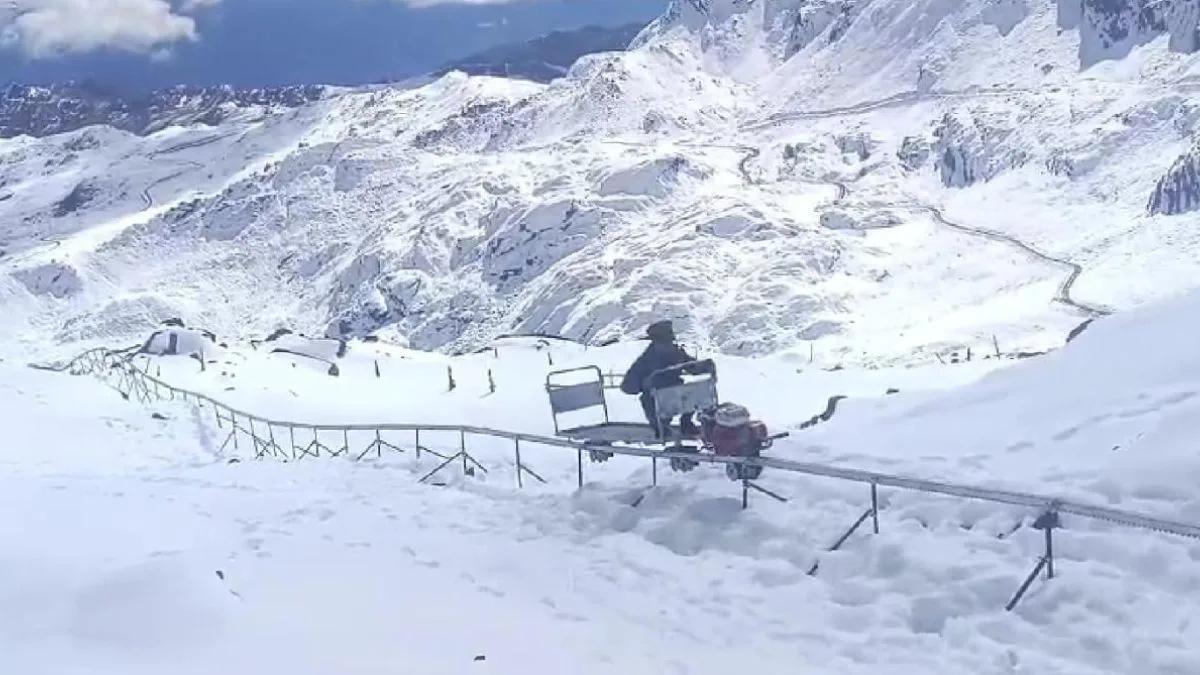
In a major milestone altering the course of supply lines in the high-altitude regions, the Indian Army has deployed an indigenous high-altitude mono rail system, fully operational, validated, and transforming logistics at 16,000 ft. The feat was achieved by the Gajraj Corps.
In a statement issued here, the Army spokesperson said that operations in the unforgiving expanse of the Kameng Himalayas, where at 16000 feet, sheer baren cliffs, unpredictable weather, and extreme altitude routinely severed the vital supply lines. With this innovative milestone in high-altitude logistics solution, will aid timely delivery of essential stores in an environment where forward posts are often cut off for days under the snow and traditional means of transport struggle against the rugged terrain.
Advertisement
Rising to this operational necessity, the Gajraj Corps successfully conceptualised, engineered, and deployed an indigenous High Altitude Mono Rail System. This innovative solution—capable of transporting 300+ kg of load in a single run- is proving to be a lifeline to remote posts that have no alternative means of communication or supply links.
It enables reliable movement of mission-critical stores, ammunition, rations, fuel, engineering equipment, and other heavy or awkward loads that are otherwise difficult to ferry across steep gradients and unstable surfaces. This transportation facility is fully operation worthy to be used day or night, with or without escort, during hail or storm irrespective of the weather conditions, read the statement further.
Beyond logistics, the system has also emerged as a potential enabler for rapid casualty evacuation, offering a safe and efficient means to move injured personnel across inhospitable stretches where helicopters may not always operate and foot evacuation is slow and risky.