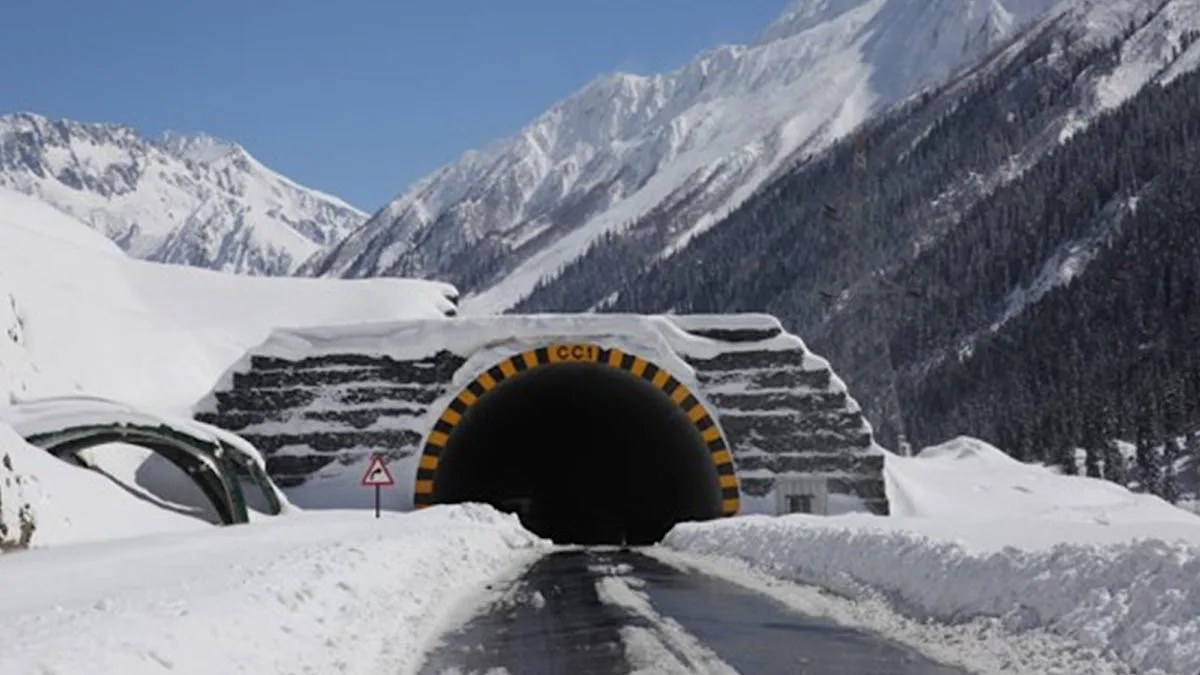
The strategically important Zojila Tunnel project achieved a major engineering milestone on Tuesday, bringing India closer to establishing all-weather connectivity between the Kashmir Valley and Ladakh while significantly enhancing military logistics and operational preparedness along its northern frontiers.
The breakthrough was marked after engineers successfully blasted through the final 2.5 metres of rock, linking both ends of the tunnel beneath the Himalayas. The achievement paves the way for year-round road access to Ladakh, a region that remains cut off for several months each year due to heavy snowfall at the Zojila Pass.
Advertisement
Union Minister for Road Transport and Highways Nitin Gadkari remotely triggered the breakthrough blast from the eastern portal near Minimarg in Ladakh. Jammu and Kashmir Lieutenant Governor Manoj Sinha and Chief Minister Omar Abdullah were present on the occasion.
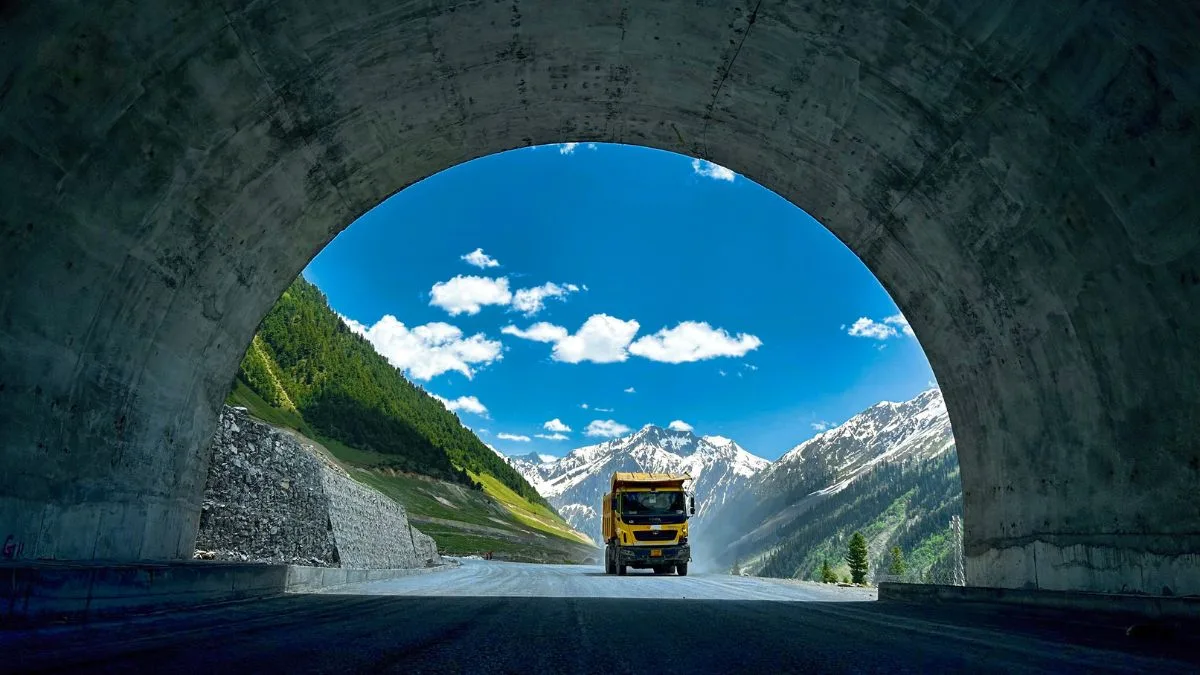
Stretching 13.153 kilometres beneath the Zojila Pass on the Srinagar-Kargil-Leh National Highway, the tunnel is being constructed at an altitude of 11,578 feet above sea level. Once completed, it will be the world’s longest single-tube bi-directional road tunnel at such a high altitude. The project is approximately 85 per cent complete and is expected to be opened for traffic by February 2028.
The tunnel has a width of 9.5 metres and a height of 7.57 metres. Upon commissioning, it is expected to reduce travel time across the pass from up to 90 minutes to about 15 minutes, while ensuring uninterrupted connectivity between Kashmir and Ladakh throughout the year.
Currently, the Zojila Pass remains closed during winter due to heavy snowfall, often isolating Ladakh and creating major challenges for civilian movement, trade, emergency services and military logistics.
Defence experts regard the Zojila Tunnel as one of India’s most significant strategic infrastructure projects due to its direct impact on operational readiness along the borders with both China and Pakistan. The project has acquired greater importance following the prolonged military standoff with China along the Line of Actual Control (LAC) in eastern Ladakh since 2020.
Once operational, the tunnel will facilitate the rapid movement of troops, armoured vehicles, artillery, ammunition and critical supplies to forward areas, ensuring reliable military mobility irrespective of weather conditions. Military planners have long stressed the need for dependable all-weather connectivity to Ladakh, where harsh terrain and extreme climatic conditions often complicate reinforcement and logistics operations.
The strategic relevance of Zojila is deeply rooted in India’s military history. During the 1947-48 India-Pakistan conflict, the Indian Army launched a daring offensive to recapture the Zojila Pass from Pakistani forces and tribal raiders. The operation, conducted in November 1948, remains one of the highest-altitude tank assaults in military history and played a crucial role in securing Ladakh and restoring the vital land link between Srinagar and Leh.
The pass again assumed critical importance during the 1999 Kargil War, serving as the principal route for transporting troops, weapons, ammunition and supplies to the conflict zone. Maintaining the route under difficult weather and operational conditions proved vital to India’s campaign to evict Pakistani intruders from the Kargil sector.
Over the decades, the Srinagar-Kargil-Leh axis has remained the strategic lifeline for Indian armed forces deployed in Ladakh, including formations tasked with guarding the country’s borders with China and Pakistan.
The Zojila Tunnel forms part of the government’s broader effort to strengthen border infrastructure through the construction of strategic roads, tunnels, bridges and logistics networks across frontier regions. Such initiatives have gained urgency amid evolving security challenges along India’s northern borders.