Civilisational resurgence
As India marks 12 years of Prime Minister Narendra Modi’s leadership, one of the most pro fond transformations has been the quiet yet decisive resurgence of Bharat’s civilisational identity.
While India celebrates former PM Atal Bihari Vajpayee’s birth anniversary as Good Governance Day, it is worth noting that 2025 has witnessed some of the Modi government’s most decisive, big-ticket governance reforms.




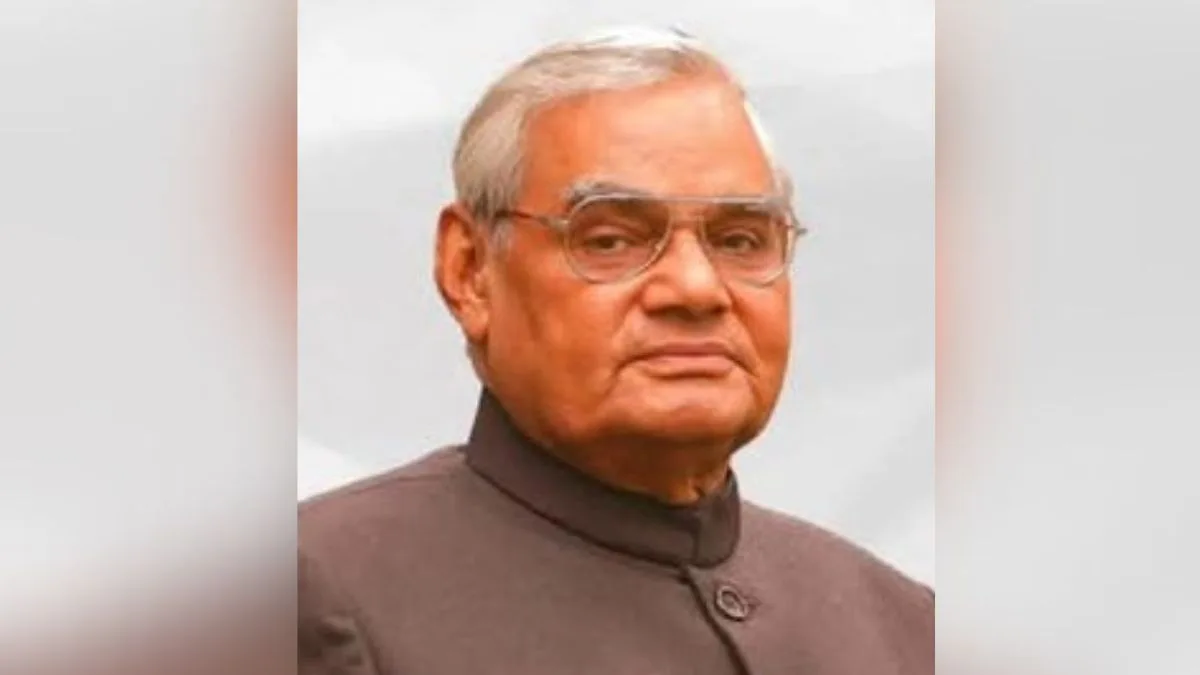
Photo: IANS
While India celebrates former PM Atal Bihari Vajpayee’s birth anniversary as Good Governance Day, it is worth noting that 2025 has witnessed some of the Modi government’s most decisive, big-ticket governance reforms. These reforms only reinforce the Prime Minister’s commitment to raise the governance bar and expedite India’s 2047 goals. Good Governance Day, marked every December 25 since 2014, honours the legacy of former PM Atal Bihari Vajpayee, one of India’s most revered leaders and a founding figure of the Bharatiya Janata Party (BJP).
Vajpayee, born in 1924, exemplified principles of accountability, transparency, and inclusive growth during his tenure as Prime Minister from 1998 to 2004. His administration pioneered initiatives like the Golden Quadrilateral highway project and telecom reforms, setting a benchmark for efficient governance. The same ethos of “Sushasan” (good governance) have underpinned the Modi government’s reform agenda, transforming abstract ideals into concrete policies that prioritize citizen welfare, economic resilience, and systemic efficiency. 2025 emerged as a year of “reform blitz” for the Modi government, with over a dozen major bills passed in Parliament to turbo charge the economy amid global challenges like potential US tariffs and geopolitical uncertainties. These reforms, spanning nuclear energy, insurance, securities markets, labour laws, rural employment, and Waqf property management, were designed to unlock hundreds of billions in investments, simplify compliance, and position India as a global economic powerhouse.
Advertisement
By consolidating outdated laws, enhancing transparency, and opening sectors to private and foreign participation, the government aimed to boost GDP growth, create jobs, and achieve the targets of “Viksit Bharat” (Developed India) by 2047. Critics argued some changes diluted worker rights or increased government oversight, but proponents hailed them as decisive steps to correct historical wrongs, formalize informal sectors, and shield the economy from external shocks. A decoding of some of these reforms only underscores their importance in the country’s journey ahead. One of the most contentious yet corrective reforms of 2025 was the Waqf (Amendment) Act, passed in April, which overhauled the Waqf Act of 1995 and its 2013 amendments.
Advertisement
The 1995 Act had granted Waqf Boards unchecked powers to declare properties as Waqf, often leading to arbitrary claims on government, private, and even non-Muslim lands. The 2013 amendments exacerbated this by introducing “Waqf by user” – a provision allowing properties to be deemed Waqf based on historical usage, without formal documentation, enabling illegal land grabs estimated to affect millions of acres. The 2025 Act rectifies these wrongs by abolishing “Waqf by user,” ensuring only properties with valid deeds or explicit dedication can be classified as Waqf, thus preventing retrospective claims on government lands. This formalization paves the way for transparent management, including digitization of records and inclusion of non-Muslims in Waqf Councils for broader oversight.
By ending unchecked encroachments, the reform safeguards heritage while promoting socio-economic utilization of Waqf assets, potentially unlocking value for community welfare and reducing litigation. Implemented nationwide from 21 November 2025, the four new Labour Codes – on Wages, Social Security, Industrial Relations, and Occupational Safety – consolidated 29 previous laws into a streamlined framework of four comprehensive labour codes, marking a historic overhaul. These codes enhance social security by mandating Provident Fund (PF), Employees’ State Insurance Corporation (ESIC), insurance, and gratuity for all workers, including those in unorganized sectors. A boon for gig and platform workers, the Social Security Code requires aggregators to contribute to a welfare fund, providing first-time coverage like accident benefits and pensions.
To boost women’s workforce participation, provisions include extended maternity leave, creche facilities, and flexible work hours, addressing barriers that have kept female labour force participation below 40 per cent. Uniform minimum wages across industries and simplified compliance (reducing forms from hundreds to a few) make it easier for businesses to hire, potentially creating millions of jobs while protecting vulnerable workers from exploitation. The codes’ focus on inclusivity positions them as a catalyst for a more equitable labour market. Enacted in December 2025, the VB–G RAM G Bill replaced the 2005 Mahatma Gandhi National Rural Employment Guarantee Act (MGNREGA) with a modernized framework aligned with India’s 2047 development goals. MGNREGA’s 100-day guarantee often suffered from delays, corruption, and limited focus on asset creation; the new Bill expands it to 125 days of wage employment per househol, introduces Gramin Rozgar Guarantee Cards for seamless access, and raises administrative spending to 9 per cent for better tech-driven monitoring. It emphasizes livelihood security through skill-linked works and infrastructure projects, with seasonal pauses to align with agricultural cycles.
By capping funding and integrating digital tools, the reform curbs leakages and shifts from mere wage provision to sustainable rural empowerment. This overhaul is expected to enhance rural resilience, reduce migration, and contribute to balanced economic growth. The Sustainable Harnessing and Advancement of Nuclear Energy for Transforming India (SHANTI) Bill, passed in December 2025, marked a seismic shift by allowing private and foreign firms full participation in India’s nuclear sector for the first time since independence. Previously monopolized by state entities, the sector faced funding shortages and slow expansion. This single reform unlocks $214 billion in investments. It streamlines regulations, promotes clean energy to meet net-zero targets, and bolsters energy security amid rising demands.
Safety remains paramount with enhanced oversight, positioning nuclear power as a cornerstone for sustainable development and reducing reliance on fossil fuels. The Sabka Bima Sabki Raksha (Amendment of Insurance Laws) Bill,approved in December 2025, raised Foreign Direct Investment (FDI) in insurance from 74 to 100 per cent, fulfilling a long-pending demand to infuse capital and achieve “Insurance for All by 2047.” With penetration at just 3.8 per cent of GDP, the sector needed a boost; the reform reduces capital requirements for reinsurers from Rs 5,000 crore to Rs 1,000 crore, encouraging more players and innovation in products like micro-insurance. It mandates full premium reinvestment in India, addressing data privacy concerns while spurring job creation and skill development. This liberalization is projected to deepen market penetration, lower premiums through competition, and fortify financial resilience for millions. Introduced and passed in December 2025, the Securities Markets Code Bill unified three legacy laws – the SEBI Act (1992), Depositories Act (1996), and Securities Contracts (Regulation) Act (1956) – into a single, contemporary code.
Outdated regulations had hampered efficiency; the new code strengthens the Securities and Exchange Board of India (SEBI) by expanding its board to 15 members, enhancing accountability, and bolstering investor protection through stricter penalties and faster dispute resolution. It simplif ies compliance for intermediaries, promotes market participation, and integrates digital tools for transparency. This reform shields India’s booming stock markets from volatility, attracts foreign inflows, and aligns with global standards, fostering a robust financial ecosystem. Moreover, In August 2025, PM Modi during his Independence Day speech, announced a dedicated Task Force for Next-Generation Reforms led by former Cabinet Secretary Rajiv Gauba.
It aims to accelerate economic growth, slash red tape, and modernize governance by repealing obsolete laws, simplifying compliance, digitizing approvals, and decriminalizing minor offencesbuilding on prior elimination of over 40,000 compliances. Complementing this, the government advanced key trade pacts: India-UK CETA (July), India-EFTA TEPA (October, $100B investments), India- New Zealand and India- Oman (December). Additionally, “GST 2.0” reforms (September) simplified rates to mainly 5 and 18 per cent, cut taxes on essentials and insurance, and boosted MSME refunds to stimulate consumption and growth.
These measures reflect conviction-driven reforms to insulate the economy and attract investments. The Modi government’s 2025 reforms represent a decisive push towards systemic transformation, echoing Vajpayee’s governance legacy while adapting to contemporary needs. From curbing land grabs to empowering gig workers and opening strategic sectors, these changes promise sustained growth, job creation, and equity. As India navigates 2026, the true test will be in implementation, but 2025 undoubtedly laid a resilient foundation for a pacy future.
(The writer is a national spokesperson of BJP and an author.)
Advertisement